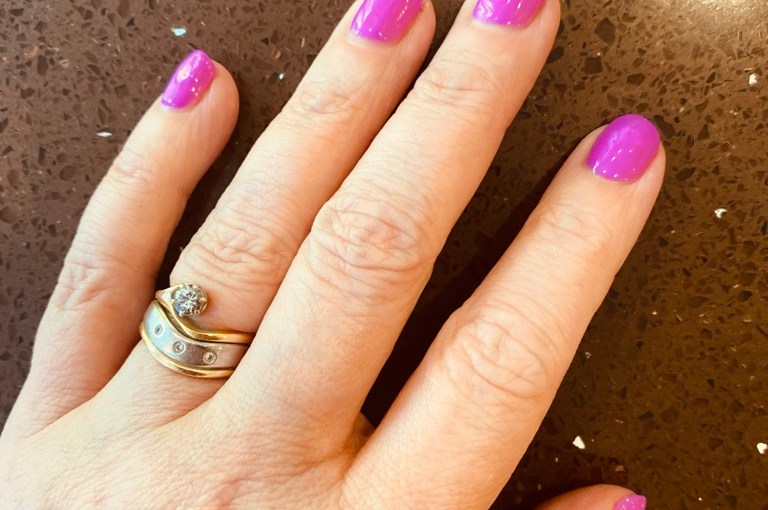
what a child looks like

This is a photo of me the summer I was 12, in 1976. My father’s abuse of me had started the previous year, when I was 11. I have cut them out of the shot for privacy’s sake, but my half brother (six years younger) and my half sister (four years younger) are sitting on the railings either side of me.

I read Ruth Beecher’s article in History Workshop this week with great interest and recognition. It is absolutely true that the overriding cultural assumptions in my experience — during the 70’s and 80’s — were that girls who were abused were ‘flirting’, ‘playing with their sexuality’ — and ‘irresistible’. This starting point informs everything about how my early disclosures failed to get my father arrested. At the time, regardless of the law, child sexual abuse was still treated as a ‘problem in the family’. He was not considered a perpetrator, and I was not considered a victim.

It is true that from the beginning my father behaved as if the abuse happened because I was ‘so beautiful’. That he ‘couldn’t resist’. He went to great lengths to normalise this environment: men were uncontrollably attracted to girls — whether grown or not. All girls would become women, and were therefore sexual beings from the start. He was ‘safe’ because he was my father — but you never knew who else was out there. I was best off with him, because he had my best interests at heart; he could ‘teach’ me.

I ask you to look closely at this photo. I am a kid. I am a child. My father has been abusing me — touching every part of my body in a sexual way — for a year. He has shown his own sexual arousal to me in a variety of ways. He has tried and failed to make me satisfy him sexually. All before I am 13. All when I am in a training bra, wearing braces, thick lensed glasses, had not yet started my periods — and have no idea how to even begin to want to be attractive sexually, in any way. All I want to do is play, read, write, dance, and have friends.

I’m not a ‘young woman’ here. I am a child. Child Sexual Abuse is NEVER about ‘temptation’.

By the time this photo is taken, I am already struggling to feel ‘like a child’. My father’s abuse is another layer of mistreatment over my history of instability and neglect. I want nothing more than to be a child, to be ‘like everyone else’, to not be worried all the time. My father makes this impossible though, once and for all. This is what survivors mean when we say our ‘childhoods were stolen’. Because they were.

After this summer, we move to from the US to the UK for a year, to Oxford, where my father is on sabbatical. That year was one of the worst for the abuse. From Learning to Survive:

***

Pretence

Perhaps it is more difficult for him to ‘say goodnight’ for a lengthy time in Oxford – [my stepmother] is likely right next door I suppose. So some nights he comes in. Some nights he doesn’t. Some nights he leaves the door open, some nights he closes it.

            I begin to realise that he is going through such elaborate motions – closing and opening doors, sticking his head in, or coming in completely, mornings or nights – in order to deceive [my stepmother]. To misdirect her. To always have something to say. Excuses. Observations. I begin to realise that I am part of his deception. I begin to feel implicated. I begin to feel guilty. I begin to feel like I am part of his betrayal of her.

            My chest aches all the time. Whenever he is in my room, I am so frightened she will walk in. She will make me leave, hate me, if she ever finds out.

            Yet he continues. He acts like he can’t control himself, like I am a creature he cannot – cannot – resist. Like this is all my fault.

            There are more nightgowns in England. Eventually I am forced to wear them, albeit with underwear. His access is nevertheless direct, swift, and, I see now, opportunistic. I cannot talk to keep him away. He gets frustrated; he doesn’t have much time. He won’t listen. He wants one thing.

            In March of that year, I turn 13.

Pact

I make a deal with myself:

            I will be a stone, cold and silent.

            Like a puppet, so he has to move me.

            I will be blank, like I’m dead.

            Like he’s touching a dead person.

silence is silencing

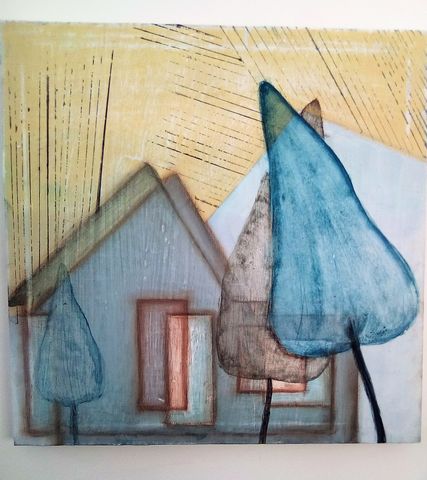
[image: untitled, Mark Rothko, 1966]

As a result of being silenced during sexual abuse and beyond, I now have an almost pathological and immediate response – physical and psychological – to feeling silenced. I shut down. Very quickly.

This paralysis, accompanied by feeling very low emotionally, hopeless, I now see as directly related to the silencing I have experienced but also somewhat enacted (to save my own pain) as a result of being abused in childhood. This is a very recent realisation — within the last six months, and 40 years after the abuse ended.

I bring this up now because I realise that I also fall silent when I feel I have no reason — no room — to speak. Silence is silencing, indeed. It feeds on itself.

This week I have found myself feeling silent/being silenced in light of the war in Ukraine. There is just so much sorrow, so much desperation, so much depravity at work there. The trauma from this, for those there and well beyond, will echo for generations. What a waste of human life and love. What tragedy. It has been hard to see my own and others’ struggles with Child Sexual Abuse as deserving space in all this.

But I guess the reality is precisely the opposite: that this is in fact where we all meet, on the level of lost lives. Man’s inhumanity to man.

Silence begets silence. It grows deeper and more opaque with time. We are duty and morally bound to break silences, to prevent loss of life and living, whether spiritual or literal.

Instead of my own work this week, here’s a poem that runs on a loop in my head, and has done for many years. We all have a job to do here, folks.

Harlem

BY LANGSTON HUGHES

What happens to a dream deferred?

      Does it dry up

      like a raisin in the sun?

      Or fester like a sore—

      And then run?

      Does it stink like rotten meat?

      Or crust and sugar over—

      like a syrupy sweet?

      Maybe it just sags

      like a heavy load.

Or does it explode?

forgiveness and complicity

[image: Petra Lea https://lelu-designs.mysupadupa.com/collections/k-collection%5D

Generally when we talk about ‘forgiving’ in Child Sexual Abuse, we mean ‘forgiving our abusers’ for their criminal actions. However a conversation on Twitter this week got me started thinking about forgiveness at large, in general… forgiveness around the whole situation which occasioned the abuse.

This is a fraught area. On one hand there are always family members etc who say they had no idea the abuse was happening. On the other hand are those who say they ‘suspected’. And let’s say we have a third hand; on this third hand I’d place the thought that the family members did not look and did not see.

I have already entered a contentious place, I know. Because what do I know about peoples’ lives while children are being abused close by? Nothing, I’ll admit. Because I was one of those children being abused.

It wasn’t my job to understand or know what the adults around me were going through that prevented them from protecting me. I suspect that in my case the household was so dysfunctional that the adults were completely shut off from each other.

So what about school? Dance teachers? Friends’ parents? There is a lot of work being done now around ‘signs’ of sexual abuse to look out for in children. And they are not necessarily what you think (see also the work of The Flying Child Project). So there is I guess a degree to which some adults — adults at a distance — might be forgiven for not noticing abuse: they didn’t know what to look for.

I return though to the family adults. In my case, there was only one other. My father, as I’ve mentioned elsewhere, drove wedges and divided the family from other family members, so there was only my stepmother in the house, ever. So there was no one else to take notice of his behaviour. No one to ‘call out’ the family dynamics, which were undoubtably skewed.

Can you remain angry with or unforgiving of those who by all appearances ‘didn’t know better’? Is ignorance a defence? Maybe. Is fear for your livelihood a defence? Maybe. Is fear for your other children a defence? Maybe.

But now I’m feeling on a dark path. Is there no one who should have been responsible? Is there no one who is duty-bound to take care of us, no matter what? Don’t surrounding adults, as expressed on Twitter this week, at some point become complicit if they do nothing?

After years of thinking and feeling all this through, I have arrived at my own conclusions. Those that are right for me. And they are: I cannot forgive my father for his abuse of me; and I cannot forgive my stepmother for not looking after me.

These two conclusions look the same, but they are arrived at differently.

  1. if my father had accepted responsibility for the abuse, and been held accountable for his abuse of me, I believe I STILL would not forgive him. The damage done to my life is irreparable, and ultimately HE made the decision to inflict it. Nothing can change this.
  2. however, if my stepmother had ever expressed remorse, had broken ranks, had asked to be forgiven, had apologised, or had spoken with me about her (unknowing or not) complicity in my father’s abuse of me — I believe I could have forgiven her over time. I recognise that she is a victim too, of something. As it stands however, none of this happened.

Forgiveness is a difficult term. It implies ‘all good’. But to some (including me) it also implies ‘resolution’, ‘forgetting’, ‘integration’. My anger and sorrow at losing parts of my childhood mean that I cannot resolve this, and nor do I want to ‘integrate’ the abuse into my life. On the contrary, I want it far away. But I can’t and won’t forget. Because it’s with me every day.

In the best world, forgiveness also implies ‘understanding’. And I suppose this is where I can imagine ‘meeting’ adults who became complicit in child sexual abuse. Showing understanding of each other’s situation may encourage education, and begin to create situations where CSA cannot happen. I am not sure, and I feel like I need some possibly unattainable ‘proof’ of this — but I do believe in education breaking silences of all sorts. And breaking silence breaks CSA. In theory, it’s a simple equation.

This excerpt from my memoir LEAVING LOCUST AVENUE looks at my stepmother’s role, and how I try (and fail) to understand.

***

[Stepmother]

There is just so much I do not, and never, understand. So many questions I do not ask, so much unsaid. Unacknowledged.

            My father implies that [my stepmother] will be angry. He says best to keep all of this between us. So I do. I am, as ever, so very afraid of anger, of disapproval.

            Everything needs to keep being alright. I must never show unhappiness. Never stop talking, but never talk back. Never stop doing well in school.

            It is not difficult for my father to control what I say or do. My time there is conditional, after all. And I am a quick learner; soon I am convinced that making any fuss at all will lead to terrible trouble. Then where will I go? What will I do? I am capable – my grandparents tell me – so I can do this. I can bear it. And I do.

            Over the years in Blacksburg I feel I watch [my stepmother] become unhappy, and see that unhappiness turn inward, turn to silence. I know very quickly that she doesn’t really like me, doesn’t like me being there. That she probably doesn’t love me. Later, when I become good at telling stories, I can make her laugh – a lot. And I enjoy that. She also believes in education, thinks I’m a good writer, and, along with wonderful English teachers, is formative in my learning to write with strength and economy. I think she is fond of me. But I don’t ever remember feeling love from her. I don’t remember any physical affection.

[My stepmother] is, incredibly it seems now, a trained social worker. And later goes to university part time to study for, and receive, her MBA, which is no mean feat. And yet: my best guess is that she is as cowed by my father and his control as I am, as eventually [my sister] and [brother] are to an extent. She lives, I think, around him. My father can fly into rages if his keys are in the wrong place. If dinner isn’t ready on time. If no one knows the answer to a particular maths question. He can be silent and rude. He does not tolerate silliness. He does not like any of our friends, as far as I can gather. After a first flurry, there are almost no dinner parties, and as far as I know they never go anywhere together. No holidays, no nights out. He doesn’t seem to like anybody. He’s awkward, and when he feels left out, of anything, he is angry.

            Saying all that: for several years he comes to my room nearly every night and she never does so, not once. During this time she never says good night to me. For several years he stays in my room for a considerable time. From when I am eleven years old. Eleven!

            What is she doing? What is she thinking?

            I wonder if I have a sense of what she may be feeling. And that is: excluded. The more attention he pays me, perhaps the less he pays her. The more he values me, perhaps the less he values her. This equation should not even exist – we are not equal, [my stepmother] and I, we are not factors x and y working across the = of my father – but for her, this seems the case. Years later when we are all (briefly) in therapy, after [my stepmother] ‘knows’, we are on our way back from the therapist’s office, and I am in the back seat, trying not to cry. I am 17. I am upset. And [she] swings around to me, calling over her shoulder: ‘How do you think I feel? I’m the one married to the man!’.

            I think, perhaps from early on, long before the abuse starts, I function in the family as ‘other’, as ‘different’. And so, perhaps, it is not such a leap then to turn me into ‘the other woman’, even though, of course, I am a child.

            I can work my way through all of this, all of the explanations and mitigations, here now, as a grown up. But still, as I write, my heart pounds, and I feel that inner shivering which only comes with emotion as it forces its way to the surface: [my stepmother] has the chance to stop it, over and over. Night after night. Day after day. For years. She has so many opportunities to look after me. And I am so willing to be looked after; I need looking after.

            But she doesn’t. And I don’t know how to forgive her anymore.

grief

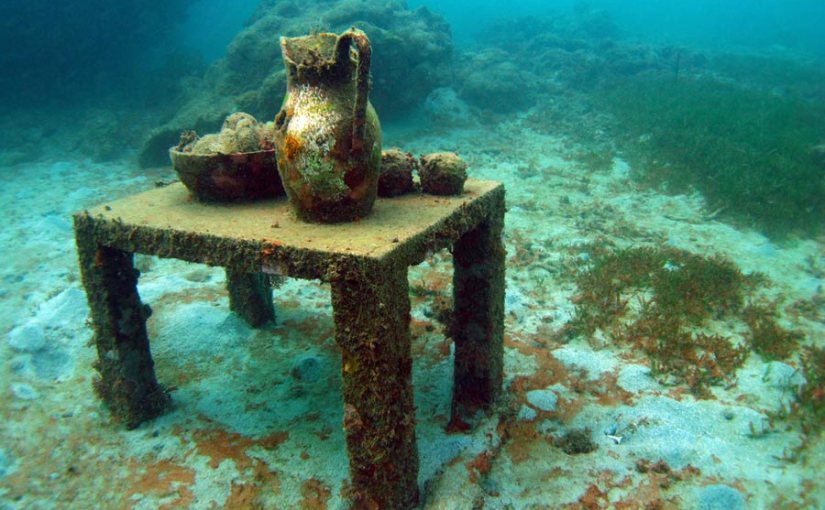
[image: The UnStill Life, at Molinere Underwater Sculpture Park, Grenada]

Planning our son’s wedding, I am more aware than ever of the huge holes I have in my own family. Both my husband and my future daughter-in-law have large, cohesive families, with marriages and relationships which have lasted, lots of children, and no more than a ‘usual’ sprinkling of the inevitable dysfunction.

My blood family — what is left of it — are disparate, spread all over the US, in tiny pockets.

I mentioned in my last post the way that my father drove wedges between family members, both immediate and extended. This is a typical abuser tactic for maintaining the silence of the victim, and control over ‘information’ generally. An abuser needs to contain any possibility of the abuse being revealed — often not because he (in my case) necessarily believes it ‘wrong’ (though it obviously is), but because he believes the relationship is so ‘special’ that no one will ‘understand’.

The end result is a lot of missing relationships. When I think of ‘wedges’ I think of pieces of pie — and so when I imagine the ‘wedges’ my father drove between us all removed (which they are now in theory), I still see the spaces where the wedges sat. Those pieces of pie will be missing forever. And not just in my life, but in my whole family’s lives — my brother’s and sister’s, my step mother’s, my aunt’s and her children’s, my cousins’, and even my grandparents’, who knew about his abuse of me toward the ends of their lives. They too must have felt the terrible loss, and the lies: their son was a criminal, though never brought to justice. And everyone could see — everyone — how all of our lives had been misshapen and distorted, like trees forced to grow in high winds, over time.

When my father died in 2018, unexpectedly, the focus of the dysfunction died with him. We were all left with empty spaces, untethered ends, gaps now thrown into sharp relief. There was no memorial or funeral.

I know my brother and sister found grieving for my father complicated, and I cannot speak for them in any deep way. I can however speak for myself. The layered grief of past loss — what never was — with present loss — what isn’t now — with future loss — what will never be, for a time threw my own life into chaos, again. Loss upon loss upon loss, again and forever.

I only really acknowledged the wholesale destruction my father wrecked on all of our lives after he died. I only really felt the gaps, the collateral yet irreparable chasms that he and his actions created between us all, then.

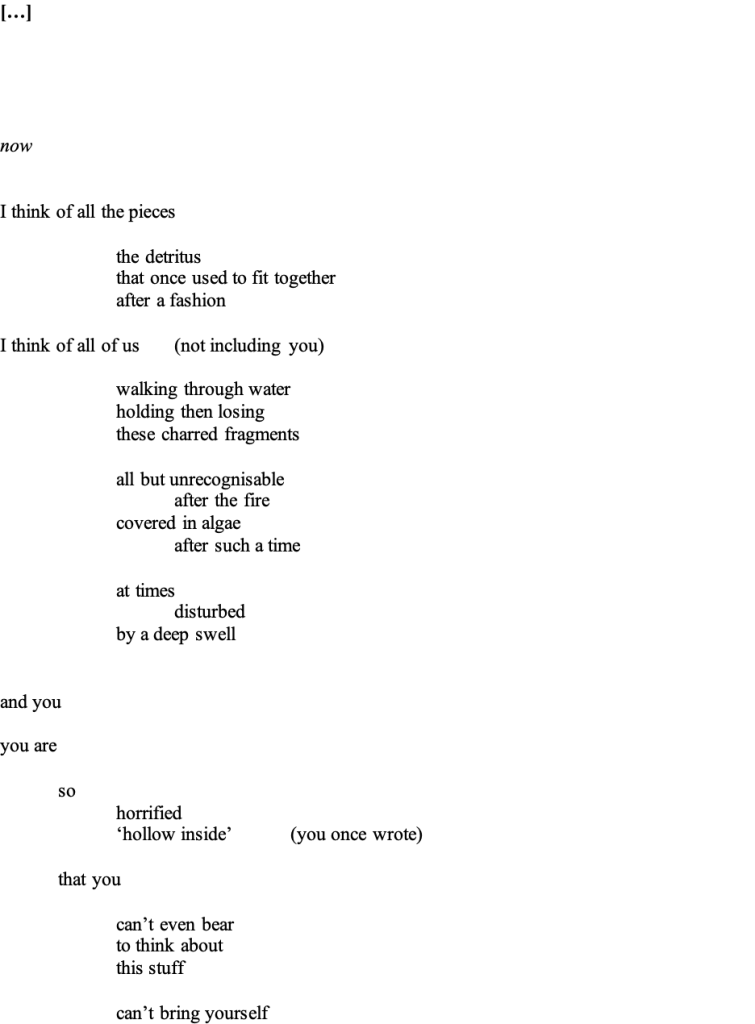
It’s easier to feel a righteous and focused anger at someone who’s alive. It was for me, anyway. When my father died, my fierce and full anger at him did too. What took its place in some ways feels worse: bitterness, hopelessness, and a useless regret — not for my own actions (I truly know I did the best I could), but for the incredibly incompetent and deluded person he turned out to be. He could have done so much more to help his family find ways through, and he didn’t. He could have filled in some chasms, but he didn’t. Instead, he just left us all here, forever picking up his ‘charred’ pieces.

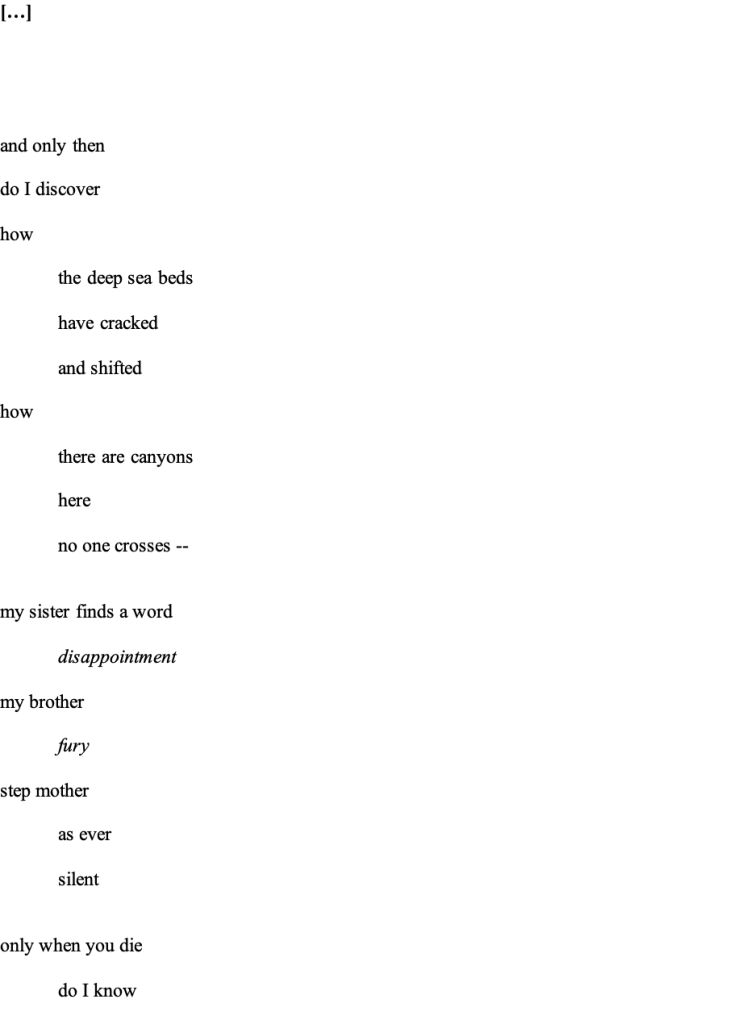
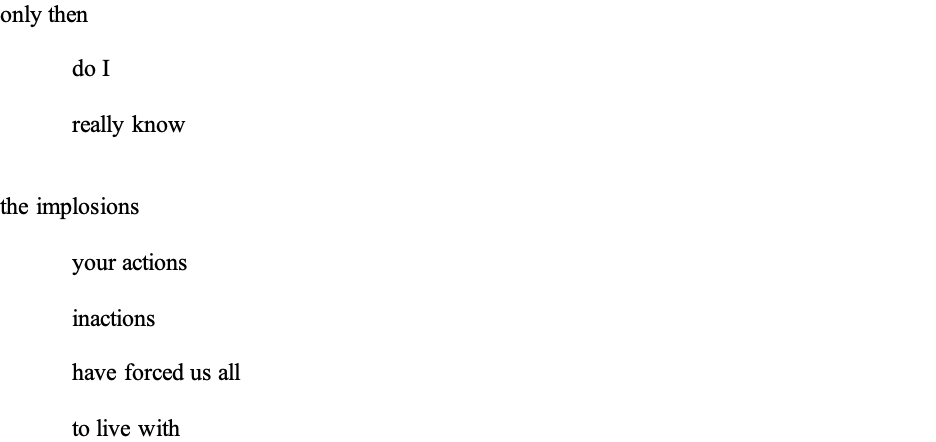
Part 4 of my memoir Learning to Survive is a collection of 16 poems written while my father was dying, and directly after his death. I’m pasting three here. They are untitled, so this […] denotes a new one. In my writing life, poetry has been what emerges when I can only see the world in fragments, and so it was this time too.

***

***

***

damaged goods

[painting: Hope Within, by Kirsten Bailey]

Sexual assault of any kind can make the victim feel dirty. If we dig a bit deeper, we arrive at the nature of this ‘dirtiness’: that is, the body feels trespassed upon, invaded. No longer our own private property, or in our control; the body becomes someone else’s. Reclaiming the body from assault can be a long and confusing process: this is my body, supposedly, but why does it not feel like mine? Or why do I hate it?

I think it’s important to acknowledge and accept that Child Sexual Abuse is freighted with all this — this body foreignness — to an almost overwhelming degree. Because the child does not yet have a body identity when the abuse happens. The abused child’s sense of self is very much still forming: what do I look like? what do I want? what do I not like or want? The child without a body becomes an adult without a body that feels like theirs.

A victim of CSA is forced to figure out their body — including its physical responses, its capacities, its foibles and pleasures — already shackled with the knowledge that their body has never felt like theirs.

The incidence of eating disorders is very high in survivors of CSA, as is the incidence of self harm. It’s not rocket science to see where this urge to destroy the self might come from: it comes from the even stronger urge to get some control, to have some impact upon this alien body that isn’t ours.

As in so many things around my recovery, I have been lucky. I had my dance, which meant I never lost my body entirely, and I found an amazing partner young, when I was only 21. Yet it has taken decades of slow work to feel comfortable with intimacy, with my body. To learn to say No thank you. To learn that others do not have ‘rights’ to my body, no matter how I dress or behave. It has taken decades to reclaim my body.

The psychological knock-on of feeling like ‘damaged goods’ is shame. After all, ‘allowing’ someone to interfere with your body must be your fault, right? ‘You should be ashamed of yourself.’

This shame, the sense of something deep down being wrong, and being your fault, for me is never far away. If I have a disappointment of some sort, Shame says ‘what did you expect?’ followed by ‘it was bound to mess up, because you will never be like everyone else’. You are unworthy. This shame has held me back in my career, and in my life. It has also kept me from enjoying some moments in my life fully, like the arrival of my first child.

This excerpt from my memoir Learning to Survive traces my pregnancies, and some of my early psychological complexities as a survivor around shame, feeling unworthy, expecting disaster, and having children.

*

un/made

I live for a year in Norwich doing my MA, and R meanwhile has landed funding to do a year at IRCAM in Paris. We are apart again, but spend a fortune seeing each other every other week so survive it quite well. It helps too that his father lives in Norwich; I have family again. Eventually I write stories, publish a couple, and in time complete my first novel – which, I now see, is the first full-length attempt to write this book.

            In 1992 R secures an academic job in Canterbury. R’s father helps us buy a house, and we move there with relief and energy; we both know this is the new chapter of our lives, and relish it. I have teaching work in Norwich and in Kent, and R very quickly establishes himself as a fine teacher of music composition. We make close friends.

            We also start trying to have children. I have always – despite everything – known I want a family. R is less committed, but fortunately I don’t believe him; as it turns out, he becomes the most natural parent I have ever witnessed, even though our wait is a long one.

            In the 18 months it takes me to become pregnant the first time, I have convinced myself that something is wrong. That I am wrong. And this feels expected: of course I am. We are only 28, but have all the tests, all of which come back borderline everything. As is so often the case, we start to give up – and suddenly we are pregnant. I begin to allow myself to believe everything will be okay. R is overjoyed; I try not to panic.

            Almost immediately I begin spotting. And at nine weeks, I miscarry. The grief is intense, the loss crushing. I remember sitting in the play room in R’s father’s house that Christmas, watching the other grandchildren, tight with tears, and R’s father resting his hand on my shoulder, deep in understanding.

I dream about babies for weeks. In the one I remember most vividly, I have three babies, all newborn. In the dream, I lose them and begin frantically searching the house. They are naked, vulnerable. At last I find them in a kitchen cupboard, with all the glass jars and odds and ends. One baby is fine, called Laura. Another has Down’s Syndrome, and another – I don’t look closely – is shrivelled, mewing like a cat. I leave these last two in the cupboard. The memory of this dream, of losing or abandoning two babies, triggers my worst moments in the grief following a second miscarriage years later.

            However, after this first miscarriage, everyone says, all the doctors, that it will be easier to get pregnant the next time around. They are wrong. It takes much longer, two and a half years, and in that time I retreat to an old place. This old feeling, so familiar, says that I am fundamentally flawed, different. That I am not like other women: I am damaged.

            Indeed. As each month ticks by, the feeling becomes more entrenched, the evidence mounting. I am not going to get what I want, and this should come as absolutely no surprise. I don’t, of course, deserve to. I should be happy with what I have.

            When I finally, by some miracle it seems, and with the help of Clomid, fall pregnant again, my fear of losing the baby is almost paralysing. I feel convinced of something no one else will believe: that I am incapable of carrying a baby to term. As the days tick by, I force myself to act as if this is all perfectly normal. In secret, I create a mantra for myself: I am afraid of being afraid. I steel myself never to look at my underwear for signs of bleeding.

            In this case however, nature manages to plough its furrow regardless. On 10 March, 1996, Eliot emerges, healthy and huge. Everyone celebrates, but I am numb with surprise. This numbness takes weeks to dissipate, and it is months, even years, before I believe, truly believe, that this is real, that I deserve him, and that I am not living in the middle of another disaster waiting to happen.

            Eliot is the most amazing baby and toddler. Of course. He is bright, kind, funny. When he is two we begin to try for another. And after another year of trying, I fall pregnant, only to have another miscarriage, at nine weeks again. This loss, if anything, is deeper and harder than the first. I am useless, incapable, and will not get lucky again. Who do I think I am?

            We decide to keep going, one more time. This time I am put onto Clomid quicker, and although I don’t conceive on it, I conceive shortly afterward. However, as with the other pregnancies, I begin to spot at six weeks. In full panic mode, I go straight to the hospital, where an internal scan shows a heartbeat; this is a relief, but also terrifying, as I now know if I lose it – I am losing a viable baby. I am reassured, placed on aspirin, just in case there’s a blood clotting issue, and within two days, the spotting stops. To their credit, the midwives at the Foetal Medicine Unit recognise that I am nearly incapacitated by fear, and I have a scan every week for another three months, suffering terrible morning sickness, and sky-high anxiety, all at once. At 20 weeks, my usual midwife says to me ‘Now do you believe you are having this baby?’, and we manage to laugh. I have to believe her. Nineteen weeks later another huge, healthy – and every bit as bright and kind — baby emerges via Caesarean, Max.

amnesia

Another fairly common characteristic of trauma memory and (C)PTSD is amnesia. Forgetting.

I wonder if this sounds like a good thing. Maybe it does? After all, if you forget aspects of abuse, it won’t bother you, right? Wrong.

And here’s why:

  1. The body keeps the score, regardless of what you remember and what you don’t. There are plenty of survivors who only remember what happened to them as they explore their unhappiness, their suicidal ideation, or why oh why do I see flash images of something I can’t place? Just because you don’t remember something clearly doesn’t mean it hasn’t happened. And hasn’t done damage. For instance, I have a solid idea of the first couple of episodes of actual sexual abuse — I was 11. And I am pretty sure that it went on until I was around 15. Yet even then I can only remember glimpses of moments — an action, a positions, a time of day, a pair of trousers, a sound — out of episodes which will have lasted perhaps 15 – 30 minutes each, and happened dozens of times. This type of remembering is more than fragmentation: the mind forces itself entirely to forget.
  2. The mind forgets too what might have been positive, or good to remember. The mind forgets times when you might have been powerful, or successful. It might forget the loyalty of your friends, or in my case, even that you had any. The mind is — depressingly, and distressingly — indiscriminate in its forgetting sometimes. There’s probably a neurological reason for this strange thing — forgetting the potentially good as well as the self-evidently bad. All I really know is that my whole childhood has stretches of absolutely nothing at all. Blankness, regardless of what might have happened in that space.

In my memoir Learning to Survive I call these blank passages of time ’empty rooms’. That’s what they feel and look like when I think of them: grey-scale, entirely bare, deserted, with wind blowing through them. They are all over the place. And I can’t help but feel them as losses — examples of yet more helpless loss of what is rightly mine.

This excerpt captures the nature of these blank passages, and one in particular which I still find startling: I told people for nearly 40 years that I did not attend my high school graduation — but then I discover something that refutes that.

I am 17 here, and living with my mother for my final year of high school. It’s a different high school, in a different town, and I am only there for eight months.

*

so far

Aside from the smoking block, the creative writing magazine, and drama, virtually nothing else in my time at Patrick Henry [High School] sticks. My group of friends is important to me – even if I am aware from the start that soon I am leaving – but I remember nothing about my classes, what I learn, if I learn, what I study. Not even English. I do know, however, that I refuse to undertake Advanced Placement classes, and also refuse to take the exams, even though doing well in them will remove some college credit requirements. I feel certain that the school merely wants the kudos – I have no idea if this is true – and I take heart from there being no one else at Patrick Henry going for AP. So I hold firm, perhaps – the jury is out – cutting off my nose to spite my face.

            In June 1982 I graduate second in my class of around 500 students. I remember nothing about the ceremony itself – not the location, the gowns, the announcements, the walk across stage – nothing, and have always assumed (and told everyone) that I did not attend. Except I must have, because three days ago I discover two copies of the graduation programme in the manila folder [my sister] passed to me from [my stepmother] – all my paperwork, such as it is, from my 13 years with them.

            The programme shows that I am the top graduating woman in my class, and my sister tells me that the whole family was there: my father, my stepmother, my mother, and my siblings. …….. I wish I could remember being there, remember taking pleasure in it — anything about it at all — but as ever, when the wind blows, it sweeps everything away in its path.

And so the academic year ends. I get the first of many jobs in restaurants, at first as dishwasher, then soon move up to wait staff. My mother is delighted and I love the work; I am earning my own money and am able to save. I am going back to Blacksburg a little more, still uncomfortably, but we all, I think, seem to reach an unspoken truce. And no one is the wiser.

            In August it is time for me to go to Oberlin [College]. Inexplicably, it seems to me now, [my stepmother] takes me there. Together we make the eight-hour journey with a full car, after which I will start the rest of my life. We listen to The Beatles, and I cry all the way through ‘The Long and Winding Road’, hiding my tears by looking out the window. I allow myself to feel homeless then, anchorless, all belief fading, going from who knows what to who knows where. I don’t know if I’m going to be okay. I wonder if I am wrong: if my old life, after all, is better than the one I am going to. I wonder if I will ever come back. If I will ever really be happy.

trauma memory

Three nights ago I was hounded by bouts of sleeplessness. This happens infrequently now, usually as a precursor to a migraine, and such has been the case alas. I usually listen to the radio when life is like this — podcasts, World Service, etc.

After much depressing news, I caught a podcast hosted by Steven Pinker, called Think with Pinker. This episode, ‘Sentence first, verdict after’, set out to look at cognitive concerns around juries and judges — specifically, language and memory.

Normally, I have a HUGE amount of time for Dr Pinker. He has done some fascinating work around language acquisition, computational intelligence, and has been a respected media intellectual for some years now. However, lying there unable to sleep….I just got madder and madder.

His main guest was Dr Elizabeth Loftus, a renowned cognitive psychologist, best known for her work in the area of memory and recovered memory. Her studies show pretty unequivocally that it is possible to ‘implant’ some kinds of memories in children especially (though they may be other conclusions to be drawn from them of course — perhaps just that adults can get children to believe lies?). While there are many questions about her work and how it may intersect with her own history (here is a fascinating and thorough New Yorker piece on her work and her personal history), there is no doubt that she is an influential expert in the area of ‘false memory’, called upon often by the defence in trials of the likes of Harvey Weinstein and Ghislaine Maxwell.

To be fair, I’m guessing that the podcast intended to control the conversation into only speaking about how necessary it is to be careful with language — to watch how questions and cross-questions are framed and asked when it comes to witnesses and victims. This makes sense: it’s good to be alert to influencing anyone on the stand.

But the programme was too dismissive for my liking. Too categorical. Loftus and Pinker laughed about how one of her studies convinced subjects that they’d been to Disneyland, when they hadn’t. One even reported having seen Bugs Bunny — impossible, because Bugs Bunny is not part of the Disney world.

Neither of them mentioned the very specific — and totally UNfunny situation of trials involving sexual abuse and sexual assault. Neither of them mentioned the fact that Dr Loftus is the queen of taking the stand for the defence in these cases — and testifying that memories can be implanted. And that therefore the victim’s recall of events and accusations may well be so unreliable as to be ‘untrue’.

Neither of them took any account of the questions surrounding Loftus’ work and traumatic experiences (see The New Yorker article above). Or mentioned that implanting traumatic memories has never been successful. And that is because it is impossible to recreate a sufficiently traumatic environment, context or individual situation. Trauma has its own rules.

We now know that not only are memories themselves different from each other (self evidently), but the creation and storage of these trauma memories are also different. There are many studies and articles available on the formation and characteristics (the neuroscience) of trauma memory; here is a snippet of a particularly well researched piece:

“Much of what is remembered of a traumatic or threatening event functions as if existing in separate islands of memory.

Information encoding and storage are impaired for aspects of the experiences that are not considered essential for survival or are of little emotional importance. This includes the sequence of events as well as peripheral details. This often results in a disorganized and incomplete narrative memory.

This is immensely important for how victims of trauma are interviewed. The primary emphasis of the sexual assault police interview should therefore be on the sensory, emotional memories that the victim has encoded and remembered rather than expecting the victim to give a narrative with a chronology.”

Trauma memory is different. It cannot be accessed like other types of memory, nor can memories be truly ‘planted’. The area of the brain into which the implanting would have to happen is too primal, and not open to suggestion.

The notion of memory — in all of its layers and mutability — is not solid at the best of times. But we must not confuse ‘normal’ memory with trauma memory. We have to establish respectful ways of questioning victims and witnesses who have been traumatised (or allegedly so) without risking re-traumatisation or further silencing. Sexual abuse and domestic abuse are SO common that we simply must find ways of doing this right. Discrediting memories, and/or eliding testimony into False Memory, fatally disadvantage actual victims and survivors — who are disproportionately penalised for having memories that behave differently, and which do so completely out of their control.

My memoir Learning to Survive reflects trauma memory at work in its structure, its gaps, and its fragmentation. I recognise and acknowledge these irregularities as the book progresses, but they are my reality, my memory, and ultimately they shape my life. This excerpt details what I can remember, and what I can’t, around an early traumatic sexual assault.

*

L is for Laundry Room

Close to the pool at one of the apartment blocks, there is a laundry room. I’ve been in it plenty of times. It’s a long thin room with washers and dryers along both sides: you open up the top, load in the clothes and close it, then line up the quarters in the sliding tray, push it in with a satisfying clunk. Many, many times I have helped my mother load up and push in the metal tray. You have to get it just right, but when it goes in, the water comes on immediately, a great rush into the drum of the machine.

            My friend Deidre and I are hanging around, as usual. It is summer. We wander past the laundry room, on our way somewhere else. There’s a man in there, and he steps out, calls after us, ‘Hey, can you help me?’

            We turn around. Deidre is wary, but I am not. Together we go back to him. He’s a big man, older, dressed in overalls like Granddaddy wears when he’s gardening or working on the pick-up truck. But he’s not as old as him, he’s more like an old father. He says, ‘Thanks. It’s just that I can’t get this to work, I don’t know how it works. Do you need quarters?’

            We are standing at the door, in shorts, barefoot and barelegged as usual, five years old. It’s darker in the room. We don’t say anything.

            ‘How many quarters do you need?’ he goes on. Finally I answer. ‘Two,’ I say.

            ‘Oh well,’ he says, ‘I’ve got two quarters. Could you show me how to work it?’

            Somehow I am moving into the room, and he lifts me up to put the quarters in. I push the slide in, and the wash starts. He puts me down. The moment of fear, the stepping forward, has passed, and I turn to leave.

            ‘Thank you,’ he says, then, as if it’s an afterthought, ‘oh hey, do you like Coke?’

            ‘Yes,’ I say.

            ‘Do you want one?’ he says.

            I do. He hasn’t given me anything for helping him, and I wonder if he’s going to give me a Coke for it. I nod.

            From now on, I don’t know what happens to Deidre, I only know what happens to me. I step forward again, and the man shuts the door. He says he’s going to put something over my eyes, then he’s going to give me a Coke. I am blindfolded. Fear begins to press at me, panic fluttering, but I don’t move. I don’t want him to see I am afraid. I tell myself that whatever is happening will be over, sometime it will be over.

            Something goes into my mouth. It doesn’t taste like coke. It tastes and feels terrible, but it is over quickly. I spit it out. I remember the sound of a zipper. I remember not looking at him when the blindfold comes off, and walking calmly out of the door, still not wanting to be afraid, the glass bottle of Coke in my hand.

            I sense that Deidre is with me, but I could be wrong. Perhaps she runs away, to find someone, to tell them, before the door is closed. Or perhaps she is blindfolded too.

            Some conversation comes up later, with older children or even with mothers, not my own. Someone asks me if I’ve seen anything, if anything has happened. ‘No,’ I say. I lie. I know I have something to hide. I’ve been greedy.

even the ‘good’ goes away

For many years I tried to ‘reconcile’ the parts of my father who was my abuser with the parts that weren’t. I tried to hold onto the ‘good’ parts. I tried to look past the ‘bad’. Because without doubt, he had much to offer to the world.

Like probably all survivors of sexual abuse, I am hugely relieved to hear of Ghislaine Maxwell’s conviction for sex trafficking girls. Regardless of her no doubt manifold ‘good’ qualities, her ‘bad’ qualities, her crimes, have taken priority. She has been held accountable.

Child Sexual Abuse (CSA) can ruin victims’ lives. Sexual abuse is an extraordinarily damaging crime. Its effects bleed into everything. There is no way to look past it, either in your life or in the life of someone you love. The blame lies squarely with the perpetrator, and absolutely nowhere else. Sexual abuse is so heinous that it negates whatever else a perpetrator might have done in their lives. This may feel ‘unfair’ or ‘out of proportion’ to those who love or respect the perpetrators. But dealing with being a victim of sexual abuse is a lifelong sentence. Being sexually abused doesn’t ‘clear up’. It is never ‘out of sight’. There are ways to tackle its effects which are helpful, and which develop good tools for living. But trauma changes the wiring in the body; it changes us physiologically. As survivors, we are forever altered.

Perpetrators’ lives — no matter how much ‘good’ they do in the world — deserve likewise to be forever changed. The decisions they made, and the damage from them, are irreparable.

From Learning to Survive, writing about the loss of anything good to do with my father.

***

Good Things

After the age of about 11, I cannot remember a single decent time with him. That is, one that isn’t inflected with fear, or repulsion, wondering what his next move will be. Wondering how he will use any moment to bring me closer to him, to be with him, later. As I look back, I think I may experience some moments of joy, in theory – like listening to music with him, peering through a telescope, arriving at the correct answer to a maths problem together – but none of them exist separately for long. I cannot tease them apart from everything else; I cannot make them stand up strong. They are never far from everything else I want to forget. They become meaningless.

            So I forget them all. I forget any possibility of good in him, and it never comes back. That room, like so many, is entirely empty.

[photo Martin Muir]

shifting trauma

This is a photo of me at about 16. I have no memory of it being taken, and no idea for what it was taken. One of my children found it in my high school yearbook. It was taken, it seems, to highlight my dance. There’s an article that goes with it. My memory loss from abuse is indiscriminate: I have forgotten a number of ‘good’ things as well as a number of ‘bad’ things. I have holes in my memory all over the place. In my memoir I call them ’empty rooms’. So I have an empty room around this photo.

I am, though, a die-hard dancer, and an accomplished one, it seems. I danced from age seven or eight until my late 40’s, with never more than a few months’ break. I pitched up at dance schools in London and Norwich UK, danced all the way through university in the US, through having children, and working. Indeed, I often performed yearly, with other adult dancers. And WHAT a blast we had!

I have always known that dance was somehow vital for me. I knew I was happy doing it. I knew that its lyricism and rhythm informed my writing over decades.

What I didn’t know — until literally October 2021, practically yesterday — was that dance shifts my trauma, and always has done.

I am now 57 years old. I haven’t been able to dance in nearly a decade. There are physical reasons for this: namely, dodgy joints from hypermobility, and early onset arthritis. I have, however, remained fit. And for the last 10 years, I pretty much thought it was FITNESS that dance provided for me. Fitness and moving to music. I really never thought much beyond that.

Fast forward to summer ’21. Like a lot of people, I’ve had a tough, tough 18 months. Two close bereavements, a second hip replacement, one of my children having a serious accident and then a major operation. My writing stalled. And three lockdowns. I remained fit by walking (after recovery from my op), but I felt trapped. I was static in some fundamental way. And I spiralled down, really for the first time in my life. I landed in a mild — but frightening — depression. The more paralysed I felt, the more debilitated I became.

I am fortunate to have a brilliant therapist ‘on tap’. I have turned to her numerous times over the last few years, and so this time, at my husband’s insistent urging (I was all ‘no one can do anything; I’m going to feel like this forever’) — I contacted her again.

One of her first questions was ‘what has made you the happiest in the last two weeks?’. I had one answer, that I was rather embarrassed about: watching Strictly Come Dancing.

The unsettling thing is — she didn’t even know I had been such a dancer. She didn’t know that I danced all the way through the abuse. That I never felt threatened while dancing, I never felt watched. I always but always felt inside my body. It was my space. It was my thing. Time and again, I found myself gushing to her, dance has been transcendent for me. It takes me entirely into my body, and entirely elsewhere, at once. But I had never articulated this to her; indeed, I didn’t really know it myself.

It turns out that dance, over and over, has re-centred me, locating my ‘core self’ again and again. Because one thing I do know: I have preserved my core self. In that I have been extremely, extremely lucky. I just didn’t know that dance harboured and protected it.

First, I agreed with my therapist to watch as much dance as I wanted, to let that happen and indulge in that, instead of — as I was feeling — thinking of it as kind of a fun waste of time. I needed to let my body experience it.

Second, my best bae Nancy suggested we go line dancing (this video is a dance I actually do in class). We went to the first one together. And, as those of you who follow me on FB know: I WAS INSTANTLY HOOKED. Line dancing is not high impact, doesn’t involve grasping a barre (thumb arthritis, ugh), or going up on half point much (toe arthritis, double ugh!). What it does involve is my brain and focus (32 or 64 steps in sequence, repeated to each side of the room in various combinations, for five minutes at a time) and my intense, now realised, love of being inside my body and moving through music.

Along with talking therapy, line dancing has proved transformative — and yes transcendent — these last two months. I now do it twice a week, and my biggest fear over this new Covid wave is that line dancing will stop. I feel almost like I could give up everything but that. Here’s hoping.

I’m writing about this now for several reasons. First: it’s the holiday season, and we all need to pay attention, if we can, to what supports us rather than depletes us. Holidays are not fun for everyone.

Second, I saw a genius video about how The Body Keeps the Score when it comes to trauma. Yes, there is a brilliant book about this. And here’s the video that brought it home to me: The Body Keeps the Score by Knowledge is Power

Illustrated like this, I now see so clearly that dance shifts trauma for me. It moves it to a place where it doesn’t haunt me or stay in the present. It shifts the trauma. The last two years in particular have seen my body in an unfamiliar and unhealthy stasis. And the old and new trauma stacked up. It had nowhere to go, and I didn’t even know how to begin to shift it.

Third, I read this brilliant blog yesterday on the Epione page, Co-Regulation in Times of Covid by Felicity Douglas (twitter @felicitydougie). About how trauma sticks around, and about the kind of unabashed deep care you need to do to shift it around to something you can live with. How it may circle back, the same or differently, and how we as survivors can’t really be ‘fixed’. How the nervous system — the body — is something we can’t always know or take account of. It does what it does. Indeed, my therapist really feels that everything unravelled for me this last summer as much due to past stresses as to more present ones. I had been living with high cortisol and adrenaline levels for years. YEARS. Like the author of this blog: my nervous system just gave up the ghost.

So. As we go into this time of year — so difficult and strange for so many — I just want to say: your body keeps the score. Find, if you can, what nourishes you. What brings you pure joy, however fleeting. And do more of it. Do it mindfully. Make space for it. Cherish it. And your ever-shifting body will return the favour.

***

This is the first mention of dance in my memoir, Learning to Survive: an ABC of Abuse:

Ballet

Soon after arriving in Virginia [aged six], I begin to dance. Has someone mentioned my adventures with the Pink Panther theme dance class back when I was living with my mother? Does my father recall that my mother loves to dance?

            I do not know when or how I realise I am good at it. And I never realise, while living in my father’s house anyway, the purpose it comes to serve. It provides rhythm, shape to my days. I do it away from the family. It is mine. It is my body.

            I inhabit that room. I make another house. And I live there, in one form or another, for as long as I dance, for 40 years.

I saw his face

Over the years I’ve had plenty of nightmares. Shadowy figures, fear of doors opening, lying on my back suffocating. Plenty of those. And only with the recent spate of them, in the last six months or so, have I really acknowledged that all of them are from being abused. As is the development of claustrophobia, and a profound fear of the dark, among other things.

However. Something must be shifting: the night after my last post, I dreamt directly about my abuser, my father, for the first time in my memory. We had been estranged for over 30 years when he died in 2018. In this dream though: I saw his face. I looked right at his face. And I was grown up — a 57 year old woman with some things to say.

In the dream, he was sitting down. I was determined to stand up. And I told my father everything. I railed at him. I listed every last damaging effect that his abuse had had upon me, upon my family, my relationships, my sense of self. I absolutely let him have it. I tore a strip off of him.

I wasn’t scared. At all. I felt indeed — the opposite. I felt so strong. So clear. So just and righteous. I knew I was right, and that he was wrong, and that he had always been wrong. I told him all this, right to his face.

He didn’t understand. He tried to laugh. He tried to move away from me. I followed. I wouldn’t let it go. I listed and listed, until I reached the end of my list. Then I turned and left him, and went into the next room, where my beautiful grown up children were getting on with their lives. I told them what I had just done, and they were proud of me. We had things to do, and we did them, all without my father.

When I woke up, I felt like I could take on the world. I’d left him for good, and he would never understand. He was never going to. But at last I’d said my piece.

I credit this powerful dream in no small part to starting this blog, and to being in touch with so many other survivors and allies now, all of whom are strong, inspiring, and supportive. Together we are getting things done. THANK YOU, one and all.

In my memoir Learning to Survive, there’s a section of poems written around my father’s death. This one is about the last time we spoke, on the phone, in 1986, the very last time I tried to speak to him at all:

***

the last time

I am standing

           in my first apartment

                        before marriage

                        before children

                        before the UK

                        beige carpets

                        second hand sofa

                        second hand bed

                        new cushions (three hours to choose in JC Penny’s)

                        second hand glasses and bowls

                        fiancé hovering

                        in the kitchen

                        in case

my arm aches

            from gripping the handset

hand cramped

            from squeezing too hard

you are asking me

            to meet you

                        somewhere mid-way

                        somewhere

                                    to get past this

you say

                                    we need to resolve this

                                    with our therapists

                                    and I find out later

                                    that yours wants

                                    a Gestalt model

                                    which suits you fine

                                    conflict-resolution

                                    where both parties are responsible

                                    I wonder

                                                not for the first time

                                    if you have told her

                                                anything like the truth –

I say

                                    heart always pounding

                                    always shaking inside

                                    always swallowing fear

I say

                                    you are the perpetrator

                                    I am the victim

and

                                    you laugh

                                                you chuckle

you say

                                    you’ve been reading

                                    too many magazines

                                    you don’t know

                                    what you’re talking about

I stand there

            trembling

I want to hurt you

            like I am hurting

I try to think

            how to show you

                                    how important

                                    how vital

                                    how crucial

                                    this is

I say

                                    if you don’t do this

                                    my way

                                    my rules:

                                    you will never see your grandchildren

and

                                    you laugh again

you laugh

                                    but you never do

                                    see them