‘my incurable anger’

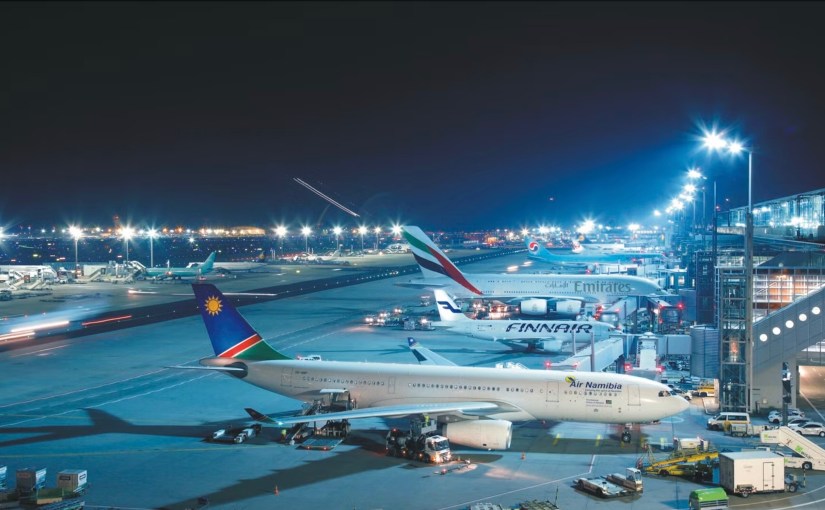
The liminal space of airports can take me one of two ways: either I feel elated by the possibilities that travel may hold, or I feel lost, rudderless, unmoored.

It’s not surprising I guess that what with everything happening in the world right now — the latter pulled me in deep last night, as I traveled back from Germany after seeing our (beautiful, precious, smiling and laughing, curious) grandson. Thank goodness for new life, right now especially, truly.

In the airport I found myself surrounded by businessmen while waiting for my flight. All men. All working. All seemingly contained, professional.

And for the first time in years and years, I was furious at all of them — so furious that I struggled not to cry. I wanted them to be up in arms. I wanted them to show that they noticed what was happening in the world. That they knew they were privileged. That they understood their positions of power — and that they rejected this power, wholesale. Then I wondered how many of them were abusers. I wondered about the women and girls and boys in their lives: were these men good people?

Who knows. All I could see, all I could read in their faces, was that they were unperturbed. Contrary to the triggering and beyond I was going through: they felt safe. They had no reason not to feel safe.

Let’s say that again: they had no reason not to feel safe.

Then I actually did cry as the plane taxied and took flight over Cologne. I saw the lights of the city below, and knew there were thousands of abused people there — the vast majority abused at the hands of men.

We have every reason not to feel safe. I have every reason not to feel safe. I want to scream: look, why don’t you — just open your eyes! You have done this. You run the world so you always win, so you are safe, happy, prosperous — and so you can bask however you choose in the entitlement bestowed upon you by being born male, into a patriarchy.

But they are not looking. Not those men. Not then, and possibly not ever. They don’t have to.

Which is why I cried: I must look. My eyes are stuck open. Every day, and especially right now. Millions of us have to look. We have no choice but to know about all of this, from the inside — and none of us, not a single one, wants to.

We are flayed raw. We are so tired. We are so heartsore.

***

This morning the words that circled my mind in the airport at last found their poem: one of Twenty-One Love Poems, a sequence by Adrienne Rich, the great activist feminist writer, one of only two or three writers whose work has echoed through my life. I first read her poems in 1980.

I’ve added emphasis to the lines I’ve been hearing over and over….


IV.


I come home from you through the early light of spring
flashing off ordinary walls, the Pez Dorado,
the Discount Wares, the shoe-store… I’m lugging my sack
of groceries, I dash for the elevator
where a man, taut, elderly, carefully composed
lets the door almost close on me.—For god’s sake hold it!
I croak at him.—Hysterical, he breathes my way.
I let myself into the kitchen, unload my bundles,
make coffee, open the window, put on Nina Simone
singing Here comes the sun… I open the mail,
drinking delicious coffee, delicious music,
my body still both light and heavy with you. The mail
lets fall a Xerox of something written by a man
aged 27, a hostage, tortured in prison:
My genitals have been the object of such a sadistic display
they keep me constantly awake with the pain…
Do whatever you can to survive.
You know, I think that men love wars…
And my incurable anger, my unmendable wounds
break open further with tears, I am crying helplessly,
and they still control the world, and you are not in my arms.
will we get there?

So many are asking this question right now: survivors of Child Sexual Abuse, allies of survivors, and the general public.

Who will be charged? Who will be prosecuted? And importantly: will this global explosion around sexual abuse and sex trafficking change anything?

***

I was up at the University of York this week, diving into a set of materials gathered by relatives of a long-term survivor activist in the UK. She was clearly an incredible woman, and built her huge network brick by brick through paper, telephone, personal relationships (before connectivity of any sort). This work is a fundamental part of a larger project I am working on with some colleagues, and it’s very exciting — here’s the LinkedIn page. The project only officially started this month, but we have done work around it now for the last six months. I can go into details once the website is up, in about two weeks!

Meanwhile, the archive material around this amazing survivor activist blew me away:

  • she worked so hard. She ran support groups, distributed leaflets, lobbied politicians and attorneys. She involved much of London, and had strong connections throughout the UK. Against all odds, she kept going for decades. I am only now, after about five years of doing this myself, beginning to understand how much this will have cost her.

  • toward the end of her life, she wrote about how ‘nothing had changed’, in all her 40 years of campaigning. Her voice was as strong as ever, but she didn’t and couldn’t understand why what she and others were screaming about CSA wasn’t being acted upon. Sound familiar? I cried.

  • I cried too because she knew everything we know now — in the 70’s. She had statistics (which haven’t changed), questionnaires, testimonies. She wrote plainly and directly, no sugar-coating. She understood and distributed leaflets about how to keep safe. She understood manipulation, coercion, and taboo. She shouted about it all — but to what end? I am heartbroken by how painful this must have been for her.

  • I cried the hardest because: in the 70’s and 80’s I knew very little about sexual abuse. I had no words for what was happening/had happened to me. I thought I was the only one. I was terrified and ashamed. All I knew was that I hated it. Sitting in the archives with her vast materials, I just kept thinking if only I’d known, if only someone had said something to me, if only I’d seen a leaflet, if only I’d had someone to turn to.

And now I say: if only any of her work (and the work of many others) had been acted upon, think how many potential victims might have been saved.

***

Basically, the project above is about developing a way to archive survivor activist materials — to record past activisms, make connections, and to build upon it all going forward. So we know who has come before us, so we can consolidate their work, honour them, and effect change — rather than what we too often do now: seemingly invent the wheel era after era, and risk getting precisely nowhere therefore.

Do I think the global Epstein ‘scandal’ will lead to change? Will society begin to understand that the root of abuse is power? Will we stop blaming victims? Will we believe them? Will we change what constitutes ‘evidence’ in cases of CSA and SA? Will we acknowledge the sheer prevalence of CSA? Will we open our ears and eyes? Will we help the children — and succeed in imprisoning more than the current 2% of men and women who perpetrate abuse?

We have SUCH a very long way to go. The materials I poured through this week turned me inside out. She fought with all she had — and over 40 years later, devastatingly, almost nothing has changed.

We have to do better. We have to do better for not only the millions upon millions of survivors of CSA, but for the millions upon millions of potential victims of CSA.

So please don’t stop talking about CSA, now that the ball is truly rolling. Please be an ally. Please don’t turn away. Please accept that children are being abused all around you: that is, at least 1 in 6, 15% of the population. These are FACTS, as difficult as they are to accept.

Please raise your voices. Please commit to advocating for cultural and social change at the deepest levels. Otherwise — I’m pretty sure that everything will die down, and continue as it was. It’s the path of least resistance after all, and I have witnessed now how easily so much can be lost.

So please: let’s be the change. We need every one of you.

where so many of us are right now

But we can do this.

More soon.

Hold tight.

anger

Safe to say it’s been a grim few days, on top of already grim days, on top of a hard year.

I was raised never to be angry. Never to disrupt. Never to raise a fuss. For abuse victim survivors of any sort, anger can bring with it a variety of outcomes, all bad: more abuse perhaps, to ‘put you in your place’; more attention, which may draw eyes to the abuse, which in turn will definitely destabilise your life — and make everything worse. This repression of anger is familial, environmentally necessary. It kept my father from flying off the handle, from making everyone suffer.

But it’s also often cultural: be reasonable. Somehow this has become the reigning metric of so many of our lives. And it has its roots in the primacy of logic. We are encouraged to stand back, to be ‘objective’.

Of course this whole ‘reasonable’ approach has the effect of removing us from our emotional selves. It downplays our emotions, our views, and ultimately is a form of gaslighting: you don’t really feel this, how could you think/feel this, and finally, you’ve got it all wrong.

Case in point: the last time I spoke to my father, in 1987, it was on the phone. I was shaking with fear and anger, struggling to hold the earpiece to my ear. I said that I wanted him to accept responsibility for what he had done to me, that it was sexual abuse. His response was to laugh, and say I’d been reading too many magazines. I then said that unless he did as I asked, he would never see any future children I might have. He laughed again.

***

In fact: he never did see my children. In that moment, that last conversation with him, I somehow managed to hold onto the importance of what I felt, of right and wrong. I somehow, and possibly for the first time, managed to speak to him, however terrifyingly hard it was — and it was — with my whole self.

This won’t be the only post I do about our whole selves, and what this means to me.

For now though I’ll say that I’ve got better at anger. I’ve got better at not always having logical reasons, at not having to explain every last thing — at just feeling something. Feeling something is not in itself threatening, not in itself dangerous.

So what do we do now with these equal measures of anger and despair? When it sometimes seems that any full-throated reaction is ‘too emotional’, ‘too political’, ‘too extreme’?

Sunday January 25th, the day after Alex Pretti’s death, I felt, like a lot of people, incandescent with rage. And grief. All day. And I couldn’t see how I was going to get out of it. Would I just have to get used to this hopelessness — would we all?

At the end of the day I had a text conversation with family. All of us are distressed. We all have loved ones in the US; we all care.

I said that I was so angry, didn’t know what to do with myself. Our younger son M wrote:

you can have a day of being furious

…but the goal is not to trick yourself into thinking

you’re fighting BY getting angry.

In other words: anger is the justified by-product. Of grief, of horror, of despair.

But it’s not, in itself, The Fight. In itself, anger does not do any useful battle.

How do we ‘fight’ then? How do we make sure we are heard? How do we make a difference?

We are heard by being whatever loud means to us — through the written or spoken word, through image, through music — in our houses, on the streets, on the phone. By breaking barriers, pushing through the societal and familial boundaries we have been hesitant to question before now.

It is very much time to ask questions and demand answers, and to keep doing it, to press and press at it all. I think we know this. It’s time to stand together. To break all the silences which form the hierarchies which control our lives — the ‘families’ if you will, which declare how we should act and what we should say.

Nope. No more. It’s time.

I’m so grateful to son M for giving me some clarity through my overwhelming feelings. And yeah: I’m extremely proud to have played a part in raising him.

are we finally at #metooCSA?

So. I spent the first nine months of 2025 feeling pretty freaked out: everything seemed worse, and likely to keep getting worse. Pillars of what most people in the world have taken to be truths and even basic human rights crumbled and continued to crumble. I for one felt that the ground I had stood on my whole life was shifting, inexorably. And I know I wasn’t the only one. I know so many felt this and continue to feel it. Unfortunately, this hasn’t changed yet in any real way.

As I mentioned in my last post, the overriding feeling for me through this became the one I dread possibly the most: we were being silenced. At every turn.

Then came the US government shutdown and the Epstein files saga. And I started to notice: wait, survivors are standing up together. With allies. At least some people are starting to build some momentum.

And then, Virginia Giuffre’s powerful memoir, Nobody’s Girl. It was being read — albeit with a kind of horror still — but it was being read. Not everyone was turning away. It was not ‘niche’ reading. It was not in a bubble. It was mainstream.

Guiffre’s experiences in her childhood home and beyond have the exact shape and tone — down to what is said, the manipulation, the physical responses of her abusers — of not only my own experiences as a victim survivor, but the experiences of every survivor I have spoken to about it.

But she then goes on. She places the abuses in the context of our cultures and our societies. She makes clear that she was not the exception. That child sexual abuse is endemic. And that it’s all about power. Many — across mainstream media, and certainly across socials — sat up and took notice in ways I’ve not seen before.

If you haven’t read the book — read it. It may be triggering for some of you, so take care. And some of you will find it very upsetting. What I would say to that is: welcome to our world. Survivors carry aspects of her story — as she did — every day, day in, day out. We don’t have the luxury of ‘not engaging’ with abuse. We have lived it, and it will never go away.

I’m just stating facts.

***

It’s tempting to turn away from activism — whether quiet or loud — because more often than not it meets with disbelief, horror, embarrassment, or dismissal.

And yet, somehow this latest series of events hasn’t skidded to a stop at a dead end. Somehow a ball is still rolling.

In 2017, the #metoo movement went viral. Begun by a survivor of child sexual abuse, Tarana Burke several years before, it gathered sexual violence as a whole under its umbrella. Various offshoots developed, including #metooinceste, which started in France.

However. From my and other CSA survivors’ I know points of view — we never really felt heard with #metoo. Like so many, I have been sexually assaulted as an adult, and I felt #metoo supported these disclosures. But despite the origins of the phrase, I never felt that it could hold Child Sexual Abuse, or CSA. The viral wave swept it elsewhere. Soon, any hint of #metoo in relation to CSA simply disappeared.

Something is happening now though. Does anyone else feel it? NOT just around Epstein and his cronies (including we know who). But around the whole space of CSA. In the last six weeks or so, my Threads and Bluesky and even Instagram feeds have been flooded with disclosures, with CSA survivors who have never before gone public about the abuse they suffered — now feeling safe to disclose, or that it’s necessary to disclose, or that they know it’s time to disclose, to connect some dots, to be here in solidarity. And the vast majority of these disclosures identify family and family friends as perpetrators. Unsurprisingly.

One way or another I’ve been working in this space for about six years. And almost the whole time, I have felt that my words, my experiences, my desire to connect and amplify — to make a change, somehow — have had almost no impact beyond the (beautiful!) survivor activism community. My greatest frustration — the thing which has done me in time and time again over the years — has been the sense that we are not being heard. That no one is really — really — listening.

I feel a shift now, though. A lasting shift, I hope. A solidarity across ‘types’ of sexual abuse is coming to the fore, a space for all survivor stories and testimonies. As are vocal allies, who are saying over and over, in public and on socials: ‘listen to survivors’, ‘believe the survivors’. I am sensing that there is a gathering together of activists, survivors, and allies into what we have long been working for: a survivor-led #metooCSA movement. We are gaining critical mass — for our voices, and for change.

Thank you always Tarana Burke, for your courage, and your words.

A Year Later: starting 2026

[image from Juneau Empire]

I have been writing and re-writing this post in my head for months.

What happened? I considered this for weeks.

What I did not want to admit (to myself, or anyone) was how completely shaken I was by the re-election of an abuser to the White House. His re-emergence, followed by lawless action after lawless action, rendered me almost paralysed.

What is the point of working away in my small corner of the fight against Violence Against Women and Girls, when the whole world order has turned justice on its head?

More pointedly: every survivor I know hears an abuser in his voice. An abuser, and a bully. We have all known this since at least 2015. We all recognise it. And for the last 10 years, we have not been heard. And as we all know: when we talk and no one hears, we are silenced, again.

It took me several months to realise that I was simultaneously triggered and silenced by happenings in the US. Again and again I felt that any voice I had ever had was useless. I see now that I have spent the last year being re-traumatised, over and over.

The reality is: the country where I grew up is being dismantled. The values I thought we all shared (more or less) have evaporated. Any ‘noise’ I might be able to make surely disappears into thin air.

I remain pessimistic when it comes to the US managing to take care of its people. This feels a very long way from achievable at the moment.

However. In the last few months, the plight of the Epstein survivors, and the involvement of men and women who occupy the most wealthy and powerful positions in the world in their trafficking — have crashed my worlds together.

Thing is: we are all the same. As survivors, we are all the same. Whatever our backgrounds, whomever our abusers. Whether ‘it’ happens once, or repeatedly over years and years or perpetrator after perpetrator: we must join forces. Our homes (or lack thereof) made us vulnerable to sexual abuse; in this, we are a community.

We must not allow the isolation that inevitably accompanies our abuse to silence us. We must not consider some peoples’ experiences of abuse more harmful or ‘worse’ than others. We must understand that we are in this together, all of us.

Only then will we be able build upon the voices and experiences of survivors toward real cultural and social change: toward accountability, restitution, prevention.

I come to this post today through partially gritted teeth. I’m not sure if any of this will do any ‘good’. But I can’t not try. The last year has shown this to me in technicolour: I have to keep trying. I have to. The one thing I know is that I would do anything to save a child from going through what one in six of us goes through, worldwide. To that end, I have managed to keep going with a couple of projects, quietly, which will soon come to a kind of fruition. But I know I need to use my voice too, publicly. It’s so important that we do this if we can. And I can.

So here I am. More soon.

silence is silencing

[image: untitled, Mark Rothko, 1966]

As a result of being silenced during sexual abuse and beyond, I now have an almost pathological and immediate response – physical and psychological – to feeling silenced. I shut down. Very quickly.

This paralysis, accompanied by feeling very low emotionally, hopeless, I now see as directly related to the silencing I have experienced but also somewhat enacted (to save my own pain) as a result of being abused in childhood. This is a very recent realisation — within the last six months, and 40 years after the abuse ended.

I bring this up now because I realise that I also fall silent when I feel I have no reason — no room — to speak. Silence is silencing, indeed. It feeds on itself.

This week I have found myself feeling silent/being silenced in light of the war in Ukraine. There is just so much sorrow, so much desperation, so much depravity at work there. The trauma from this, for those there and well beyond, will echo for generations. What a waste of human life and love. What tragedy. It has been hard to see my own and others’ struggles with Child Sexual Abuse as deserving space in all this.

But I guess the reality is precisely the opposite: that this is in fact where we all meet, on the level of lost lives. Man’s inhumanity to man.

Silence begets silence. It grows deeper and more opaque with time. We are duty and morally bound to break silences, to prevent loss of life and living, whether spiritual or literal.

Instead of my own work this week, here’s a poem that runs on a loop in my head, and has done for many years. We all have a job to do here, folks.

Harlem

BY LANGSTON HUGHES

What happens to a dream deferred?

      Does it dry up

      like a raisin in the sun?

      Or fester like a sore—

      And then run?

      Does it stink like rotten meat?

      Or crust and sugar over—

      like a syrupy sweet?

      Maybe it just sags

      like a heavy load.

Or does it explode?