on not/belonging

First, what do I mean by the feeling I have had most of my life: that I don’t belong?

It’s not difficult for me to identify elements of my young life which embedded these feelings: my mother’s unstable mental health meant that I was passed between relatives at times, and that I was witness to her withdrawal from me. She would disappear in more ways than one, and, not only was I then virtually on my own physically, I was on my own emotionally too of course. Any three year old who stands aside and observes is bound not to feel part of things.

When I was six and a half, I went to live with my father, his new wife, and their children, aged six months and two years old. As my parents divorced before I was one year old, and as for some reason I didn’t see my father — I had only met him and my stepmother once before moving in with them.

So I entered the house already an outsider, a role cemented soon after by my father’s grooming and sexual abuse of me.

Keeping secrets separates you from the rest of your life. Like most in this situation, I learned to pretend. Pretend to be a ‘normal’ teenager. Pretend that things were okay in my house. This fragmentation — the reality of what I was living through and carrying with me, alongside my daily life in school and with friends — for years and years meant that I lived parallel lives.

I have never presented as ‘damaged’. I was able to keep going simply because I kept going. I guarded my independence once I left the family home, I pulled myself away from everyone and everything — with smiles, with humour, and sometimes out of a real love — in order to keep the ugliness — of me, of my inner life — away from them.

Versions of this fragmentation, this ‘other-ness’, haunt most survivors I think. From it, we know we do not ‘belong’, and feel we never will. It can be such a heavy, unspoken burden in life, one that spills over into ‘not belonging’ anywhere — in your work, in your culture, in society. No matter if others treat you like you belong: if you feel deep down you don’t belong, ‘other-ness’ can be unshakeable.

***

So, second: I know now that I belong. And indeed, never in my life have I felt such a sense of belonging, in every way. You may ask youself, how did I get here? (Talking Heads, 1980).

Over the last few years, the floating icebergs that I used to feel shifting inside me, drifting, have gathered in one place. There are bridges now between them, paths through them, leading one to the other. There is a layer of fresh snow, which, once walked upon, connects the pieces in a kind of knowledge and acceptance.
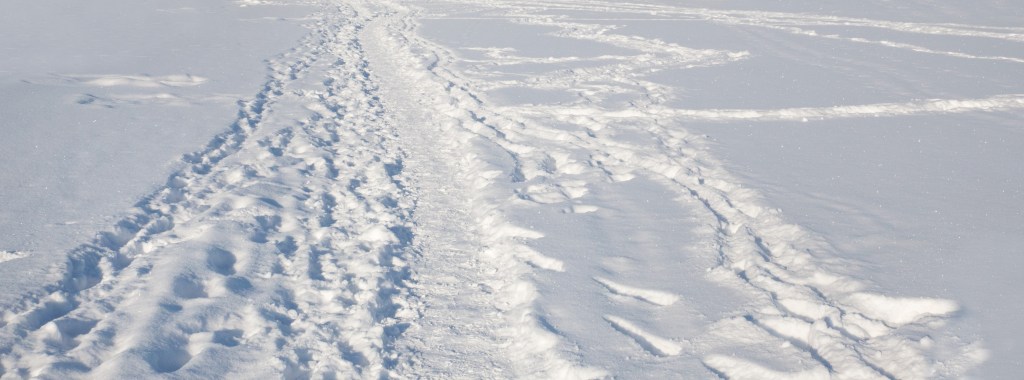
This fresh snow:

  • everyone I know and almost everyone I meet becomes aware that I am a survivor, and that, yes, I am now thriving
  • no secrets anymore, ever, from anyone
  • my friends and family — all of them — meet me where I am
  • understanding that perfection is not a condition of loving or being loved
  • I allow those close to me to take care of me
  • no pretending, and no soft-pedalling, around my truths, and my mental and physical health
  • I have been hurt, wounded for life — but here I am nevertheless, so blessed to love and be loved

I feel I belong in this world now. And that I am not alone.

***

Finally, third. The connections I have forged with the survivor activist community and its allies have been life-changing, and life-affirming. In a room of survivors, there is no scanning for harm, no second guessing what can and can’t be said. No rush to ‘fix’ difficult emotions.

We are all, each one of us, whole people. With whole lives, separate struggles, and particular concerns. But we are united in our understanding of what constitutes damage, loss, scapegoating, toxic family dynamics. We are united in our understanding of what constitutes abuse. We do not feel the need to prove anything, or even to offer our life narrative. None of this matters. What matters is the drive for change.

We all know so much needs to change. This project is the first of its kind — putting together a toolkit for archiving survivor activist materials and life experiences. Maybe, just maybe, we can consolidate activities from the last 50 years and begin to say so loudly we cannot be ignored: We are here! We are here! (and more than sensitive-eared Horton cares).

Survivors of child sexual abuse make up 15% of the population. And despite decades of work by individuals and brilliant organisations — this statistic has not shifted. Despite several government reports and inquiries: almost all of the recommendations in them have not been acted upon.

Remembering Together offers a start. A way in to gaining some critical mass. We all know things need to change. But the taboo, the distaste, the revulsion even — all perpetuate the abuse. Time and again our momentum has been dissipated, disbanded, unfunded.

There have always been activists. And quite suddenly, without any forethought, I find that I am one.

And I belong here. The joins between the icebergs are smoothed. I am integrated. I am myself, and I know where I belong.
on representation

[image courtesy of Clare Best]

(To get straight to the lyric essay discussed below, please click here: Twenty-five soundings about child sexual abuse and the arts: considering the opera Festen.)

In the Land of Peaks and Troughs (see my last post), here’s how I (we) climbed to Peak 1.

The starting point: how is child sexual abuse represented in the arts, if indeed it is represented at all?

Looking for ourselves in books, films, plays, visual arts, and music is a human thing. We look outward as ways of looking inward. We look outward as a way to reflect upon our own lives and experiences.

Now think for a moment about any mainstream creative endeavour which highlights child sexual abuse, in any way.

I imagine you are still thinking. And that’s because there are precious few examples of ANY art form addressing child sexual abuse. Furthermore, most examples (think of documentaries and books about Savile or Epstein, or murder/detective films and books about a child abusing misfit etc) focus on horror, on sensationalising abuse. Most too turn around a fascination with the perpetrator: what kind of person would do this?

I ask you instead: where are the survivors of CSA? where are their stories, their voices in the mainstream? where are the real lives of this 15% of the population represented?

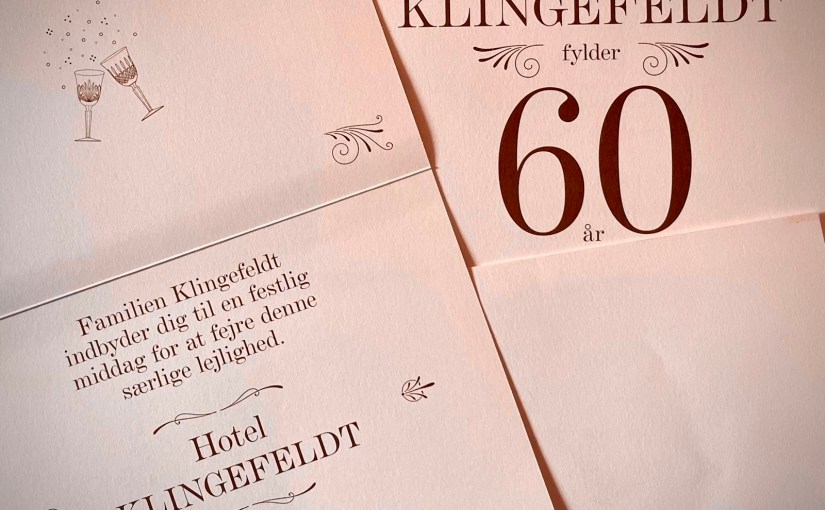
Last year fellow survivor writer Clare Best and I went to the opera Festen at the Royal Opera House in London. We went because we’d seen the film by the same name, directed by Thomas Vinterberg (1998) and we had read enough to know that this opera brought essentially the same narrative to the stage. This narrative — there is a gathering for a 60th birthday party, where one of the grown sons of the ‘birthday father’ publicly discloses that this same father abused him and his sister from a very young age — happens over the course of 24 hours, in the middle of a house party.

Clare and I have both written libretti for operas, and both have an abiding love for contemporary music. And of course: we are both survivor activists, focusing much of our energies these days working in associated spaces, and considering the nuances of survivorship in the wider world.

Festen was very powerful. CSA was ‘front and centre’ of the narrative, and family dysfunction, reactions to the disclosures — mostly denials through word or action — occupied the majority of the emotional and psychological landscape.

The opera sparked long conversations between us about how and where we see survivors of child sexual abuse portrayed. And how abuse itself — the fact of it — is handled.

We decided — because we are writers! — to explore this terrain together through writing. We both enjoy working in collaboration, and we both had a LOT to say. We swiftly decided upon a form (the lyric essay), and began sending each other prose fragments, poetry, statistics, and reflections upon Festen. Both of us have considered many times how our art — our writings — interact or intersect (or don’t) with our survivorship. And both of us, more and more, have begun to centre our survivorship throughout both our private and public lives. Both of us have worked hard to integrate what we have gone through — our journeys, our healing paths — with our daily lives and loves, with our purposes, and of course, with what we make: our art, our studies, our academic research.

Very soon after beginning our writing correspondence, Clare alighted upon the medical humanities arm of the British Medical Journal (BMJ) as a possible outlet for our work. We were delighted that our proposal was accepted by editor Sabina Dosani, and devoted ourselves to writing without constraint. In the end, we wrote twice as much as we needed, and spent one memorable summer morning pacing around Clare’s dining room table, arranging and rearranging the pages laid out there, divining a structure, finding a path.

We figured it out. After a wonderful peer review report, and a somewhat tortuous copy editing and typesetting four months, Twenty-five soundings about child sexual abuse and the arts: considering the opera Festen appeared in the BMJ last week. It’s the first lyric essay the BMJ has ever published. We are super proud of it. It goes some way at least toward articulating our feelings arising from the opera, and setting it all in a broader, more holistic cultural context.

One aspect I am most proud of it — which makes this a PEAK, aside from the fact that a publication always deserves celebrating — is that the essay has found a home where it is likely to reach whole new audiences. It is a very deep conviction of mine, a fundamental purpose, that we normalise conversations about CSA. That we normalise the fact of its existence and occurrence across 15% of society, regardless of socio-economic levels. It is wholesale, global — but most people, including medics, researchers, artists — have no idea of its prevalence. No idea how it is happening in plain sight, day after day.

I’m hoping that publishing our essay in such a mainstream publication brings the ‘everyday-ness’ of CSA closer to home for some. That it manages to break through, at least partially, the reflexive silencing that says too often: be quiet, we don’t need to speak about this, take it elsewhere.

So without further ado: this link will take you to a pdf of the full text.

I’d love to hear what you think.

*Please note that in places the essay alludes to subjects that some readers may find distressing.*

on finding my way (again)

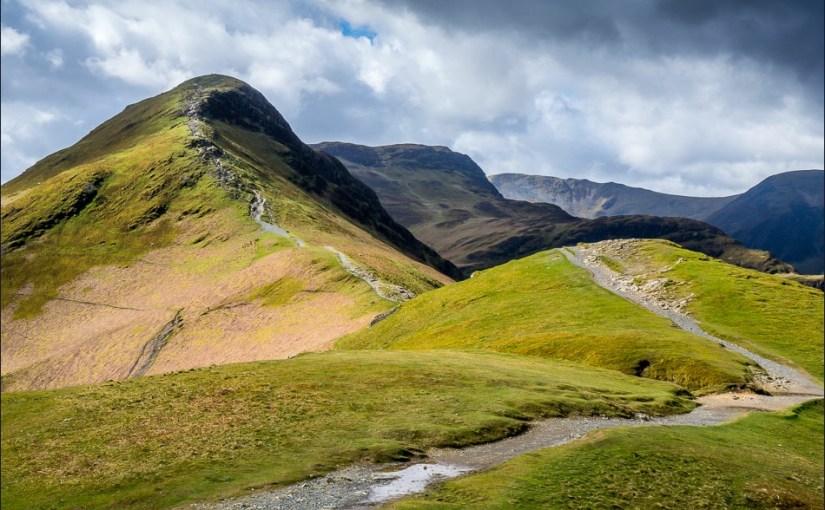
[unattributed image of Catbells, in the Lake District, UK — a favourite walk]

Like so many here on this earth, there is a lot going on for me right now, from every angle: in real life, in the wider world, psychologically and medically. The last few weeks have brought brilliant peaks — and some very tough troughs.

Troughs: I’m having more nightmares. This is of course a CPTSD reaction — I reckon in response to the relentless disclosures of sexual abuse and assault, alongside the disgusting failure of those who are able to hold others accountable — utterly failing to do so. Some nightmares for the first time place me in a bed as a child, with the clear knowledge of my abuser approaching. Others place me in charge of protecting children in a large house — and no matter what I do, the door to the abuser waiting outside swings open.

Carrying this distress through the days, feeling like I must pretend that I am not distressed, when I really felt like screaming — sent me back into therapy for a few sessions, with my wonderful and long-term therapist, whom I have called upon several times in the last 12 years. I am so grateful for her compassion, her understanding of me as a person and writer and survivor — and the permission she gives me to simply feel and accept this anger, this grief, rather than turn to my default: something is wrong with me.

These resurgences of anger and grief have been the undercurrents of these last few weeks, indeed. And I continue to ride them out.

Through them though, emerges the crystal conviction again and again: I will not turn away. I will not shrink. I hold my nerve, I bear witness. Because I survived, and this surviving brings me closer to what must be done. I have room in my heart, and the strength to link arms with thousands of others.

And the peaks — ah the PEAKS! They are footholds up this rocky path: healing, centring, empowering. I wedge my feet ledge by ledge, not knowing quite where the next breath will come from — but come it does, thank goodness.

So. PEAKS to follow here over the next few days. Thank you for coming with me – we got this, together.

are we finally at #metooCSA?

So. I spent the first nine months of 2025 feeling pretty freaked out: everything seemed worse, and likely to keep getting worse. Pillars of what most people in the world have taken to be truths and even basic human rights crumbled and continued to crumble. I for one felt that the ground I had stood on my whole life was shifting, inexorably. And I know I wasn’t the only one. I know so many felt this and continue to feel it. Unfortunately, this hasn’t changed yet in any real way.

As I mentioned in my last post, the overriding feeling for me through this became the one I dread possibly the most: we were being silenced. At every turn.

Then came the US government shutdown and the Epstein files saga. And I started to notice: wait, survivors are standing up together. With allies. At least some people are starting to build some momentum.

And then, Virginia Giuffre’s powerful memoir, Nobody’s Girl. It was being read — albeit with a kind of horror still — but it was being read. Not everyone was turning away. It was not ‘niche’ reading. It was not in a bubble. It was mainstream.

Guiffre’s experiences in her childhood home and beyond have the exact shape and tone — down to what is said, the manipulation, the physical responses of her abusers — of not only my own experiences as a victim survivor, but the experiences of every survivor I have spoken to about it.

But she then goes on. She places the abuses in the context of our cultures and our societies. She makes clear that she was not the exception. That child sexual abuse is endemic. And that it’s all about power. Many — across mainstream media, and certainly across socials — sat up and took notice in ways I’ve not seen before.

If you haven’t read the book — read it. It may be triggering for some of you, so take care. And some of you will find it very upsetting. What I would say to that is: welcome to our world. Survivors carry aspects of her story — as she did — every day, day in, day out. We don’t have the luxury of ‘not engaging’ with abuse. We have lived it, and it will never go away.

I’m just stating facts.

***

It’s tempting to turn away from activism — whether quiet or loud — because more often than not it meets with disbelief, horror, embarrassment, or dismissal.

And yet, somehow this latest series of events hasn’t skidded to a stop at a dead end. Somehow a ball is still rolling.

In 2017, the #metoo movement went viral. Begun by a survivor of child sexual abuse, Tarana Burke several years before, it gathered sexual violence as a whole under its umbrella. Various offshoots developed, including #metooinceste, which started in France.

However. From my and other CSA survivors’ I know points of view — we never really felt heard with #metoo. Like so many, I have been sexually assaulted as an adult, and I felt #metoo supported these disclosures. But despite the origins of the phrase, I never felt that it could hold Child Sexual Abuse, or CSA. The viral wave swept it elsewhere. Soon, any hint of #metoo in relation to CSA simply disappeared.

Something is happening now though. Does anyone else feel it? NOT just around Epstein and his cronies (including we know who). But around the whole space of CSA. In the last six weeks or so, my Threads and Bluesky and even Instagram feeds have been flooded with disclosures, with CSA survivors who have never before gone public about the abuse they suffered — now feeling safe to disclose, or that it’s necessary to disclose, or that they know it’s time to disclose, to connect some dots, to be here in solidarity. And the vast majority of these disclosures identify family and family friends as perpetrators. Unsurprisingly.

One way or another I’ve been working in this space for about six years. And almost the whole time, I have felt that my words, my experiences, my desire to connect and amplify — to make a change, somehow — have had almost no impact beyond the (beautiful!) survivor activism community. My greatest frustration — the thing which has done me in time and time again over the years — has been the sense that we are not being heard. That no one is really — really — listening.

I feel a shift now, though. A lasting shift, I hope. A solidarity across ‘types’ of sexual abuse is coming to the fore, a space for all survivor stories and testimonies. As are vocal allies, who are saying over and over, in public and on socials: ‘listen to survivors’, ‘believe the survivors’. I am sensing that there is a gathering together of activists, survivors, and allies into what we have long been working for: a survivor-led #metooCSA movement. We are gaining critical mass — for our voices, and for change.

Thank you always Tarana Burke, for your courage, and your words.

our ribbons, our shoes

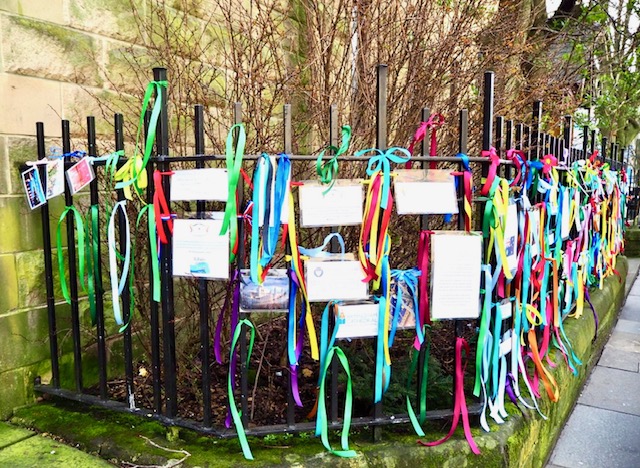
Last week I was in Newcastle (UK), where I helped do a LOUDfence on the railings of St Mary’s Cathedral. As ever, the act of tying ribbons — colourful, fluttering — releases something purposeful in me and I think in others. The tags which are attached by the ribbons recount grief, and loss, and sorrow, and in some — betrayal. They also speak of support, validation, and the determination to make a difference in every walk of life. To say loudly: we hear you, we believe you, we are so sorry. And we want this never to happen again.

A new and powerful symbol in LOUDfence is the introduction of empty shoes: children’s, priests’, religious sisters’, laity’s. They all represent people who aren’t there, who can’t be, and people whose shoes we need to walk in, to be with, and hold close. Abuse is a destructive force. It rips us from those we might love, and from the roads we might have walked.

LOUDfence is making a difference. It’s reaching beyond countries, and beyond regions. Beyond silence and silencing. Victim survivors from every walk of life can see themselves — can feel themselves held. Know that they are seen too, in some cases by the very people who did them harm.

Change comes through a gathering which reaches critical mass, a tipping over into the clear sense that we MUST enact cultural change. On all fronts.

I’m so proud to be part of this movement. Next stop: West Virginia USA in April.

***

Antonia Sobocki (founder of LOUDfence UK) asked me to write a poem for the Newcastle LOUDfence. Here it is. I am not usually one for writing to commission – I tend to freeze up! – but this time I had the gift of a pair of baby shoes I had found in my mother’s belongings after her death. Here are the shoes, and here is the poem.

(apologies for the poor quality reproduction here — the clumsiness of WordPress!)

blindsided

I have been feeling silenced.

It’s taken me 10 weeks to come here and say this. That’s how silenced I have felt.

What silences sexual abuse victim/survivors? What silences ME?

To somewhat answer this, I’d like to highlight this article. Absolutely none of it will be news to survivors who struggle with their families, particularly if the sexual abuse they suffered was perpetrated by a member of the family.

https://www.brainzmagazine.com/post/understanding-family-scapegoating-and-its-interplay-with-survivors-of-childhood-sexual-abuse

None of this is news, but none of this can be solved either.

I cannot say much more. I have written and erased this post several times. This is how silenced I feel, and how much I am checking myself, worrying about my words.

For weeks my husband, children, other family, and close friends have been my scaffolding. Alongside me and checking in every day. Thanks to them, and to the years of excellent therapy, the ‘top up’ therapy I’m doing now — I know I’m okay, and always will be.

I love my life. I won’t be dragged back into tangles of secrets and blame. There’s no reconciliation in that. In the words of glorious Fleetwood Mac: never going back again.

This is one of the recurring dreams I had during the abuse, and afterward during my initial therapy. I have felt very much like this over the last few weeks. Nothing to stand on, falling, exposed.

But I’m back on my feet now. For good.

from my memoir, Leaving Locust Avenue:

making a lot of quiet noise

A couple of weekends ago, I went to Cardiff for my first LOUDfence. Founder and Director of LOUDfence UK Antonia Sobocki had invited me to help launch Wales’ LOUDfence movement.

As victim-survivors, we have come to expect emotional turmoil around Child Sexual Abuse: being misunderstood, not being heard, not being ‘seen’, not being believed. We have come to expect physical turmoil too: not feeling able to go someplace (church, for instance), or revisit any childhood location without fear, or even wear certain clothes, smell certain smells, hear certain sounds — without triggers which drive us far away from our lives.

In Cardiff, I was prepared to feel a lot of this turmoil. I was prepared to feel on the outside looking in. To feel at arm’s length from the huge ‘authority’ figure called the Church. I did not expect to be moved.

I am generally not a church-goer. However, my husband’s family are Catholic, we were married in a Catholic church, etc — and I feel comfortable with a Catholic mass insofar as hymns and actions and words go. At the last minute in Cardiff I was drafted in to do the first reading, from Ezekiel. This too was absolutely fine; I am used to finding a calm place in myself from which to read, in any environment really.

Archbishop Mark O’Toole took the mass. Antonia and I were in the front pew. And as he spoke, something started to let go in me. He was soft-spoken, sad — and offered a profound apology. He took responsibility for the failings in his beloved Church. He directly addressed survivors, many of whom (it turns out) were in the congregation. He made room for their – my – suffering. For their – my – trauma. He spoke about the betrayal all of us — whether abused in association with the Church or not — had undergone, perpetrated by the very people meant to take care of us. He acknowledged his own guilt too, by proxy, in perhaps not responding as he should have, not taking note of everything he needed to, and of not making it his responsibility to understand and enact change. He showed his own pain in the face of all of this.

I began to feel he was speaking to me. Directly to me. He was saying he was sorry. He was saying that he ‘saw’ me, saw all of us survivors. And I found myself crying almost uncontrollably. It was the first time in my life — my whole 45 years of living with the debris and breakages from five years of sexual abuse when I was a child — that anyone with any authority, part of any institution AT ALL, had apologised. Sorry. Had opened their hands palms upward in a gesture of responsibility, of grief, and reparation. We are sorry.

Through his humility and gentleness, Archbishop Mark brought the part of me which feels undeserving — the broken part, the abused part — back into the centre of the Church’s responsibilities and concerns. How many times have I felt I was writing/shouting/crying into a wind which blew it all right back into my face? How many times have I felt ignored? Hundreds of times, as have all survivors. The trauma of sexual abuse haunts us, and for some of us, it haunts us most particularly in the place where witnessing faith might help: the Church. And yet: this time our words and feelings were held there. Believed. Grieved for.

It is not in my nature to be loud about my experiences of abuse. Although I consider myself an activist, I am a fairly quiet one. My activism is through my writing, through the research and arts projects I participate in, and through being open and frank about my own experiences. Over time, my transparency in every aspect of my life has encouraged numerous people to disclose their own experiences of abuse to me. Part of what I hope to do is make room for conversations in contexts which have nothing to do with abuse. What matters is that people who confide in me know that they are safe. That I won’t shout about their abuse. That they can trust me. That we are in this together.

And for the first time in my life, two weeks ago I was welcomed into the centre of someone else’s openness and transparency. For the first time, I felt that our experiences as survivors were at the centre of things, not around the edges fighting hard to be heard. I felt respected and believed.

At the end of the mass, Archbishop Mark invited Antonia and I to process out of the church ahead of him and the rest of the clergy. I reached for Antonia’s hand. We walked out together.

It was one service, yes. One priest. One church. There is still so much to do in challenging and changing our cultures both from inside and outside our faith institutions. But for me — Cardiff was an enormously powerful beam of hope. Maybe change right through to our oldest and most revered institutions is actually possible. Some of us move more quietly than others — but we are all, each of us, centring survivors, sharing our stories, trying to protect children, and, step by step, one foot after the other, shifting cultures. We are all loud now.

Archbishop Mark’s homily begins at about 26 minutes in.

did anyone suspect?

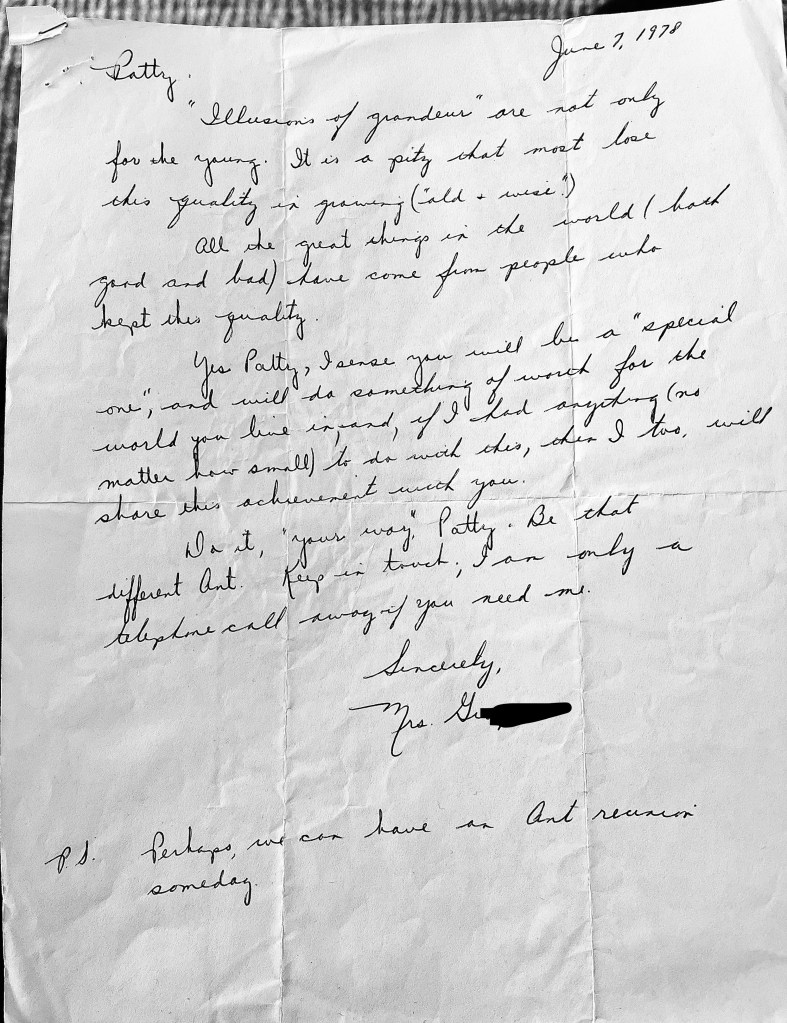
Over the weekend I discovered a note given to me by my Social Studies teacher when I was 14 (1978). I clearly remember the circumstances surrounding it: my father or my stepmother had told me that I had ‘illusions of grandeur’. I went to this teacher, Mrs G, upset. Ever since I could remember, I had harboured feelings of wanting to do something important, something meaningful. I don’t know why I apparently confided in my father or stepmother — but I do remember being very hurt by them. I felt belittled.

Mrs G however: as the note above shows, she believed in me. For my part, I adored her, absolutely adored her (as I did many teachers throughout my formal education, feeling handed between them like a baton in a relay race, for safe keeping). She was mischievous, an individualist, and taught me more about good essay writing than anyone else, before or since.

I must have kept this folded piece of paper because it helped. She believed that I could do something. And she would know. She would know, I thought, possibly more than my father or stepmother would. She was in the world in ways they weren’t — I sensed this, already.

Now though what strikes me about this note are the words at the end: ‘I am only a telephone call away if you need me.’

I have no memory of these words. No memory of that level of care at this age — the age at which I now know some of the most harrowing and damaging instances of sexual abuse occurred, seemingly relentlessly. I wonder what I thought about those words then? Would I have considered speaking with her? Would I have ever thought about phoning?

And why such a pointed offer of help? Did I show more than I think I did? Did she suspect anything?

I was a very high achiever throughout my formal education. I was not shy. I had friends. I was principled, political, and often revelled in being ‘a bit different’, particularly in terms of fashion. By age 15, in the days of mostly preppie wear, I wore patent leather heels, balloon black trousers, a thrifted double breasted red top, and put my hair in tiny braids so that it was all kinky the next day. Etc. Yet: I never misbehaved. I never actively rebelled.

I now know that I stuffed the sexual abuse I was experiencing into a box in my head — and slammed the lid down tight. I did this almost from the start, almost knowingly. I remember the gut response when my mind flitted to the abuse: pay attention to what you like: forget everything else, forget it. This separation of mind and body preserved my mental health for many years. Until it didn’t. I know this story is so familiar to so many.

Recently there’s been a bit of discussion on X (Twitter) about whether signs of abuse were missed in us survivors when we were being abused. And the more I think about it, the more I become confused. Maybe there was enough ‘unusual’ about me to make teachers think, or wonder? Certainly I was always hailed as ‘very mature’ for my age — not physically, but emotionally. I often felt out of step with peers. All the talk of boyfriends, crushes, and dates — I found excruciating and terrifying in equal measure. I wanted nothing to do with it. My overriding priorities were learning, writing, and ballet. Not much else mattered very often. This might have been interpreted as ‘mature’? Was it noticeable? Was this a ‘sign’?

The truth is, I never would have phoned Mrs G, although from here I fervently wish I had been able to. And there were other teachers, after her, who often seemed to be waiting for me to say something. But what? What?

What can children say about the dangers they live in? Precious little, I think, is the answer even now. So it’s up to teachers? But that can’t be right either, as even if something (what?) is ‘noticed’ — chances are high that a child will lie when asked directly. I am certain I would have.

There are so many variations of ‘signs’ of abuse — many that are in fact seen as ‘fine’ (good behaviour, quiet etc) — that there is no rulebook here. None of us can produce a definitive list. What’s clear however is that adults in the position to notice need to be given the training and the space to act; similarly, children need to hear and see that sexual abuse can enter conversation. If there had been a space to speak, or to write, about what was happening to me — one that wasn’t judgemental, that didn’t put me in a vulnerable place, that wouldn’t pity me or think less of me, one that I trusted to look after me — I might, might have found a way to send a clear message.

But there was no space for that then. Despite Mrs G, and despite all of the kind adults in my school life as the years progressed — the thought of mentioning anything to them about the abuse I experienced never, ever occurred to me. And indeed: no one made me feel safe enough so that I knew, if asked, I could answer honestly. So I never even got close.

I’m heartened by the work of the many survivor-centric organisations and charities now on the ground, going into schools, speaking with medical students, within the police, with churches of almost all denominations, scouts organisations, community leaders etc. This is the training and awareness which is so desperately needed. I pray that the enormous differences they are making hold fast. I pray for a future in which a teacher, nurse, doctor, pastor, priest, vicar, scout leader — neighbour, friend, anyone — feels empowered to ask, carefully and with respect, knowing there is support available: is something happening? And for a future too where another child like me (like so many of us) might go back to Mrs G and be able to say: something is happening.

[I cannot finish this post without signposting some of these vital organisations. I really only know a bit about the UK. I urge everyone please to add more in the comments. The Flying Child Project, Survivors Voices, LOUDfence, Barnardo’s, the NSPCC, Survivors Trust.]

***

This extract from Leaving Locust Avenue follows what happened when I decided to move schools at 17, at the beginning of my senior year of high school. No one asked much, but looking back — I wonder if at least a couple of them wished for the space and permission to do so.

*

Leaving Locust Avenue

I thought I would take a minute here to acknowledge the shifting of my memoir title from Learning to Survive to Leaving Locust Avenue. First things first: a big THANK YOU to Caroline Litman, gifted writer and fellow Highly Commended author in the Bridport Memoir Awards. She read my book, and floated this title with me. I immediately knew it was right. So grateful to her for this stroke of insight.

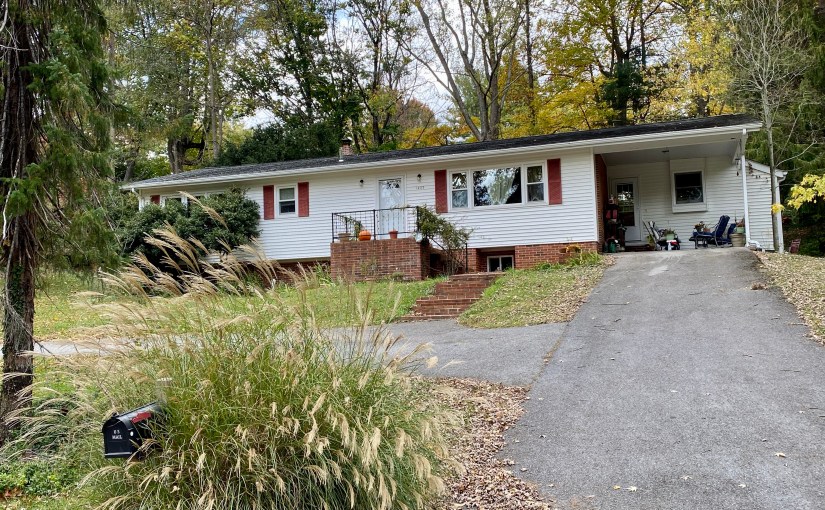
Second: the title makes clear that this house is at the centre of the abuse. On this avenue. In Southwestern Virginia suburbia. It feels right and important to flag here that Child Sexual Abuse occurs everywhere and anywhere. Including within the four walls of my childhood home. My sexual abuse did not happen in some ‘deprived’ area, by parents who were ‘addicts’ or ‘on benefits’ etc etc… I make these points because, believe it or not, over the last couple of years I have had people say exactly these things: ‘oh I knew it happened in some parts of town’, and ‘oh but you are doing so well, how?’ etc. All judgments of not only me now, but the circumstances I and others grew up in. And a ridiculous, shaming attitude toward those who grew up differently. This attitude conveniently keeps CSA at arm’s length — over there, not in my backyard.

Once and for all, here it is: Child Sexual Abuse happens to at least 1 in 6 children across all socioeconomic levels. I am happy to provide the resources I and others, including dozens of charities and organisations, use to arrive at this — but I would also encourage you to look it up yourself if you have questions, as along the way you will find out a great deal about Child Sexual Abuse.

My father was a professor, as were many wage earners living along this particular avenue. And his crimes were completely hidden in this house. How many more houses along this street hid Child Sexual Abuse? Statistically speaking: several. Yes, almost certainly: several.

Third and finally, I come to my leaving Locust Avenue. It was the last thing I wanted to do, in so many ways. But I felt forced out, scapegoated (as I now know is typical in family cases of abuse) — and I had to do something to save myself. As followers of this blog will know, I had to leave behind my [half] brother and [half] sister after 11 years of living with them, and was forbidden from telling them anything. It was a terrible secret to keep. Feeling forced to leave my childhood home destroyed it for me, forever, regardless of any good times there.

So yes. Leaving Locust Avenue is right. It captures so much at the heart of this book.

Here is an excerpt from the memoir which recalls when I first arrived at Locust Avenue.

***

generations

I’ve been thinking a lot about my mother over the last few weeks. Her illnesses. Her pathology. Her recurring cries for help.

She unfortunately married an abuser. Who, over ten years after they were divorced, began to abuse me. When I think back to telling her I was abused…I wonder if then, right then, she gave up almost completely.

My aunt and I believe that my grandmother was also abused by a family member. And we are sure there are more. How my father figures into this history of abuse is not something I will ever know. I am sorry if something happened to him, in the way that I am sorry when I hear of any abuse. But it is not a consideration when I face his abuse of me. After all: I am not an abuser. My aunt (whom he also abused) is not an abuser. My mother, abused by her own father, was not an abuser.

It is a myth that victims of abuse go on to abuse. It is a dangerous and wholly inaccurate assumption, one which partly absolves perpetrators of responsibility and accountability. The truth is, abused in childhood or not: the decision to abuse is down to the abuser. It is the abuser’s fault. No one else’s.

All of the abused women in my family have tried, and mostly succeeded, to break the intergenerational line of sexual abuse. My mother’s attempt to save me from her suicidal and infanticidal actions — her more or less throwing me from her sinking boat onto the boat which appeared to be floating, my father’s — was also an attempt no doubt to save me from her abusive past, and the fear of how she might harm me. She said to me many times that giving me up was the hardest thing she had ever done, and that she was wracked with grief for over a decade afterward, until I went to university. Later, when I told her about my father’s abuse of me — all of her sacrifice must have seemed for nothing. Must have destroyed whatever she had left, on all fronts.

Two and a half years after she died, I am finally going through her things. As I’ve known for a while, this is all — somehow — my next book. The photo above is I believe her graduation photo, from high school. She went on to the University of Texas at Austin and did a double major, in English Literature and Maths. She was smart. Very, very smart. The loss of herself over her lifetime is heartbreaking. So much promise, so much life. She was 79 when she died, destitute and completely alone in a high security nursing home, trailing a number of psychiatric diagnoses. In the pandemic. Despite our years of trauma with each other, it was the thought of her dying alone which really undid me, the night I received the email.

This short excerpt from my memoir — now titled Leaving Locust Avenue — recounts when I told my mother about my father abusing me.

***