claustrophobia

My dear friend came to visit recently. After many years of knowing each other and being close as writers — we discovered only a few years ago that we are both CSA (Child Sexual Abuse) survivors. This was a shock to us both: keeping secrets, keeping abuse ‘over there’ is hard-wired in both of us. But we have come to know that much connects us, and that in a way this is cause for celebration. Despite our pasts, we have compassion, we have empathy. We have humour, and love.

This time we ended up alighting upon something I didn’t know she had as well: a violent reaction to feeling enclosed.

I’m curious: do most or all survivors experience this? I cannot bear the sensation of feeling enclosed, or struggling to swallow, or reaching for air. This means that last year when I had tonsillitis I was in a terrible, panicked state. Max sat with me, holding my hand, distracting me by watching sitcoms. I was barely with it. Tears of desperation squeezed out of my eyes with every breath.

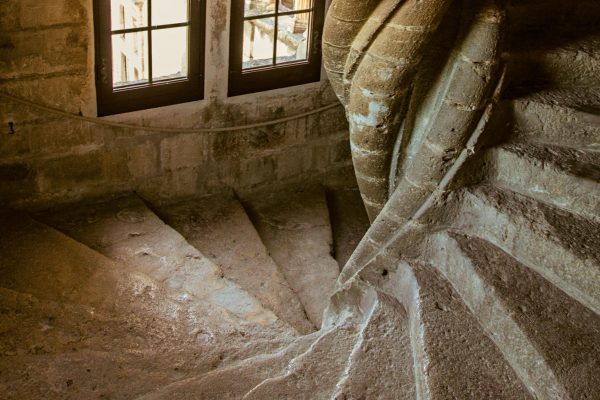
Every time a duvet climbs above my shoulders I am panicky and shove it away. I almost always sleep with my arms out of the covers. I also find elevators (lifts) very difficult, especially small ones. I struggle with spiral staircases, and have had more than one serious panic attack while climbing them. I am physically disoriented very easily, and launch into a full blown panic attack when this happens. Whether in IKEA, or once in an observatory when the ceiling rotated — when I don’t know or remember how to ‘escape’ from someplace, I melt down.

My friend is the same. Almost exactly the same. We figured there must be something about being overpowered. About a large person hovering and smothering. About not being able to fight.

One of the first realisations I had in my early therapy was the fact that I wanted to push my father away. My arms ached with that realisation. But I never did. I was frozen, frightened, dissociated.

These triggers — phobias, fears, whatever you call them — are all collateral damage. Ripples from abuse. All of the above responses are valid, as are many more. They are normal trauma responses. Yet both of us have at times been made to feel deficient: buck up, be brave, there’s nothing wrong!

There’s a lot wrong when you are in fear for your life. When you think the breath will be squeezed out of you. When things are forced into your mouth and you can’t breathe. When you are a child and can’t bear the weight, the intrusion. These are the facts. They never go away.

We must respect trauma responses. We need to be trauma-informed. It is often NOT possible to ‘overcome’ these responses, and it’s a myth to believe everyone can. We all have to work with what we carry around the best we can. For survivors, these tangled and deeply embedded responses are unavoidable at times.

For me this means I almost always avoid lifts. For me this means I ask the dentist to raise the head of the chair closer to sitting, and have to ‘go someplace else’ when x-ray plates are in my mouth. For me this means I am always verging on panic when in a crowd.

My family know these things and accept them. They know where these responses come from. With time and recognition of these triggers, I am less compromised by them than I used to be. For me, speaking my ‘truth’ — admitting that I’m frightened, admitting that I’m disoriented and having to control my breathing — eases my panic, and often prevents it from escalating to the point where I can’t be reached. These issues don’t go away — but they have less sway over me.

This won’t work for everyone, clearly. Sometimes we are surrounded by people who refuse to understand, or whom we don’t trust, or with whom we don’t feel safe enough to show we are feeling vulnerable. I know I am very lucky. Without even realising it consciously, I landed on my feet when it comes to close family and friends.

Regardless of how memories manifest with you or with your loved ones, acceptance goes a long way. Lack of judgment goes a long way. Saying ‘it’s alright’ to feel this way, to react, goes a long way. Because next time the panic might not be quite as overwhelming. Regardless of the trigger: being seen and believed and supported can help dismantle these suffocating walls.

blood and water

In some ways, this is a simple post. Because love — unconditional love, offered freely — is in some ways a simple thing.

I think of this today in particular because last week we hugged and waved goodbye to my teenage nieces. My actual nieces. My [half] brother’s children, who came with their mother and stepfather. Where to start with the girls? Authentic, open, loving, kind. Fun and funny. And completely accepting of me.

To those of you who haven’t had family torn apart — by trauma, abuse, narcissism (take your pick!) — being accepted as a blood relative may be so automatic as to not be questioned. Brother’s children = nieces. Equals blood relation. Equals thicker than water.

And yet. As many of you will know, I left my father’s house at age 17, leaving behind my brother and sister. I was not allowed to explain why, although my stepmother ‘knew’. I had lived there since my brother was a baby, and my sister was two years old. Leaving them remains the most painful separation I have ever undergone, or had to bear. I cried in private for years.

Meanwhile, the damage unfurled. For me and for them. Eventually I realised that it was my father who should have left the house. He had committed the crimes. But my first therapist did not report him, as was Virginian law then. She broke the law. And consequently broke two of the most cherished ties of my life. Just like that. Before we’d had time to consider what might be happening, it was just too late. We had lost each other, through no fault of our own. Stuck with the painful consequences.

I hoped against hope that I could be ‘real aunt’ for my nieces, before they came to visit. I hoped, but had learned after years of tangled dynamics not to count on anything. If you don’t count on something, it doesn’t hurt as much when it doesn’t materialise.

I am blessed to have 20+ close relatives by marriage, three generations of them now. They have been in my life unconditionally for 35 years. I am thankful every day for them.

And yet. My nieces — my beautiful nieces — arrive, and they are blood. They call me ‘Auntie’. Their faces are open, loving. We laugh, we celebrate a birthday, we punt down the River Cam, we go line dancing (yes we do!). The pure joy I feel when I say to my dance teacher, flinging my arms out: ‘these are my nieces!’…. It’s hard to express how extraordinarily precious this is. How lucky I feel. How grateful. I slide hair clips into their hair.

What can I say? I had given up on ever being a blood aunt, and here I am, one of theirs. They accept me. They don’t blame me for anything. They don’t deal in loyalties or suspicion. There is nothing to (fruitlessly) unpick here. We start where we are. And all this is so much more, so unexpected, and I was so unprepared. I was not prepared to be free of the past, to land in this tender place. But I am with them. And they are with me.

It is possible to be surprised by happiness it seems, always, despite what can feel like intractable pain.

Father’s Day (UK)

My first father, and the father who never harmed me, was my grandfather. That’s us in the photo. I’m three years old, and we are in Luling, Texas. My parents were divorced when I was just a few months old. In this photo, I hadn’t met my father yet. I don’t know whether I’m leaving my grandparents’ care to go back and live with my mother, or whether I am joining my grandparents to live with them for a while, leaving my mother to her instabilities and mental illnesses. I traveled both ways, often, up until age six.

My grandfather is holding both of my hands here. My face has faded with time, but his remains strong, in focus. Out of shot here I am pointing my foot forward in my saddle shoes, as if I am foreshadowing the decades of dance I would start only a few years later.

In hard times, I still channel Granddaddy for comfort, hearing his voice in my head. He died over 20 years ago now, but I can still hear him — quietly spoken, always giving me strength and belief.

Why, you’re not going to let a little thing like that stop you, are you? he would say, no matter what;

and

We’re rooting for you! even over the telephone, often at the end of our conversations;

and

You can do anything you set your mind to.

Both of my grandparents were the solid centres of my whole life. I carry their words and actions with me, always, and miss them, honestly, daily.

Happy Father’s Day, Granddaddy. Love you always and forever.

***

What I’m saying here too is that I cannot consider my biological father my father. I cannot begin to put him in the place where Father’s Day happens. He was my abuser, and although that’s not all he was (any more than being a survivor is all I am), his abuse of me when I was a child — sexual, psychological, emotional — far overshadows any good which he may have done as a father in my life in other ways.

Child Sexual Abuse is not just the crimes themselves. CSA is insidious, pervading, and tarnishes every aspect of your relationship with your abuser (and too often, everyone). My father’s actions and decisions made him not-my-father. Forever. I never hear his voice anymore. Once I got rid of it, it was gone for good.

***

Here are two excerpts from Learning to Survive, my memoir about neglect, CSA, living through it all and with it. The first is about my life with Granddaddy, the second about my father.

***

1.

I go everywhere with them. Granddaddy takes me out in the pick-up truck, sometimes even in the back if I promise not to move around too much. He drives around the block so I can feel the wind in my hair. For longer journeys, though, I sit next to him in the cab. Together we go to the hardware store, the gardening shop, the fishing tackle store. I inspect tiny drawers full of screws and nuts and bolts, and once, lots of extravagant fishing flies lined up on the counter. It’s not my world, but with Granddaddy in his overalls, his hand around mine, or often, his hands resting on my shoulders, I get a peek at it.

It is Granddaddy who sets up the swing and slide in the backyard, and who builds a sandbox around the bottom of a tree for me. Outside, it is always hot and wet, but with Granddaddy working next to me, I play. The chameleons on the house fascinate me; I stand completely still, just waiting for one to run from the green grass to the red wall so I can watch it change colour. In the front, together we see the squirrels fussing in the tall trees, running through the thick spiky grass. I sit on the front step and watch him mow, watch our neighbours mow their front yards, the hands they raise to one another. And always, should anyone stop to talk, my grandfather waves me over, rests a hand on me: ‘This is our granddaughter,’ he says, ‘come to stay with us for a while.’ And whoever it is, sensing something, or maybe just liking what he sees, says, ‘Well isn’t that nice. Isn’t that nice for you?’ And my grandfather, with a little squeeze, says, ‘It sure is.’

2.

After the age of 11, I cannot remember a single decent time with my father. That is, one that isn’t inflected with fear, or repulsion, wondering what his next move will be. Wondering how he will exploit any moment to bring me closer to him, to be with him, later. As I look back, I think I may experience some moments of joy, in theory – like listening to music with him, peering through a telescope, arriving at the correct answer to a maths problem together – but none of them exist separately for long. I cannot tease them apart from everything else; I cannot make them stand up against the steadily rising tide of distress and fear. They become meaningless.            

So I forget them all. I forget any possibility of good in him, and it never comes back. That room, like so many, is entirely empty.

trying to stay in the saddle

[image: the Osmington White Horse]

It has been SO LONG since I’ve been here. As with everything, then the guilt of NOT doing something accumulates, and then there’s so much water under the bridge that… the task becomes impossible. Or feels it.

However. It is not like me to stop something or give up. There are lots of reasons — some of which I’ll post about here — why I keep repeating this to myself. Never give up.

First: the really fab news that I hinted about last time. Way back in March of this year, 30,000 words from my memoir about Child Sexual Abuse (Learning to Survive) won Highly Commended in the Bridport Memoir Awards. Soon after, I discovered that there were about 1,000 entries. Top 5 out of 1,000 entries. It has been such a joy, a real lift, to have my work validated and valued in such a competition. One of the HUGE blocks to getting stories of CSA out is the resistance of the ‘mainstream’ (whatever form that takes — whether media, arts, medicine) to hearing about these stories. Those of you who circulate in this world of survivors know all too well: the ‘mainstream’ is hugely more likely to draw back than to bear witness, or listen, or support. The ‘mainstream’, generally, turns away.

My prize in the Bridport felt like the beginning of something — at last! I have been struggling for two years to get a bit of purchase for Learning to Survive. My frustration has always been: I have published five books, one of them prize winning, and my work has been collected in various high profile national anthologies, published in newspapers etc. So WHY — why?! — is this book, a book I know is worthwhile and sound and well-written — staggering through almost universal rejection from literally dozens of potential outlets? The Bridport win gave me hope that the book may now be championed — despite the lack of precedent in the publishing world for stories such as mine (as OURS) — hope that someone may be willing now to take a risk.

Second, and alas, it’s clear now that the Bridport accolade has made little difference to the book’s future, at least in the UK. As a result of the Bridport however I have met some wonderful people, people cheering me on, people who — alongside me — are shocked that I’ve not been able to place the book. I’ve also been in touch with some of the judges/readers of the Bridport for advice from within ‘the industry’: from each, the writing is lauded (more than my writing has ever been lauded before, just for comparison), the subject acknowledged as important and vital, my handling of it ‘just right’…. but these effusive compliments are mitigated with ‘the subject is too dark to sell’, ‘maybe child sexual abuse has been done to death’ — etc. In other words: great writing, but the material itself is unpalatable. It’s scary. It’s ‘too much’ for readers. Not worth the risk for publishers. I want to scream what about memoirs about the Holocaust? What about memoirs about domestic violence? Murder? Grief? They exist, and they are ‘dark subjects’; they are horrifying and difficult. Yet somewhere along the line, someone has considered them important enough to be in circulation. Important enough to learn about, to witness. Not so Child Sexual Abuse, clearly.

I have indulged in a couple of threads on Twitter around these responses. Here, in short:

1) CSA affects at least 15% of the population, of ALL adults and children. THERE’S your readership publishers, not to speak of the millions of people who love, support, and care for survivors. It’s a huge audience, ready-made, an audience in dire need of stories which speak to their experiences. Which break the awful silence and shame, which raise social awareness. Which comfort and support, which tell them they are not alone, that there is a future for them and all of us.

2) Child Sexual Abuse has absolutely NOT been ‘done to death’. What we do hear a lot about are ‘serial’ pedophiles such as Savile, Maxwell, Epstein. What we do hear about are ‘monster narratives’ about ‘evil people’. We read about abuse that happens ‘over there’, that is NOT in our lives. We do not read about intra-familial CSA, or CSA perpetrated by someone the child knows. Which makes up 90% of all CSA. We do not read about abusive fathers, uncles, grandfathers, brothers, babysitters, boyfriends, carers. We do not read about the most common form of CSA, that which happens in our lives, right under our noses.

3) There is a clear moral imperative to publicise these stories. Given that there are millions of survivors in the UK alone, and thousands of millions of survivors around the world. Given that these victims and survivors are — wholesale, forcibly — drowning in silence. Given that most survivors of ‘everyday’ CSA believe that they are pretty much the only victims of this in the world. That they are alone in their trauma and loss and shame. Given all this, survivors surely deserve better. There is only one literary memoir published in the UK about CSA (by Clare Best), and only a very few in Europe and Australia. We deserve more. We deserve to be seen. We deserve to be included in the long list of wrongs which need righting in our world.

4) Finally: it’s insulting to label anyone’s suffering as ‘too dark’ for general consumption. Particularly if that suffering is widespread, or ultimately turned toward doing good. My book and writings, and the work of so many other survivors, exist with the explicit aims of relieving suffering and of prevention. Of reaching out, empowering, and bringing strength and hope. All of the abuse in my book is finished by 30,000 words in. The rest of the book — 35,000 words — is about survival, hope, and living.

***

I could go on. Fortunately, as you can see, my anger has returned. Anger turned inward is sadness and depression, and I admit that I have been battling these consequences over the last couple of months. I am silenced AGAIN. We are silenced AGAIN. It’s painful, re-traumatising, and heartbreaking.

I am holding on to the belief that things may be shifting. Slowly, granted, but shifting. There are hundreds of us doing work around CSA in the UK alone, and much of it makes forays into the mainstream. Recently, Channel 4 aired a documentary which told Emily’s story: her father was her abuser. Recently too, Nicole Caroli featured in the Metro newspaper — telling her story and raising awareness. (Nicole also runs an excellent blog, here.) Sophie Olson’s (The Flying Child’s) ‘Last Taboo’ Radio 4 programme, aired nearly two years ago, continues to break down barriers, as does her work with schools, midwives, social workers, etc (Sophie’s blog is here). The glorious and indefatigable Viv Gordon continues her moving performances and showcasing of fellow survivors, championing the necessity of their work. Elizabeth Shane publishes poetry and devotes her time to supporting and speaking up for survivors. Jane Chevous at Survivors Voices and Antonia Sobocki of LOUDfence (also at Survivors Voices) are frankly astonishing in their breadth and dedication to raising awareness and holding others to account in the world of CSA.

There are many more. We are forces to be reckoned with, and there are lots of us.

Many activist/survivors are old hands at this. They know the battles and are not giving up. I’m very new here. And the stark nature of these battles has hit hard. The reality that CSA is drenched in stigma and silence, at every turn, regardless of external validation and the accompanying shocking statistics around CSA — still, in the 21st century! — has hit hard. The fact that my book seems not to stand a chance in this country due to social attitudes toward something that has nothing to do with me — that was not my fault, that I did not choose, that I wish more than anything had never happened — has hit hard. Once again, I’ve had to face that none of this is my fault. Yet I still suffer the consequences.

Saying all this: I cannot give up. I won’t give up. I am able to speak when so many cannot. It really is that simple. I’m back on the horse, with my sights now turned to the US market. I welcome any tips, advice, leads. Something has to give.

post-traumatic growth

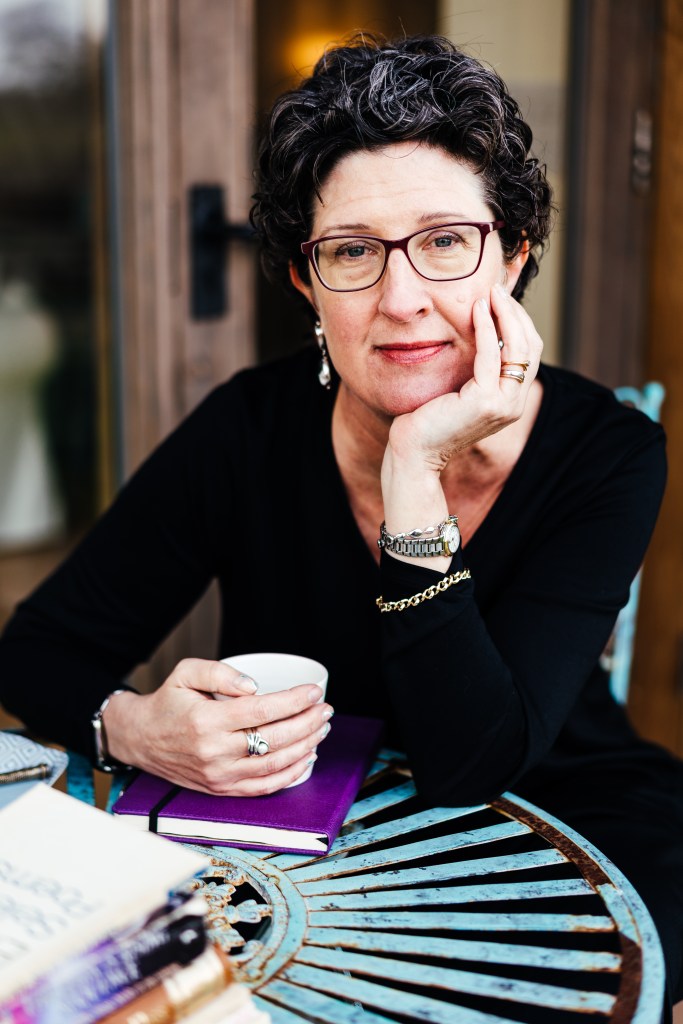
This photo of me was taken a few weeks ago by the same brilliant photographer who shot E and A’s wedding last summer (Hannah Hall Beddoe/Cuts the Mustard). I have known for a while that I needed new author photos, as the wonderful ones I had (by friend Nancy Wilson Fulton) were over 10 years old.

After discovering that my work was shortlisted in the Bridport Memoir Awards this year, I needed author photos urgently. I’ll say more about the awards in the next post, but suffice it to say I’m thrilled to bits. Child Sexual Abuse reaching the top five in an international, open competition. This is a win no matter what.

But back to the photos. I went to see Hannah of Cuts the Mustard because I trusted her. She was in the Lakes (six hour drive from here), so a bit of a haul over a weekend, but I knew I couldn’t go to a stranger. Especially a man. That was not ever going to happen.

In the couple of weeks which followed the shoot, I tried to identify my feelings. The process of doing them had felt harder than I anticipated. I felt on the spot. I felt awkward. And at some point, I realised that I felt scrutinised. Not, I hasten to say, by Hannah — but by the camera itself somehow. I tied myself into a knot trying to appear ‘normal’, all the while feeling so very ‘different’.

It’s not rocket science to figure out what is going on here. Being forced to appear ‘normal’, to perform, when really so much is NOT normal under the surface. Really you want to run away forever.

To Hannah’s enormous credit, I began, as the session went on, to see the person behind the camera for who she is: a friendly face, a face which means me no harm, a face which believes in me. Hannah knows my history, and I began to think ‘oh, just be how you are every day’ — she likes you! You like her!

The shoot improved exponentially partway through. I can identify when I began to ‘risk’ showing myself. I realised she wasn’t going to use anything against me. That I did not need to hide.

Because that’s what my father would do. Swoop into any show of my ‘true self’, try to weasel his way in, try to ‘steal’ it — or so it felt. So I learned to hide the way I felt, nothing showing on my face. I learned to live with scrutiny, with my father seeming to examine my face, my movements, for anything he could bring up later, in my bedroom, that night. Anything to get ‘closer’ to me.

At some point, in my teens, while the abuse was still going on, my father took pictures of me. They are not explicit pictures, but they are agonising nonetheless. They look grown up, so focused on me, the camera’s cold gaze. I was frozen, yet required to be ‘relaxed’. A child forced into grown up poses. Thinking about it now, I feel just sick, sick to my stomach.

Somehow, these experiences led to me being convinced that I do not, under any circumstances, ‘take a good picture’. My children and husband are ‘photogenic’. I am not. I have felt this way for as long as I can remember.

When the photos come through from Hannah though, I am gobsmacked. And elated. There, on the page, in so many photos, I am myself. I recognise me. My husband recognises me, seeing in my movements and expressions so much that is ‘typical’. I look: yes, I am happy with that kind of ‘typical’. I am happy with how I guess I must appear to the world. This is me.

I have always hated representations of myself. They feel so far away from my nebulous idea of ‘me’. I harboured a fear in fact that I always looked fake, that there was always some of kind of ‘wall’ between my interior self and my external appearance, and never the twain shall meet. I honestly had zero idea that these photos could be ‘me’ in the world. But my friends and family assure me that they are.

So what happened? How did I arrive here? Later, I spoke with my good friend Clare Best (another CSA survivor) about this. It turns out that she wrote a blog post herself about having author photos taken — by her son in this instance — and how this led to a sense of growth, of being more rather than less grounded, connecting with the self in profound ways.

Clare mentioned the idea of ‘post traumatic growth’. I’d never heard of it. But reading up on it: this is clearly what has happened to me, in particular ways, over time. The latest one being finding my way through being photographed, and experiencing it differently than ever before. There is a part of me that might have turned away completely from having these photos taken. I did find it gruelling at first, extremely emotionally challenging. But at some point, unawares, I grew past/through the initial, old trauma. I can now see that I have done this a number of times in my life, around very specific things. It is patently obvious that PTG is by no means the inevitable outcome (‘what doesn’t kill you makes you stronger’ — NO!), nor should there (as the above linked article is careful to point out) ever be an expectation or imposed narrative of certainty around PTG happening. Because we all know that there are some things about having been abused which will always remain raw — different things for different people — but forever traumatic and triggering. It’s just that for me, surprisingly, being photographed is now not one of them.

Last night we went out to dinner to celebrate the Bridport prize. My husband took a picture of me in front of some nice food, to send to the kids. He showed it to me — ‘you won’t let me send this, will you?’ After 37 years together, he is prepared! But I looked at it and thought: nah, I don’t care. Send it! So he did.

***

The following excerpt from my memoir LEARNING TO SURVIVE, recounts being scrutinised by my father. This particular event happened when I was over 18, but it is one of many such occurrences throughout my teen years.

***

That same summer, the household in Blacksburg acquires a set of weights and some gym mats. They are in the basement, in the half of the downstairs sitting room which has never been used for much. After a serious knee dislocation during a modern dance rehearsal at Oberlin College, I am in rehab, building my leg muscles, generally getting back into shape, and I use the weights every other day, doing sit-ups and stretches as well. When he’s home, my father comes downstairs to watch me. He says he is learning about weights, and smiles, laughs a half-laugh. But I know he’s simply coming down here to look at me. When [my stepmother] comes home, he quickly gets to his feet, goes upstairs.

            Encounters like this are common, I realise now. From age 11, when the abuse starts, right up until the last time I see him, at age 21, every time we are alone he behaves as if I am party to a secret, a secret between us. He behaves, I realise now, as if we are actually in a secret relationship. As if external forces ‘keep us apart’, but we still ‘long’ for each other.

            For me of course, nothing could be further from the truth. He repels me, disgusts me. His laugh, his hands rubbing together, fingers clasping. His physical awkwardness. I have a hard time being around him at all. I have no wish ever to see him again. Yet: here I am. Here is the family. Here is Blacksburg. Here is where I grew up.

            What I struggle to accept now is my tolerance of the situation. How do I not storm out and never come back? How do I eat in the same room? How do I smile? How do I breeze in and out every day? Secrecy, I guess, is hard to break the surface of. It holds firm, membranous and tough, despite the liquid chaos underneath.

            And I suppose, if I’m honest, a part of me still hopes. I hope that all of this will pass, and I know that some part of me is strong enough to last until it does. I continue to hope – for years – that he will change. That he will seek help in the ways that perpetrators I later witness are forced to seek help. I know – deeply and with real regret – that everything about his attitude to his relationship with me is wrong. What takes me so many years to do is give up on him. Give up on the family, give up on [my stepmother]. And it’s this giving up which brings lasting pain, to this day.

the cost of immobility

On the advice of my consultant, I’ve been forced into ‘complete rest’ recently. Somehow my lower back started acting up, and six weeks later not only is it not recovered, but I keep ‘setting it off’. It’s a rollercoaster.

As a consequence of my indeterminate (thus far) back issue, I haven’t been to dance or do hydrotherapy in weeks. Complete rest for me is extremely difficult. I am used to just throwing myself into things, and my body coping. The advantage of being strong and bendy is that I’ve always been able to do virtually anything without any serious consequences. I always get injuries, yes, but they clear up more or less in a few weeks. Now I am finding that things simply aren’t healing; my chronic pain has escalated, and it seems that my early arthritis (common with hEDS) is impacting everything.

So. What of mobility?

I have mentioned before here my reliance on dance as a way of shifting trauma. Dance has always been the way that I manage to stay in touch with my body — not disassociate, be grounded, be meditative, etc.

Free movement in my environment has been crucial to my mental health for decades, and, probably more than anything else, preserves my wellbeing and my belief in the future.

I noticed when I had my hip replacement operations that within a couple of weeks I felt low. Everything seemed to stop. I felt paralysed, unable to help myself. Useless. But each time, I knew the end was in sight: slowly slowly I began to move again. I had goals. I did physio diligently. And in each case, I was walking well by six weeks post-op.

My current situation is different however. The end of my immobility is not in sight. The cause of this pain and reactivity is unknown. It’s not clear that I will dance again, though I will do everything in my power to get there. I have no exercises to do, no agency in this. Except to be patient.

Which is not my top personality trait, if I’m honest!

I suspect that immobility triggers many Child Sexual Abuse survivors. There are several aspects of this for me:

  • I froze while I was being abused .
  • I could not walk or run away from my father; I was stuck.
  • I could not push my father off of me. I could not move my arms. I was afraid he would do something ‘worse’.
  • I stayed still in order to ‘disappear’.
  • I felt in danger of imploding, the withheld fear and panic inside me almost overwhelming.

Helplessness — true helplessness, powerlessness — is extraordinarily grinding. Your body seizes up much like your mind does. You turn into a rock, and cannot reach out. You cannot do anything to help yourself. You simply cannot. You feel yourself slipping into invisibility, nearly losing yourself in the process.

Immobility, for me, equals being nothing. Not being able to dance, for me, risks dissociation. It can also bring the inner turmoil of CPTSD: bad dreams, flashbacks, the ramping up of despair.

I am completely aware of what immobility means for me. But my reactions are not something I can control. They are hard-wired.

I am much stronger now than I was when I was a child, of course. I have more to live for, a lot more hope. And I know that whatever happens, I can bear it. But lasting through, time and again, does come at a cost.

***

(Side note: I won’t be excerpting Learning to Survive for a little while. I’m all good though, and am so grateful for everyone’s companionship and belief.)

going back (5)

Three weeks ago today in San Antonio, Texas, my cousin Jamie (more about my love for him here), my cousin Linda, Jamie’s wife Patricia, and I scattered my mother’s ashes across the graves of her (and their) beloved grandparents’ graves.

I read the Hopkins’ poem God’s Grandeur , and anyone who wanted to say something, said something. There was no sugar coating of the difficult relationships we all had with her, but we all loved her.

It was wonderful to be with people who knew her, and who cared for her and for me, no matter what. My people.

The journey to Texas with my mother’s ashes was traumatic; I do not recommend it. I was completely unprepared for the separate examination and testing the box would need to undergo. On my own in an airport of rushing people, security folks handling ‘my mother’, I just stood there and sobbed and sobbed. The low point. But I had to get her to San Antonio. Which I did.

(After security, I found a place in the terminal to cry more, send a sad note to the family WhatsApp, and blow my nose. Within a couple of minutes I spoke with E in Boston, heard from M in Pittsburgh, and spoke with R in Cambridge. I am so grateful for my solid, loving family.)

I had not been to San Antonio in 34 years, since leaving for the UK. Yet there, especially after the scattering, sheer elation took me by surprise. I was so happy. I felt like having a party – dancing! Home at last. My home, which I had truly thought lost to me forever. It was so much more powerful and empowering than I could ever have imagined.

My mother would have been delighted, through and through. And would have utterly relished the cracking Tex Mex we had afterward for lunch. We toasted her with margaritas.

Goodbye Mom. Rest in peace now.

going back (3)

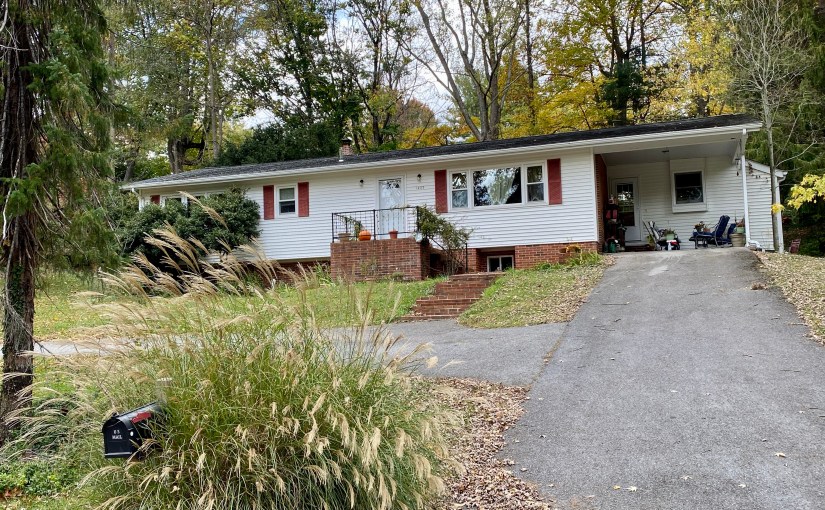
I took this photo three days ago. This is the house where everything started, and everything ended.

I was six years old when I came to live with my father, my step mother, and my two half siblings. Even at six, I wanted a family life, and deep down I was hopeful. My mother had been unpredictable, frequently immobile, and I had only seen my father once in my life before moving in with them. And yet: I was hopeful.

When I was 11, my father started grooming me in this house. Soon after, he began sexually abusing me. In this house. The abuse increased in frequency and severity until I was 15, although I don’t remember how it stopped. I locked the door? He stopped because I was too old? I don’t know.

But the abuse stopped, and within a year things fell apart to the point that I left this house at 17, back to my unpredictable and neglectful mother.

The hardest decision I ever made in my life was leaving my siblings. All in this house. I left them here, and I felt like pieces of me had been torn out. No one ever knew any of this.

This looks like a pretty normal house, right? It looks like a lot of houses in a lot of neighbourhoods.

Make no assumptions folks. Do not rely on appearances. Listen to something deeper. I’m sorry to say that everyone who reads this will have lived on a street or in an apartment block – possibly next door – to a family where child sexual abuse is happening. We need to do better. Starting now.

going back (1)

[NB: probably part of a series]

After several years away, in two weeks I am going to the US. My main purpose in going is to settle my mother’s things, collect her ashes, and take her back to Texas from Virginia. I’m so grateful for all the support I will have over the two weeks I am there: Max, Brett, Anthony, Anna, Lois, Jamie and Patricia. I’m not sure any of this would be doable without you.

My mother died in May 2021. She was 79, and had been in a nursing home for a few months, following a few months in hospital. She had huge mental health challenges, and I now recognise that she had Narcissistic Personality Disorder. In her younger years, she could present a kind exterior when she wanted to. She believed she was kind, indeed. And more clever than anyone else, more sympathetic, wiser etc. She once told me, almost pleading with me to believe her, that she was ‘good with children.’ My understanding is that narcissists have no idea that they are ill. Because the problem always lies with someone else, not them.

I am her only child, and her only relative (bar Jamie in Texas) who ever spoke to her. She had also alienated all of her friends, one by one, as her selfishness became her single prominent characteristic.

I know she was lonely. And yet I called my mother only twice in the last year of her life. The penultimate time, I could hear that she was slipping. And, exactly like the old days when this happened, she called me names, accused me of conspiring against her, and said that I should stop trying to help.

It’s so hard to tell the difference between mental illness and actual personality traits. I came downstairs after that phone call, and as usual, completely fell apart. I was 56 year old, and my mother’s sharp, disparaging tongue could hurt me every bit as much as it used to.

I went into therapy again. I knew I needed to free myself from her, but I had no idea how to do it, having tried and failed numerous times.

It took a long while to unravel some things, in particular to unpick the deeply imbedded guilt: she’s had such a hard life, and everything about our relationship is just making it worse; why can’t I love her? Etc.

One day, as I was struggling to express this rock of guilt, my therapist said: ‘you do realise that in this day and age you would have been taken out of your mother’s care?’

My mouth literally fell open. ‘What?’

‘Yes,’ she went on. ‘She was abusive. She took drugs in front of you, she did sexual things in front of you, she allowed you to get into dangerous situations. She was neglectful. Nowadays social services would have been called in.’

After the shock, relief washed over me: there is a social consensus about caring for children, and she did not satisfy it.

No she did not. She did not know how to take care of me, and therefore didn’t.

The last time I spoke to my mother was shortly after this realisation. She was still in hospital, and her meds had clearly been balanced. She was pretty lucid, softly spoken, and nicer than she’d been in years. I had called to talk about plans for her apartment, and her belongings. And she said two things, bittersweet: Patty, you don’t owe me anything, you really don’t. And Patty, I trust you completely. You’ll make the right decisions. This was the closest she ever came to acknowledging her part in our disastrous relationship, and the only time she ever entrusted me with anything.

As her only child then I am going to Virginia in two weeks to go through what remains of her things. I am collecting her ashes, and then getting on a plane to San Antonio, where Jamie and I will scatter them. She was always but always trying to get back to Texas. I am as certain of this as I am of anything in my life: she wanted her ashes in Texas.

Finally: it’s important to register that my mother’s negligence and inabilities set me up for the sexual abuse I would later undergo. We never spoke directly about this, but I know it’s true. By six years old, when I went to Virginia, the pattern around love and attention being conditional was already well established. My grandparents planted unconditional love in those first six years and afterward, enough to see me through the very worst times of my life, but no one — not even them — could fix my mother’s conditionality. Or my father’s, for that matter.

In a change from Learning to Survive, here are three poems from my last poetry collection, Baby (Liquorice Fish Books, 2016), with apologies for having to work with wonky images. Formatting is not fun on WordPress!

The ‘you’ in these poems is my mother.

***

in hope or in despair

The Flying Child’s recent blog post about arranging to see her abuser again — and what happened in that visit, in public — has stayed with me for several days.

Over and over in these days, I replay the scene in which I did something similar: I went to go stay with my father — my abuser — for one night when I was 20 years old. He was living alone in an apartment in Washington DC. The excerpt from LEARNING TO SURVIVE, below, recounts what happened.

That night marked the last time I saw my father. But it didn’t mark the end of me trying to ‘solve’ the family dynamics, of me trying to make him accountable, accept responsibility. Of trying to get an apology. These useless hopes, this belief that maybe just maybe I could ‘fix’ something — went on for another 10 years or so, through letters, therapy, and a few more conversations. To no avail: I do not believe he ever accepted that his actions, his arrogance, his delusions and pathology, were at the root of every single messed up relationship not in only his life, but in the lives of every member of his family. Delusion is indeed the word.

And so I return to why I — and Sophie of The Flying Child, and others, I’m sure — thought seeing our abusers again would be anything other than excruciating, or at worst, dangerous. For me, I can see now, I desperately wanted everything to be over, to be passed. I wanted him to be a father — as in fatherly, parental — and thought, somehow — because the warped world view of abuse also affected my self-perception — that I could lead him to that change of role simply by inhabiting a daughter role fully, and pretend nothing had happened. It’s important to note here that Child Sexual Abuse also skews how the victim views themselves: in my case, because my father seemed unable to ‘control himself’ in my presence, for years, I thought I had some influence over him. And I wanted to ‘use’ this ‘influence’ for good. Somehow. Looking back, knowing what I know now about abuse, I can see that this odd inflated ‘power’ dogged me for years. My perception of all relationships alternated between me having ‘no power’ and me having ‘all the power’. Just like how I registered the abuse.

So when I went to see my father, deep down I wonder if I figured that this was a time when I had all the power. That he would be able to see I needed to be free of him, and that the only way I wanted him in my life was as a father.

I was crushingly wrong about all of it. And yet only ten years later did I truly give up hope — and this giving up involved me cutting ties, me set adrift all on my own. As victims, we are forced into isolation, loneliness and confusion in exchange for escaping unresolved abuse and its attendant distortions. As a result our pain and despair can appear self-inflicted. Yet another way in which the abuser screws us. We strike the world and our families as self-destructive and stubborn. When all we are trying to do is save ourselves.

From Learning to Survive:

***

The summer between my junior and senior years of university, I see my father for what turns out to be the last time. I have worked all summer in a yet another restaurant in Roanoke, a country and western one this time. My father is doing some work in Washington DC, also looking for a permanent job there, never having made the progress he wanted in academia. He is living on his own in an apartment at the weekends. I am not certain what takes me to DC – perhaps I am seeing my friend Daniel, who lives close by, or perhaps I still have the particular blindness that comes with abuse, the compartmentalising that leads me to think that everything is manageable. In any case I am there on my father’s floor in a sleeping bag.

            It is an uncomfortable night. I become afraid that he will come in, that he will touch me. Eventually he does come in, but ‘only to talk’; he wants to ‘see how [I am]’. I am lying on the floor; he is crouched next to me. He wants to talk about the abuse somehow, to discuss ‘it’ – but I cannot imagine how this will happen. Ever, really, at this point, and never with him.

            I survive the conversation, virtually mute. He touches my hair. I am afraid I am going to throw up, although I have never thrown up in his presence before. Paralysis sets in. I know now that I want to hit him, to push him away, and that this is why my arms ache. For the first time then though, I know, I really, truly know it’s not safe: that I’m not safe. That I must go away for good, and not come back until things have changed, if ever. I leave after that night, and never see him again.

            Once the compartmentalising breaks down, it is impossible to put the cat, as it were, back in the bag. I know now that because I am by senior year mostly happy, settled, and with direction, I am for the first time grounded enough to open Pandora’s box. Apparently my body and mind now believe I can withstand whatever emerges, although I do not know this at the time, and although at many points over the next two and a half years, I do not feel I will ever make it through.