even the ‘good’ goes away

For many years I tried to ‘reconcile’ the parts of my father who was my abuser with the parts that weren’t. I tried to hold onto the ‘good’ parts. I tried to look past the ‘bad’. Because without doubt, he had much to offer to the world.

Like probably all survivors of sexual abuse, I am hugely relieved to hear of Ghislaine Maxwell’s conviction for sex trafficking girls. Regardless of her no doubt manifold ‘good’ qualities, her ‘bad’ qualities, her crimes, have taken priority. She has been held accountable.

Child Sexual Abuse (CSA) can ruin victims’ lives. Sexual abuse is an extraordinarily damaging crime. Its effects bleed into everything. There is no way to look past it, either in your life or in the life of someone you love. The blame lies squarely with the perpetrator, and absolutely nowhere else. Sexual abuse is so heinous that it negates whatever else a perpetrator might have done in their lives. This may feel ‘unfair’ or ‘out of proportion’ to those who love or respect the perpetrators. But dealing with being a victim of sexual abuse is a lifelong sentence. Being sexually abused doesn’t ‘clear up’. It is never ‘out of sight’. There are ways to tackle its effects which are helpful, and which develop good tools for living. But trauma changes the wiring in the body; it changes us physiologically. As survivors, we are forever altered.

Perpetrators’ lives — no matter how much ‘good’ they do in the world — deserve likewise to be forever changed. The decisions they made, and the damage from them, are irreparable.

From Learning to Survive, writing about the loss of anything good to do with my father.

***

Good Things

After the age of about 11, I cannot remember a single decent time with him. That is, one that isn’t inflected with fear, or repulsion, wondering what his next move will be. Wondering how he will use any moment to bring me closer to him, to be with him, later. As I look back, I think I may experience some moments of joy, in theory – like listening to music with him, peering through a telescope, arriving at the correct answer to a maths problem together – but none of them exist separately for long. I cannot tease them apart from everything else; I cannot make them stand up strong. They are never far from everything else I want to forget. They become meaningless.

            So I forget them all. I forget any possibility of good in him, and it never comes back. That room, like so many, is entirely empty.

[photo Martin Muir]

shifting trauma

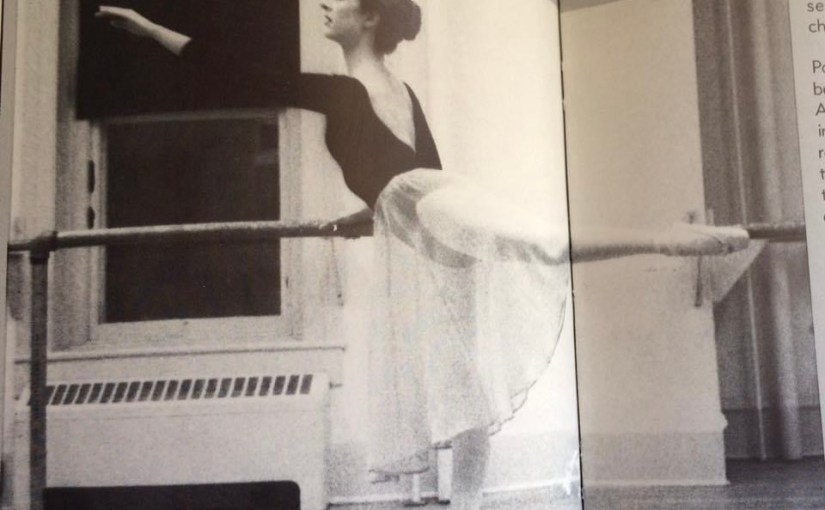
This is a photo of me at about 16. I have no memory of it being taken, and no idea for what it was taken. One of my children found it in my high school yearbook. It was taken, it seems, to highlight my dance. There’s an article that goes with it. My memory loss from abuse is indiscriminate: I have forgotten a number of ‘good’ things as well as a number of ‘bad’ things. I have holes in my memory all over the place. In my memoir I call them ’empty rooms’. So I have an empty room around this photo.

I am, though, a die-hard dancer, and an accomplished one, it seems. I danced from age seven or eight until my late 40’s, with never more than a few months’ break. I pitched up at dance schools in London and Norwich UK, danced all the way through university in the US, through having children, and working. Indeed, I often performed yearly, with other adult dancers. And WHAT a blast we had!

I have always known that dance was somehow vital for me. I knew I was happy doing it. I knew that its lyricism and rhythm informed my writing over decades.

What I didn’t know — until literally October 2021, practically yesterday — was that dance shifts my trauma, and always has done.

I am now 57 years old. I haven’t been able to dance in nearly a decade. There are physical reasons for this: namely, dodgy joints from hypermobility, and early onset arthritis. I have, however, remained fit. And for the last 10 years, I pretty much thought it was FITNESS that dance provided for me. Fitness and moving to music. I really never thought much beyond that.

Fast forward to summer ’21. Like a lot of people, I’ve had a tough, tough 18 months. Two close bereavements, a second hip replacement, one of my children having a serious accident and then a major operation. My writing stalled. And three lockdowns. I remained fit by walking (after recovery from my op), but I felt trapped. I was static in some fundamental way. And I spiralled down, really for the first time in my life. I landed in a mild — but frightening — depression. The more paralysed I felt, the more debilitated I became.

I am fortunate to have a brilliant therapist ‘on tap’. I have turned to her numerous times over the last few years, and so this time, at my husband’s insistent urging (I was all ‘no one can do anything; I’m going to feel like this forever’) — I contacted her again.

One of her first questions was ‘what has made you the happiest in the last two weeks?’. I had one answer, that I was rather embarrassed about: watching Strictly Come Dancing.

The unsettling thing is — she didn’t even know I had been such a dancer. She didn’t know that I danced all the way through the abuse. That I never felt threatened while dancing, I never felt watched. I always but always felt inside my body. It was my space. It was my thing. Time and again, I found myself gushing to her, dance has been transcendent for me. It takes me entirely into my body, and entirely elsewhere, at once. But I had never articulated this to her; indeed, I didn’t really know it myself.

It turns out that dance, over and over, has re-centred me, locating my ‘core self’ again and again. Because one thing I do know: I have preserved my core self. In that I have been extremely, extremely lucky. I just didn’t know that dance harboured and protected it.

First, I agreed with my therapist to watch as much dance as I wanted, to let that happen and indulge in that, instead of — as I was feeling — thinking of it as kind of a fun waste of time. I needed to let my body experience it.

Second, my best bae Nancy suggested we go line dancing (this video is a dance I actually do in class). We went to the first one together. And, as those of you who follow me on FB know: I WAS INSTANTLY HOOKED. Line dancing is not high impact, doesn’t involve grasping a barre (thumb arthritis, ugh), or going up on half point much (toe arthritis, double ugh!). What it does involve is my brain and focus (32 or 64 steps in sequence, repeated to each side of the room in various combinations, for five minutes at a time) and my intense, now realised, love of being inside my body and moving through music.

Along with talking therapy, line dancing has proved transformative — and yes transcendent — these last two months. I now do it twice a week, and my biggest fear over this new Covid wave is that line dancing will stop. I feel almost like I could give up everything but that. Here’s hoping.

I’m writing about this now for several reasons. First: it’s the holiday season, and we all need to pay attention, if we can, to what supports us rather than depletes us. Holidays are not fun for everyone.

Second, I saw a genius video about how The Body Keeps the Score when it comes to trauma. Yes, there is a brilliant book about this. And here’s the video that brought it home to me: The Body Keeps the Score by Knowledge is Power

Illustrated like this, I now see so clearly that dance shifts trauma for me. It moves it to a place where it doesn’t haunt me or stay in the present. It shifts the trauma. The last two years in particular have seen my body in an unfamiliar and unhealthy stasis. And the old and new trauma stacked up. It had nowhere to go, and I didn’t even know how to begin to shift it.

Third, I read this brilliant blog yesterday on the Epione page, Co-Regulation in Times of Covid by Felicity Douglas (twitter @felicitydougie). About how trauma sticks around, and about the kind of unabashed deep care you need to do to shift it around to something you can live with. How it may circle back, the same or differently, and how we as survivors can’t really be ‘fixed’. How the nervous system — the body — is something we can’t always know or take account of. It does what it does. Indeed, my therapist really feels that everything unravelled for me this last summer as much due to past stresses as to more present ones. I had been living with high cortisol and adrenaline levels for years. YEARS. Like the author of this blog: my nervous system just gave up the ghost.

So. As we go into this time of year — so difficult and strange for so many — I just want to say: your body keeps the score. Find, if you can, what nourishes you. What brings you pure joy, however fleeting. And do more of it. Do it mindfully. Make space for it. Cherish it. And your ever-shifting body will return the favour.

***

This is the first mention of dance in my memoir, Learning to Survive: an ABC of Abuse:

Ballet

Soon after arriving in Virginia [aged six], I begin to dance. Has someone mentioned my adventures with the Pink Panther theme dance class back when I was living with my mother? Does my father recall that my mother loves to dance?

            I do not know when or how I realise I am good at it. And I never realise, while living in my father’s house anyway, the purpose it comes to serve. It provides rhythm, shape to my days. I do it away from the family. It is mine. It is my body.

            I inhabit that room. I make another house. And I live there, in one form or another, for as long as I dance, for 40 years.

I saw his face

Over the years I’ve had plenty of nightmares. Shadowy figures, fear of doors opening, lying on my back suffocating. Plenty of those. And only with the recent spate of them, in the last six months or so, have I really acknowledged that all of them are from being abused. As is the development of claustrophobia, and a profound fear of the dark, among other things.

However. Something must be shifting: the night after my last post, I dreamt directly about my abuser, my father, for the first time in my memory. We had been estranged for over 30 years when he died in 2018. In this dream though: I saw his face. I looked right at his face. And I was grown up — a 57 year old woman with some things to say.

In the dream, he was sitting down. I was determined to stand up. And I told my father everything. I railed at him. I listed every last damaging effect that his abuse had had upon me, upon my family, my relationships, my sense of self. I absolutely let him have it. I tore a strip off of him.

I wasn’t scared. At all. I felt indeed — the opposite. I felt so strong. So clear. So just and righteous. I knew I was right, and that he was wrong, and that he had always been wrong. I told him all this, right to his face.

He didn’t understand. He tried to laugh. He tried to move away from me. I followed. I wouldn’t let it go. I listed and listed, until I reached the end of my list. Then I turned and left him, and went into the next room, where my beautiful grown up children were getting on with their lives. I told them what I had just done, and they were proud of me. We had things to do, and we did them, all without my father.

When I woke up, I felt like I could take on the world. I’d left him for good, and he would never understand. He was never going to. But at last I’d said my piece.

I credit this powerful dream in no small part to starting this blog, and to being in touch with so many other survivors and allies now, all of whom are strong, inspiring, and supportive. Together we are getting things done. THANK YOU, one and all.

In my memoir Learning to Survive, there’s a section of poems written around my father’s death. This one is about the last time we spoke, on the phone, in 1986, the very last time I tried to speak to him at all:

***

the last time

I am standing

           in my first apartment

                        before marriage

                        before children

                        before the UK

                        beige carpets

                        second hand sofa

                        second hand bed

                        new cushions (three hours to choose in JC Penny’s)

                        second hand glasses and bowls

                        fiancé hovering

                        in the kitchen

                        in case

my arm aches

            from gripping the handset

hand cramped

            from squeezing too hard

you are asking me

            to meet you

                        somewhere mid-way

                        somewhere

                                    to get past this

you say

                                    we need to resolve this

                                    with our therapists

                                    and I find out later

                                    that yours wants

                                    a Gestalt model

                                    which suits you fine

                                    conflict-resolution

                                    where both parties are responsible

                                    I wonder

                                                not for the first time

                                    if you have told her

                                                anything like the truth –

I say

                                    heart always pounding

                                    always shaking inside

                                    always swallowing fear

I say

                                    you are the perpetrator

                                    I am the victim

and

                                    you laugh

                                                you chuckle

you say

                                    you’ve been reading

                                    too many magazines

                                    you don’t know

                                    what you’re talking about

I stand there

            trembling

I want to hurt you

            like I am hurting

I try to think

            how to show you

                                    how important

                                    how vital

                                    how crucial

                                    this is

I say

                                    if you don’t do this

                                    my way

                                    my rules:

                                    you will never see your grandchildren

and

                                    you laugh again

you laugh

                                    but you never do

                                    see them

turning the corner?

I was sorry to miss the Shameless WoW Festival yesterday at Battersea Arts Centre (life too hectic right now). There looked to be some discussion there around #CSA (Child Sexual Abuse) as well as much-needed activism and lived experience around gender based violence. Insofar as CSA goes: might this be a corner turning?

I hope so. Bringing CSA to the public consciousness — really LOOKING at it — has been like turning around a huge ship in limited space: it will go, it will happen, but it will take lots and lots of small movements. A 1000 point turn, in other words, for British readers.

But the incremental and mighty ‘turns’ are there, now in abundance. Witness the part #CSA plays this year in #16Days (16 Days of Activism Against Gender-Based Violence); in particular, look at the work Viv Gordon and her colleagues are undertaking in Cutting Out — we ALL would benefit from doing this, mindful moments to place our concerns, anger, grief, hopes for the future into creative and ritualised action. The paper dolls go into the world to speak for us, hold us, and touch others, hand to hand.

Witness too the writers’ loud voices speaking directly to sexual abuse, sexual assault, and trauma: writers like alice hiller, Day Mattar, Chaucer Cameron, Tessa Foley, Clare Best — and myself. Witness how at last they are being heard: in Poetry and Trauma at Poetry in Aldeburgh, in shortlisting for national prizes, in national forums and readings.

Witness at last the enormous amount of grassroots work now being done by individuals and organisations raising awareness of CSA, developing policies for schools and medical professionals, and offering training for the same. I can’t help but imagine what life might have been like if someone had recognised and noticed my behaviour, or my father’s, during the abuse. If I had known that I was not the only girl going through this, that I was not on my own.

But I didn’t know that. Not for years and years. And any hint from anyone — teachers, friends, a therapist — that they knew something might be wrong, was unspoken. Nothing like this had words then, not words said in public or to each other. Looking back, I think some people in my life had suspicions. Yet they watched me have to leave my family home at 17 as a direct result of the abuse, and could say nothing. Silence damages everyone. In my memoir Learning to Survive, I write this about that time:

***

Us

[My friend] Valerie is perhaps the most upset. I remember she starts crying, right in the classroom. She wants to know why. And I have my answer, the one I use over and over ‘I just want to live with my mother before going away to college.’

            I do not realise that Valerie still cares about me. I do not realise, if I’m honest, that anyone except [my close friend] Alice really cares. Yet my going disturbs the surface, and numerous people – students, teachers – seek me out to wish me well, and ask questions. The Principal of the school asks me in to see if he can do anything to make me stay, and if everything is okay. To which I say No, and Yes.

            Of course it is [my English teacher] Mrs Amos I dread leaving the most. But again, to her credit, she doesn’t try to convince me otherwise. She wishes me all the best. She knows I will succeed in everything I do. She believes in me.

I encounter a curious mix of sorrow and knowingness when I announce I’m leaving. Looking back, I think that the sorrow mainly comes from those who cannot imagine how this has happened. Whereas the knowingness, the unspoken, rises through the eyes of those who may know something or suspect.

            From here, I see our joint powerlessness. I see how mistreatment, how abuse, is too often communicated in silence, implied. How it is up to the women to get away, how other women must urge them silently. How they are brave, deserting everything. Leaving everything – their children, their lives, their homes – behind. Forced to cut and run.

            Whereas really it’s my father who needed to leave. Really he should have been arrested. And I should have been able to stay put, and never lost [my half-siblings], the heartbreak of my life. And they in turn would never have had to carry their own complex and heart-breaking confusions – with no help from anyone — around for so many years.

***

So. Are we turning corners? I really, really hope so. So many are working so hard to ensure that safeguarding is now more nuanced, and that Child Sexual Abuse is part of the conversation. Up until now, too many abuse disclosures result in what happened to me: scapegoating, and the girl/woman/boy/man leaving/running/escaping. Isolation follows, and the attempt to remake a life. Please help us in working toward a time when this is not the only option.