[image courtesy of Clare Best]
(To get straight to the lyric essay discussed below, please click here: Twenty-five soundings about child sexual abuse and the arts: considering the opera Festen.)
In the Land of Peaks and Troughs (see my last post), here’s how I (we) climbed to Peak 1.
The starting point: how is child sexual abuse represented in the arts, if indeed it is represented at all?
Looking for ourselves in books, films, plays, visual arts, and music is a human thing. We look outward as ways of looking inward. We look outward as a way to reflect upon our own lives and experiences.
Now think for a moment about any mainstream creative endeavour which highlights child sexual abuse, in any way.
I imagine you are still thinking. And that’s because there are precious few examples of ANY art form addressing child sexual abuse. Furthermore, most examples (think of documentaries and books about Savile or Epstein, or murder/detective films and books about a child abusing misfit etc) focus on horror, on sensationalising abuse. Most too turn around a fascination with the perpetrator: what kind of person would do this?
I ask you instead: where are the survivors of CSA? where are their stories, their voices in the mainstream? where are the real lives of this 15% of the population represented?
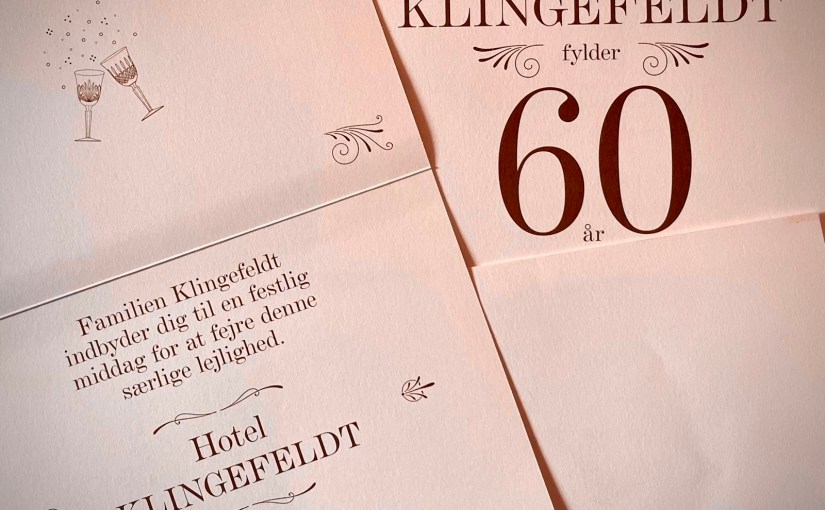
Last year fellow survivor writer Clare Best and I went to the opera Festen at the Royal Opera House in London. We went because we’d seen the film by the same name, directed by Thomas Vinterberg (1998) and we had read enough to know that this opera brought essentially the same narrative to the stage. This narrative — there is a gathering for a 60th birthday party, where one of the grown sons of the ‘birthday father’ publicly discloses that this same father abused him and his sister from a very young age — happens over the course of 24 hours, in the middle of a house party.
Clare and I have both written libretti for operas, and both have an abiding love for contemporary music. And of course: we are both survivor activists, focusing much of our energies these days working in associated spaces, and considering the nuances of survivorship in the wider world.
Festen was very powerful. CSA was ‘front and centre’ of the narrative, and family dysfunction, reactions to the disclosures — mostly denials through word or action — occupied the majority of the emotional and psychological landscape.
The opera sparked long conversations between us about how and where we see survivors of child sexual abuse portrayed. And how abuse itself — the fact of it — is handled.
We decided — because we are writers! — to explore this terrain together through writing. We both enjoy working in collaboration, and we both had a LOT to say. We swiftly decided upon a form (the lyric essay), and began sending each other prose fragments, poetry, statistics, and reflections upon Festen. Both of us have considered many times how our art — our writings — interact or intersect (or don’t) with our survivorship. And both of us, more and more, have begun to centre our survivorship throughout both our private and public lives. Both of us have worked hard to integrate what we have gone through — our journeys, our healing paths — with our daily lives and loves, with our purposes, and of course, with what we make: our art, our studies, our academic research.
Very soon after beginning our writing correspondence, Clare alighted upon the medical humanities arm of the British Medical Journal (BMJ) as a possible outlet for our work. We were delighted that our proposal was accepted by editor Sabina Dosani, and devoted ourselves to writing without constraint. In the end, we wrote twice as much as we needed, and spent one memorable summer morning pacing around Clare’s dining room table, arranging and rearranging the pages laid out there, divining a structure, finding a path.
We figured it out. After a wonderful peer review report, and a somewhat tortuous copy editing and typesetting four months, Twenty-five soundings about child sexual abuse and the arts: considering the opera Festen appeared in the BMJ last week. It’s the first lyric essay the BMJ has ever published. We are super proud of it. It goes some way at least toward articulating our feelings arising from the opera, and setting it all in a broader, more holistic cultural context.
One aspect I am most proud of it — which makes this a PEAK, aside from the fact that a publication always deserves celebrating — is that the essay has found a home where it is likely to reach whole new audiences. It is a very deep conviction of mine, a fundamental purpose, that we normalise conversations about CSA. That we normalise the fact of its existence and occurrence across 15% of society, regardless of socio-economic levels. It is wholesale, global — but most people, including medics, researchers, artists — have no idea of its prevalence. No idea how it is happening in plain sight, day after day.
I’m hoping that publishing our essay in such a mainstream publication brings the ‘everyday-ness’ of CSA closer to home for some. That it manages to break through, at least partially, the reflexive silencing that says too often: be quiet, we don’t need to speak about this, take it elsewhere.
So without further ado: this link will take you to a pdf of the full text.
I’d love to hear what you think.
*Please note that in places the essay alludes to subjects that some readers may find distressing.*


