will we get there?

So many are asking this question right now: survivors of Child Sexual Abuse, allies of survivors, and the general public.

Who will be charged? Who will be prosecuted? And importantly: will this global explosion around sexual abuse and sex trafficking change anything?

***

I was up at the University of York this week, diving into a set of materials gathered by relatives of a long-term survivor activist in the UK. She was clearly an incredible woman, and built her huge network brick by brick through paper, telephone, personal relationships (before connectivity of any sort). This work is a fundamental part of a larger project I am working on with some colleagues, and it’s very exciting — here’s the LinkedIn page. The project only officially started this month, but we have done work around it now for the last six months. I can go into details once the website is up, in about two weeks!

Meanwhile, the archive material around this amazing survivor activist blew me away:

  • she worked so hard. She ran support groups, distributed leaflets, lobbied politicians and attorneys. She involved much of London, and had strong connections throughout the UK. Against all odds, she kept going for decades. I am only now, after about five years of doing this myself, beginning to understand how much this will have cost her.

  • toward the end of her life, she wrote about how ‘nothing had changed’, in all her 40 years of campaigning. Her voice was as strong as ever, but she didn’t and couldn’t understand why what she and others were screaming about CSA wasn’t being acted upon. Sound familiar? I cried.

  • I cried too because she knew everything we know now — in the 70’s. She had statistics (which haven’t changed), questionnaires, testimonies. She wrote plainly and directly, no sugar-coating. She understood and distributed leaflets about how to keep safe. She understood manipulation, coercion, and taboo. She shouted about it all — but to what end? I am heartbroken by how painful this must have been for her.

  • I cried the hardest because: in the 70’s and 80’s I knew very little about sexual abuse. I had no words for what was happening/had happened to me. I thought I was the only one. I was terrified and ashamed. All I knew was that I hated it. Sitting in the archives with her vast materials, I just kept thinking if only I’d known, if only someone had said something to me, if only I’d seen a leaflet, if only I’d had someone to turn to.

And now I say: if only any of her work (and the work of many others) had been acted upon, think how many potential victims might have been saved.

***

Basically, the project above is about developing a way to archive survivor activist materials — to record past activisms, make connections, and to build upon it all going forward. So we know who has come before us, so we can consolidate their work, honour them, and effect change — rather than what we too often do now: seemingly invent the wheel era after era, and risk getting precisely nowhere therefore.

Do I think the global Epstein ‘scandal’ will lead to change? Will society begin to understand that the root of abuse is power? Will we stop blaming victims? Will we believe them? Will we change what constitutes ‘evidence’ in cases of CSA and SA? Will we acknowledge the sheer prevalence of CSA? Will we open our ears and eyes? Will we help the children — and succeed in imprisoning more than the current 2% of men and women who perpetrate abuse?

We have SUCH a very long way to go. The materials I poured through this week turned me inside out. She fought with all she had — and over 40 years later, devastatingly, almost nothing has changed.

We have to do better. We have to do better for not only the millions upon millions of survivors of CSA, but for the millions upon millions of potential victims of CSA.

So please don’t stop talking about CSA, now that the ball is truly rolling. Please be an ally. Please don’t turn away. Please accept that children are being abused all around you: that is, at least 1 in 6, 15% of the population. These are FACTS, as difficult as they are to accept.

Please raise your voices. Please commit to advocating for cultural and social change at the deepest levels. Otherwise — I’m pretty sure that everything will die down, and continue as it was. It’s the path of least resistance after all, and I have witnessed now how easily so much can be lost.

So please: let’s be the change. We need every one of you.
are we finally at #metooCSA?

So. I spent the first nine months of 2025 feeling pretty freaked out: everything seemed worse, and likely to keep getting worse. Pillars of what most people in the world have taken to be truths and even basic human rights crumbled and continued to crumble. I for one felt that the ground I had stood on my whole life was shifting, inexorably. And I know I wasn’t the only one. I know so many felt this and continue to feel it. Unfortunately, this hasn’t changed yet in any real way.

As I mentioned in my last post, the overriding feeling for me through this became the one I dread possibly the most: we were being silenced. At every turn.

Then came the US government shutdown and the Epstein files saga. And I started to notice: wait, survivors are standing up together. With allies. At least some people are starting to build some momentum.

And then, Virginia Giuffre’s powerful memoir, Nobody’s Girl. It was being read — albeit with a kind of horror still — but it was being read. Not everyone was turning away. It was not ‘niche’ reading. It was not in a bubble. It was mainstream.

Guiffre’s experiences in her childhood home and beyond have the exact shape and tone — down to what is said, the manipulation, the physical responses of her abusers — of not only my own experiences as a victim survivor, but the experiences of every survivor I have spoken to about it.

But she then goes on. She places the abuses in the context of our cultures and our societies. She makes clear that she was not the exception. That child sexual abuse is endemic. And that it’s all about power. Many — across mainstream media, and certainly across socials — sat up and took notice in ways I’ve not seen before.

If you haven’t read the book — read it. It may be triggering for some of you, so take care. And some of you will find it very upsetting. What I would say to that is: welcome to our world. Survivors carry aspects of her story — as she did — every day, day in, day out. We don’t have the luxury of ‘not engaging’ with abuse. We have lived it, and it will never go away.

I’m just stating facts.

***

It’s tempting to turn away from activism — whether quiet or loud — because more often than not it meets with disbelief, horror, embarrassment, or dismissal.

And yet, somehow this latest series of events hasn’t skidded to a stop at a dead end. Somehow a ball is still rolling.

In 2017, the #metoo movement went viral. Begun by a survivor of child sexual abuse, Tarana Burke several years before, it gathered sexual violence as a whole under its umbrella. Various offshoots developed, including #metooinceste, which started in France.

However. From my and other CSA survivors’ I know points of view — we never really felt heard with #metoo. Like so many, I have been sexually assaulted as an adult, and I felt #metoo supported these disclosures. But despite the origins of the phrase, I never felt that it could hold Child Sexual Abuse, or CSA. The viral wave swept it elsewhere. Soon, any hint of #metoo in relation to CSA simply disappeared.

Something is happening now though. Does anyone else feel it? NOT just around Epstein and his cronies (including we know who). But around the whole space of CSA. In the last six weeks or so, my Threads and Bluesky and even Instagram feeds have been flooded with disclosures, with CSA survivors who have never before gone public about the abuse they suffered — now feeling safe to disclose, or that it’s necessary to disclose, or that they know it’s time to disclose, to connect some dots, to be here in solidarity. And the vast majority of these disclosures identify family and family friends as perpetrators. Unsurprisingly.

One way or another I’ve been working in this space for about six years. And almost the whole time, I have felt that my words, my experiences, my desire to connect and amplify — to make a change, somehow — have had almost no impact beyond the (beautiful!) survivor activism community. My greatest frustration — the thing which has done me in time and time again over the years — has been the sense that we are not being heard. That no one is really — really — listening.

I feel a shift now, though. A lasting shift, I hope. A solidarity across ‘types’ of sexual abuse is coming to the fore, a space for all survivor stories and testimonies. As are vocal allies, who are saying over and over, in public and on socials: ‘listen to survivors’, ‘believe the survivors’. I am sensing that there is a gathering together of activists, survivors, and allies into what we have long been working for: a survivor-led #metooCSA movement. We are gaining critical mass — for our voices, and for change.

Thank you always Tarana Burke, for your courage, and your words.

we’re here, folks, in droves

It’s been a week. My head has been down, to the grindstone. I’ve watched the Maxwell trial spin by. Relief has been followed by distress, and the too-familiar feeling of loss of control: a juror was abused. He helped others to understand the elements of abuse. Along the way another juror realised they’d most likely suffered child sexual abuse as well. All is up in the air.

What does this tell us? For those of us in the Child Sexual Abuse (CSA) world, it reinforces a few hard facts, all of which we know, all too intimately:

  1. CSA is very common. In the UK, the NSPCC can be sure that 1 in 20 children is sexually abused. In the US, the CDC splits this figure by gender: 1 in 4 girls, 1 in 13 boys. These are the surveyed and reported stats.
  2. There is also the hard fact that a third of those abused NEVER disclose or report it. So we can be sure that the figure is higher than either the NSPCC or CDC can report in good faith.
  3. No one likes to think that the person next to them has been a victim of child abuse. See number 1. No choice, folks.
  4. No one likes to think that there’s a chance that the crimes being tried were experienced on some level by a member of the jury. See number 1. No choice, folks.
  5. Nor that anyone in any context knows or has contact with anyone who was sexually abused as a child. See number 1. You, and everyone, are bound to know numerous people who have been abused. No choice, folks.

Here is the thing. As late as 1974, Child Sexual Abuse was considered extremely rare. 1 in 1 million people. My lord. Society and culture could then (incorrectly) be supported by medics’ and lawyers’ claims that CSA is virtually unknown. From there, silences, denials, dismissiveness, deflections…all of that seemed fair enough. Nothing to do with Us. What happens to those children, and those people, is not Us. What happens is strange. Perverted. Deviant. Not Us.

Yes. I’m not going to argue anything other than CSA is awful. Wrong. Deviant.

But it IS Us. It is an everyday occurrence. It deserves to be part of the conversation, even in trials around…CSA. Because who would think of having no differently abled people on a jury in a trial about discrimination against disabled folks? Who would think about requiring there be no people of colour on a jury in a trial which involved a person of colour?

CSA — for this era, and regrettably — is part of the conversation. Part of our lives. Part of your life. We have a voice. We have logic and reason. We can make a judgement. We can hear things out, and weigh things up. But we won’t disregard our abuse.

Juries represent and reflect the Human Experience. Of course the process and the questionnaire all need examining. But let’s not jump to conclusions and state that people who have been abused cannot be part of a jury which must come to a decision about abuse. It’s not gonna happen. And it’s not right if it does.

We all long for CSA never to happen again. But we are nowhere near that yet. As the Maxwell trial, and so much else, amply prove.

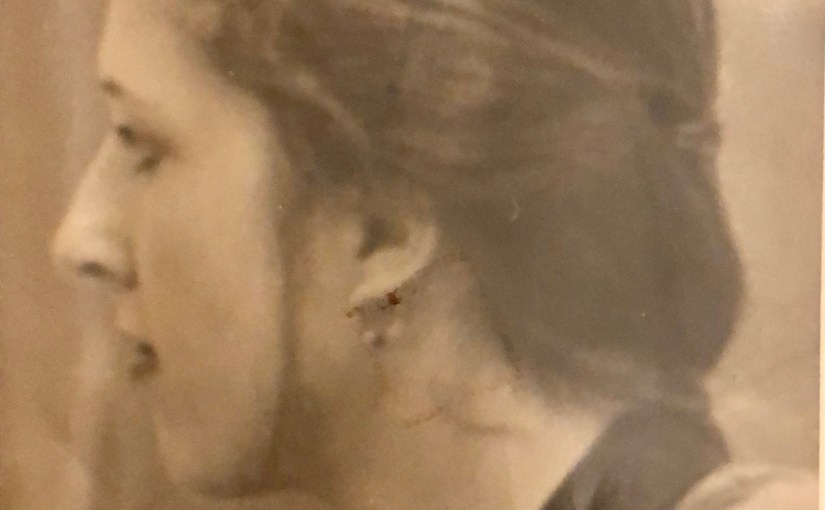
[photo: me at age 15, taken by school friend David Larsen. My father was still abusing me.]

*

from my memoir Learning to Survive, about how very badly we can be betrayed by those who in theory are supposed to protect us, and by an unenforceable law:

Therapy

The spring of my junior year at Blacksburg High School is a particularly gruelling time.

            The nerves I see in my father’s eyes become something else, and he appears to take action. He tells me that [my stepmother] ‘knows about us’ and ‘about Suzanne’, giving the impression that he has had to tell her, for my own good. He locates a therapy practice about 15 miles away in Radford which he deems suitable. We are at first booked into a group session; then I start my own sessions, and [my stepmother] and my father start marriage counselling.

            This all seems to happen within a couple of weeks. [My stepmother] does not speak to me about what she knows. I do not remember her asking any questions, or expressing any concern. We go back and forth to therapy together, and do not discuss anything said within those walls. From journals of the time, I know that I am deeply, deeply confused and unhappy. About everything. I love Suzanne, but I also like boys. I hate men. I want my father out of my life. And I am utterly miserable.

            Things that emerge from therapy:

            Every Rorschach ink blot terrifies me. Every single one looks sexual. Looks creepy. Looks scary. Has monsters. I feel I am losing some battle if I admit how terrified they make me feel. I am 17. I lie about all of them, although there is only my therapist and me in the room.      

My father requests that I no longer call him ‘Daddy’. You need to grow up, he says, and I need to move on.

            Suzanne is a bad influence. I am no longer allowed to see her, at least for a little while.

            None of this can be mentioned to [my siblings].

Things that do not happen from therapy:

My father is not reported.

My father is not reported.

My father is not reported.

It takes me a long time to accept – years, and many therapists later – that in this, my first encounter with therapy, I am fundamentally betrayed: my father does not take responsibility for his actions, and, as it turns out, never does, as if that one chance missed lets him off scot-free. As a consequence I am not protected, and nor, for that matter, is [my sister], who is 13 at the time. As a consequence I am completely flattened. If [my stepmother] in theory ‘knows’ now, if the therapists ‘know’, why does everything not fall apart? Is the abuse, after all, okay?

            My own unproven and unsubstantiated theory is that my father probably locates this practice precisely because he feels he can influence its members. After all, he has been able to manage every aspect of the story so far. He prevents any explosion, or any impact on any other part of our lives. We carry on. I speak of the abuse – lightly – in therapy, almost paralysed with dread. But it is not discussed much. Of more importance it seems is my relationship with Suzanne: is it real, am I really gay? The therapist seems fixated upon how I become involved with Suzanne, and I do not recall a single direct conversation about the abuse. I wonder if, after all that, she ever really believes me.

            I know now that my father almost certainly mis-directed and orchestrated the whole thing, such that [my stepmother] and I never have an honest conversation, and most vitally, [my siblings] are told nothing. I know now too that the therapists at the practice actually break the law: in 1981 in Virginia, therapists are legally obliged to report sexual abuse to the Child Protective Services — which these don’t, because I am never interviewed, and anyway, nothing changes. I know now that this requirement to report to services is in place precisely because perpetrators are generally expert manipulators, and otherwise control the dynamics. Which is precisely what my father does.

even the ‘good’ goes away

For many years I tried to ‘reconcile’ the parts of my father who was my abuser with the parts that weren’t. I tried to hold onto the ‘good’ parts. I tried to look past the ‘bad’. Because without doubt, he had much to offer to the world.

Like probably all survivors of sexual abuse, I am hugely relieved to hear of Ghislaine Maxwell’s conviction for sex trafficking girls. Regardless of her no doubt manifold ‘good’ qualities, her ‘bad’ qualities, her crimes, have taken priority. She has been held accountable.

Child Sexual Abuse (CSA) can ruin victims’ lives. Sexual abuse is an extraordinarily damaging crime. Its effects bleed into everything. There is no way to look past it, either in your life or in the life of someone you love. The blame lies squarely with the perpetrator, and absolutely nowhere else. Sexual abuse is so heinous that it negates whatever else a perpetrator might have done in their lives. This may feel ‘unfair’ or ‘out of proportion’ to those who love or respect the perpetrators. But dealing with being a victim of sexual abuse is a lifelong sentence. Being sexually abused doesn’t ‘clear up’. It is never ‘out of sight’. There are ways to tackle its effects which are helpful, and which develop good tools for living. But trauma changes the wiring in the body; it changes us physiologically. As survivors, we are forever altered.

Perpetrators’ lives — no matter how much ‘good’ they do in the world — deserve likewise to be forever changed. The decisions they made, and the damage from them, are irreparable.

From Learning to Survive, writing about the loss of anything good to do with my father.

***

Good Things

After the age of about 11, I cannot remember a single decent time with him. That is, one that isn’t inflected with fear, or repulsion, wondering what his next move will be. Wondering how he will use any moment to bring me closer to him, to be with him, later. As I look back, I think I may experience some moments of joy, in theory – like listening to music with him, peering through a telescope, arriving at the correct answer to a maths problem together – but none of them exist separately for long. I cannot tease them apart from everything else; I cannot make them stand up strong. They are never far from everything else I want to forget. They become meaningless.

            So I forget them all. I forget any possibility of good in him, and it never comes back. That room, like so many, is entirely empty.

[photo Martin Muir]