did anyone suspect?

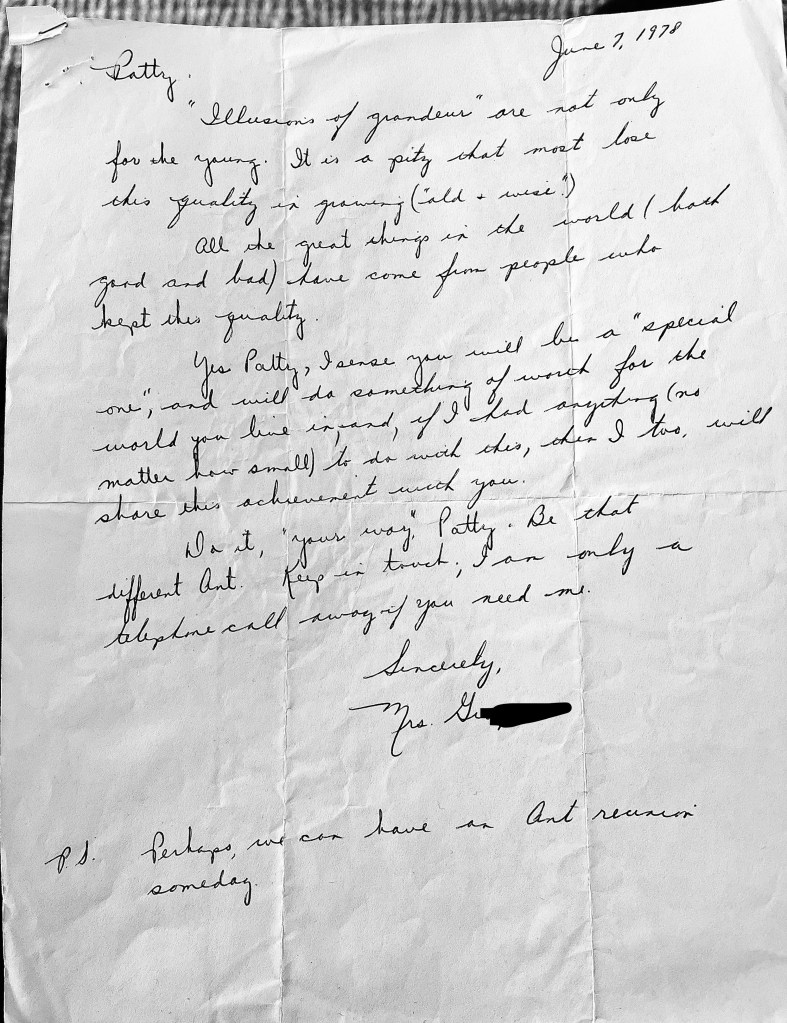
Over the weekend I discovered a note given to me by my Social Studies teacher when I was 14 (1978). I clearly remember the circumstances surrounding it: my father or my stepmother had told me that I had ‘illusions of grandeur’. I went to this teacher, Mrs G, upset. Ever since I could remember, I had harboured feelings of wanting to do something important, something meaningful. I don’t know why I apparently confided in my father or stepmother — but I do remember being very hurt by them. I felt belittled.

Mrs G however: as the note above shows, she believed in me. For my part, I adored her, absolutely adored her (as I did many teachers throughout my formal education, feeling handed between them like a baton in a relay race, for safe keeping). She was mischievous, an individualist, and taught me more about good essay writing than anyone else, before or since.

I must have kept this folded piece of paper because it helped. She believed that I could do something. And she would know. She would know, I thought, possibly more than my father or stepmother would. She was in the world in ways they weren’t — I sensed this, already.

Now though what strikes me about this note are the words at the end: ‘I am only a telephone call away if you need me.’

I have no memory of these words. No memory of that level of care at this age — the age at which I now know some of the most harrowing and damaging instances of sexual abuse occurred, seemingly relentlessly. I wonder what I thought about those words then? Would I have considered speaking with her? Would I have ever thought about phoning?

And why such a pointed offer of help? Did I show more than I think I did? Did she suspect anything?

I was a very high achiever throughout my formal education. I was not shy. I had friends. I was principled, political, and often revelled in being ‘a bit different’, particularly in terms of fashion. By age 15, in the days of mostly preppie wear, I wore patent leather heels, balloon black trousers, a thrifted double breasted red top, and put my hair in tiny braids so that it was all kinky the next day. Etc. Yet: I never misbehaved. I never actively rebelled.

I now know that I stuffed the sexual abuse I was experiencing into a box in my head — and slammed the lid down tight. I did this almost from the start, almost knowingly. I remember the gut response when my mind flitted to the abuse: pay attention to what you like: forget everything else, forget it. This separation of mind and body preserved my mental health for many years. Until it didn’t. I know this story is so familiar to so many.

Recently there’s been a bit of discussion on X (Twitter) about whether signs of abuse were missed in us survivors when we were being abused. And the more I think about it, the more I become confused. Maybe there was enough ‘unusual’ about me to make teachers think, or wonder? Certainly I was always hailed as ‘very mature’ for my age — not physically, but emotionally. I often felt out of step with peers. All the talk of boyfriends, crushes, and dates — I found excruciating and terrifying in equal measure. I wanted nothing to do with it. My overriding priorities were learning, writing, and ballet. Not much else mattered very often. This might have been interpreted as ‘mature’? Was it noticeable? Was this a ‘sign’?

The truth is, I never would have phoned Mrs G, although from here I fervently wish I had been able to. And there were other teachers, after her, who often seemed to be waiting for me to say something. But what? What?

What can children say about the dangers they live in? Precious little, I think, is the answer even now. So it’s up to teachers? But that can’t be right either, as even if something (what?) is ‘noticed’ — chances are high that a child will lie when asked directly. I am certain I would have.

There are so many variations of ‘signs’ of abuse — many that are in fact seen as ‘fine’ (good behaviour, quiet etc) — that there is no rulebook here. None of us can produce a definitive list. What’s clear however is that adults in the position to notice need to be given the training and the space to act; similarly, children need to hear and see that sexual abuse can enter conversation. If there had been a space to speak, or to write, about what was happening to me — one that wasn’t judgemental, that didn’t put me in a vulnerable place, that wouldn’t pity me or think less of me, one that I trusted to look after me — I might, might have found a way to send a clear message.

But there was no space for that then. Despite Mrs G, and despite all of the kind adults in my school life as the years progressed — the thought of mentioning anything to them about the abuse I experienced never, ever occurred to me. And indeed: no one made me feel safe enough so that I knew, if asked, I could answer honestly. So I never even got close.

I’m heartened by the work of the many survivor-centric organisations and charities now on the ground, going into schools, speaking with medical students, within the police, with churches of almost all denominations, scouts organisations, community leaders etc. This is the training and awareness which is so desperately needed. I pray that the enormous differences they are making hold fast. I pray for a future in which a teacher, nurse, doctor, pastor, priest, vicar, scout leader — neighbour, friend, anyone — feels empowered to ask, carefully and with respect, knowing there is support available: is something happening? And for a future too where another child like me (like so many of us) might go back to Mrs G and be able to say: something is happening.

[I cannot finish this post without signposting some of these vital organisations. I really only know a bit about the UK. I urge everyone please to add more in the comments. The Flying Child Project, Survivors Voices, LOUDfence, Barnardo’s, the NSPCC, Survivors Trust.]

***

This extract from Leaving Locust Avenue follows what happened when I decided to move schools at 17, at the beginning of my senior year of high school. No one asked much, but looking back — I wonder if at least a couple of them wished for the space and permission to do so.

*

Leaving Locust Avenue

I thought I would take a minute here to acknowledge the shifting of my memoir title from Learning to Survive to Leaving Locust Avenue. First things first: a big THANK YOU to Caroline Litman, gifted writer and fellow Highly Commended author in the Bridport Memoir Awards. She read my book, and floated this title with me. I immediately knew it was right. So grateful to her for this stroke of insight.

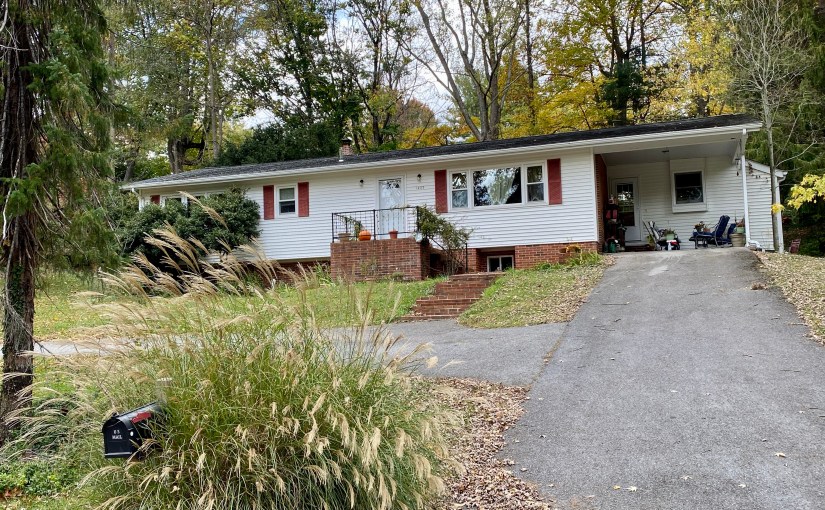
Second: the title makes clear that this house is at the centre of the abuse. On this avenue. In Southwestern Virginia suburbia. It feels right and important to flag here that Child Sexual Abuse occurs everywhere and anywhere. Including within the four walls of my childhood home. My sexual abuse did not happen in some ‘deprived’ area, by parents who were ‘addicts’ or ‘on benefits’ etc etc… I make these points because, believe it or not, over the last couple of years I have had people say exactly these things: ‘oh I knew it happened in some parts of town’, and ‘oh but you are doing so well, how?’ etc. All judgments of not only me now, but the circumstances I and others grew up in. And a ridiculous, shaming attitude toward those who grew up differently. This attitude conveniently keeps CSA at arm’s length — over there, not in my backyard.

Once and for all, here it is: Child Sexual Abuse happens to at least 1 in 6 children across all socioeconomic levels. I am happy to provide the resources I and others, including dozens of charities and organisations, use to arrive at this — but I would also encourage you to look it up yourself if you have questions, as along the way you will find out a great deal about Child Sexual Abuse.

My father was a professor, as were many wage earners living along this particular avenue. And his crimes were completely hidden in this house. How many more houses along this street hid Child Sexual Abuse? Statistically speaking: several. Yes, almost certainly: several.

Third and finally, I come to my leaving Locust Avenue. It was the last thing I wanted to do, in so many ways. But I felt forced out, scapegoated (as I now know is typical in family cases of abuse) — and I had to do something to save myself. As followers of this blog will know, I had to leave behind my [half] brother and [half] sister after 11 years of living with them, and was forbidden from telling them anything. It was a terrible secret to keep. Feeling forced to leave my childhood home destroyed it for me, forever, regardless of any good times there.

So yes. Leaving Locust Avenue is right. It captures so much at the heart of this book.

Here is an excerpt from the memoir which recalls when I first arrived at Locust Avenue.

***

generations

I’ve been thinking a lot about my mother over the last few weeks. Her illnesses. Her pathology. Her recurring cries for help.

She unfortunately married an abuser. Who, over ten years after they were divorced, began to abuse me. When I think back to telling her I was abused…I wonder if then, right then, she gave up almost completely.

My aunt and I believe that my grandmother was also abused by a family member. And we are sure there are more. How my father figures into this history of abuse is not something I will ever know. I am sorry if something happened to him, in the way that I am sorry when I hear of any abuse. But it is not a consideration when I face his abuse of me. After all: I am not an abuser. My aunt (whom he also abused) is not an abuser. My mother, abused by her own father, was not an abuser.

It is a myth that victims of abuse go on to abuse. It is a dangerous and wholly inaccurate assumption, one which partly absolves perpetrators of responsibility and accountability. The truth is, abused in childhood or not: the decision to abuse is down to the abuser. It is the abuser’s fault. No one else’s.

All of the abused women in my family have tried, and mostly succeeded, to break the intergenerational line of sexual abuse. My mother’s attempt to save me from her suicidal and infanticidal actions — her more or less throwing me from her sinking boat onto the boat which appeared to be floating, my father’s — was also an attempt no doubt to save me from her abusive past, and the fear of how she might harm me. She said to me many times that giving me up was the hardest thing she had ever done, and that she was wracked with grief for over a decade afterward, until I went to university. Later, when I told her about my father’s abuse of me — all of her sacrifice must have seemed for nothing. Must have destroyed whatever she had left, on all fronts.

Two and a half years after she died, I am finally going through her things. As I’ve known for a while, this is all — somehow — my next book. The photo above is I believe her graduation photo, from high school. She went on to the University of Texas at Austin and did a double major, in English Literature and Maths. She was smart. Very, very smart. The loss of herself over her lifetime is heartbreaking. So much promise, so much life. She was 79 when she died, destitute and completely alone in a high security nursing home, trailing a number of psychiatric diagnoses. In the pandemic. Despite our years of trauma with each other, it was the thought of her dying alone which really undid me, the night I received the email.

This short excerpt from my memoir — now titled Leaving Locust Avenue — recounts when I told my mother about my father abusing me.

***

paying the price

Over on Twitter (X now, yuck) I’ve been in conversation with writer and activist Elizabeth Shane about hypervigilance. I suspect that this kind of alertness to surroundings, to approaching/imagined danger is extremely common in survivors, if not universal.

I explore how hypervigilance affects so many areas of my life in another post, on expecting disaster.

In this same post, I mention that my elder son was diagnosed with Type 1 diabetes. This happened when he was 12. My hypervigilance meant that he was never in danger (unlike so many at diagnosis) — but this reality did not stop me from the crashing feeling that somehow I had not done enough: I had not kept him safe from harm.

When E was diagnosed, my world collapsed. I remember leaving him in hospital and coming home that first night, sobbing uncontrollably into his pillow. This remains the sharpest and most wrenching grief I have ever experienced. I remember what I was feeling: how can this happen when I have tried so hard? I have made it through everything life handed to me — why make my boy suffer too? I knew beyond doubt that he would suffer. That he was watching his life change on a dime, forever, and there was nothing any of us could do about it.

Type 1 diabetes is a life-threatening, completely life-changing, autoimmune condition. Developing it has nothing to do with diet or environment; the propensity is likely hard-wired, which means that it’s inevitable in some people. Type 1 is most often diagnosed in young people, and there are millions of families around the globe who face this particular grief — the grief of their child losing a carefree life, losing aspects of their childhood. From then on, every bit of food, every outing — and for several years, every night — is dominated by blood sugar readings, 24/7. From that moment, we could never just ‘jump in the car’ or ‘just go for a walk’. Everything had to be planned. Everything changed. This is the way it is for every family. It’s an intense, encompassing grief for the life we can never have again.

Four years later, also at age 12, our second son evidenced another chronic condition, hEDS (which, it turns out, I have too). He suffered an intractable knee dislocation which sent him miles in an ambulance to the hospital, having to bear excruciating pain. For eight years afterward, until we located a good surgeon, he lurched from crisis to crisis, emergency to emergency, pain to pain. As is common, he has numerous other chronic co-morbidities from hEDS. His life too had been turned upside down. Again: I had hoped to have one child with an ‘unencumbered’ life — but this was not to be. It took a long time for me to accept that I couldn’t ‘save’ him either, that I couldn’t make everything better. Let me at least make his life lighter.

I had wanted my own early suffering to be worth something. To matter. I wanted those difficult years to ‘count’ in the balancing out of Good and Bad. I had endured the Bad; surely now my children were due the Good?

The truth is: there are no scales of justice. Living through abuse does not mean that later life will be free of more bad luck. There is no such thing as ‘getting what you deserve’. Life doesn’t work like that, either for good or ill. We all know that finding our way through the lifelong damage of abuse is not counterbalanced by our abusers suffering in kind. The huge majority of abusers are never brought to account, either formally or informally. Whereas we, we all know, continue to pay the price they never pay.

When first one then the other of my two children had to face their life-long disabilities, I had to face that the neglect and sexual abuse of my early life did not somehow secure their wellbeing. I had to face that life never was and never has been fair. And that I had suffered for no apparent reason. For a long time, this realisation tore me apart. I had so wanted — so wanted — everything now, after my childhood and young life — to be just fine. To have borne what I did so I could accumulate Good Things for the future.

Over time I guess that I have learned — we have learned — to live with injustice, to navigate it. It’s been a necessary lesson. To value where we are now — rather than look for a time when we will be free of all this. None of us have had it ‘easy’, whatever that means. (I tend to think no one has it ‘easy’.) But somehow, through everything, we have cultivated genuine love. Genuine kindness. Genuine and fierce ties that bind us together, even when stretched over thousands of miles. I’m proud of us. The cost at times still feels immense — the grief bottomless, the suffering of no real use — but we got here, and for that I will be forever grateful.

claustrophobia

My dear friend came to visit recently. After many years of knowing each other and being close as writers — we discovered only a few years ago that we are both CSA (Child Sexual Abuse) survivors. This was a shock to us both: keeping secrets, keeping abuse ‘over there’ is hard-wired in both of us. But we have come to know that much connects us, and that in a way this is cause for celebration. Despite our pasts, we have compassion, we have empathy. We have humour, and love.

This time we ended up alighting upon something I didn’t know she had as well: a violent reaction to feeling enclosed.

I’m curious: do most or all survivors experience this? I cannot bear the sensation of feeling enclosed, or struggling to swallow, or reaching for air. This means that last year when I had tonsillitis I was in a terrible, panicked state. Max sat with me, holding my hand, distracting me by watching sitcoms. I was barely with it. Tears of desperation squeezed out of my eyes with every breath.

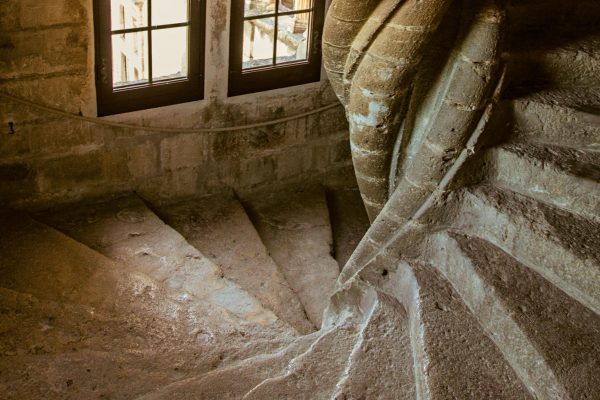
Every time a duvet climbs above my shoulders I am panicky and shove it away. I almost always sleep with my arms out of the covers. I also find elevators (lifts) very difficult, especially small ones. I struggle with spiral staircases, and have had more than one serious panic attack while climbing them. I am physically disoriented very easily, and launch into a full blown panic attack when this happens. Whether in IKEA, or once in an observatory when the ceiling rotated — when I don’t know or remember how to ‘escape’ from someplace, I melt down.

My friend is the same. Almost exactly the same. We figured there must be something about being overpowered. About a large person hovering and smothering. About not being able to fight.

One of the first realisations I had in my early therapy was the fact that I wanted to push my father away. My arms ached with that realisation. But I never did. I was frozen, frightened, dissociated.

These triggers — phobias, fears, whatever you call them — are all collateral damage. Ripples from abuse. All of the above responses are valid, as are many more. They are normal trauma responses. Yet both of us have at times been made to feel deficient: buck up, be brave, there’s nothing wrong!

There’s a lot wrong when you are in fear for your life. When you think the breath will be squeezed out of you. When things are forced into your mouth and you can’t breathe. When you are a child and can’t bear the weight, the intrusion. These are the facts. They never go away.

We must respect trauma responses. We need to be trauma-informed. It is often NOT possible to ‘overcome’ these responses, and it’s a myth to believe everyone can. We all have to work with what we carry around the best we can. For survivors, these tangled and deeply embedded responses are unavoidable at times.

For me this means I almost always avoid lifts. For me this means I ask the dentist to raise the head of the chair closer to sitting, and have to ‘go someplace else’ when x-ray plates are in my mouth. For me this means I am always verging on panic when in a crowd.

My family know these things and accept them. They know where these responses come from. With time and recognition of these triggers, I am less compromised by them than I used to be. For me, speaking my ‘truth’ — admitting that I’m frightened, admitting that I’m disoriented and having to control my breathing — eases my panic, and often prevents it from escalating to the point where I can’t be reached. These issues don’t go away — but they have less sway over me.

This won’t work for everyone, clearly. Sometimes we are surrounded by people who refuse to understand, or whom we don’t trust, or with whom we don’t feel safe enough to show we are feeling vulnerable. I know I am very lucky. Without even realising it consciously, I landed on my feet when it comes to close family and friends.

Regardless of how memories manifest with you or with your loved ones, acceptance goes a long way. Lack of judgment goes a long way. Saying ‘it’s alright’ to feel this way, to react, goes a long way. Because next time the panic might not be quite as overwhelming. Regardless of the trigger: being seen and believed and supported can help dismantle these suffocating walls.

hope is a powerful thing

[photo by: my brother]

My husband and I married 35 years ago today: 25 June, 1988. His mother, who died within the year, took it upon herself to arrange everything — here, in the UK. It was what I wanted, and I don’t regret it for a moment. There were people in my family who were not happy to have everything elsewhere, across the ocean etc… But I knew it was right. From the beginning, I was welcomed into R’s large family as one of them. This has remained the case for over 35 years now.

I knew about ten people at my wedding. There were 120 in attendance. It took place in St John’s Cathedral, Norwich, and honestly — it was like a dream. A fantastic dream. There are photos of me being fed soup in my dress. Photos of us, R and I, sailing back down the aisle so fast, so happy, that I remember the bridesmaids literally clattering after us. Astounding day. First day of the rest of my life.

We have been through troubles — who hasn’t? — but throughout, we have been together. We have made the commitment, again and again, to be together. My models — surprise surprise — were my grandparents, married for 72 years. R comes from a family where all of the marriages — all of them — are long-lived. We figured out how to do this, through trial and error, through commitment, and through a deep and abiding love. We are lucky; we are soulmates. This was clear from the start.

I wouldn’t have made it through the difficulties in my life without R. I’m not sure I would have survived. Because of him, and our children, I emerge hopeful over and over. This has been a constant. Nothing — and no one — can destroy us. Not even the memory, and the surging triggers, of my father’s abuse.

Here is an excerpt from my memoir Learning to Survive, set in Oberlin, Ohio, where we went to the College and the music Conservatory. The children cringe whenever I mention this. But every word is true. This is really what happened. This is how R and I got together. There was no question, no questioning, at all. We both knew, in the same moment, that this was it.

***

2.

Around this time I am sleeping with a pianist I’ll call Sam. We are very companionable. We have been friends in fact for a while, have friends in common, so the relationship is much more ‘out in the open’ than is usual for me up until then. We do things together, eat together, spend actual nights together. I don’t feel it will last, and I don’t think he does either, but for the moment we are okay.

            After a while it dawns on me that I am a bit distracted from Sam. He has a British friend called R, and the three of us become close, eating at least one meal, if not two or three, together every day. R is a composer. He is dark, tall and handsome, rather tortured, smokes too much, and is way – I think – out of my league. I do remember one instance of watching him walk by Sam and me in the campus diner, and knowing pretty starkly then that I was probably with the wrong guy. R however is seeing a beautiful – stunning – cellist, one who has visited his family even, and so of course I shut that thought down quick. His friendship, our friendship, feels too important to risk.

            In the event however Sam does us all a favour, though it doesn’t feel like that at the time: he sleeps with another woman. He has the good grace to tell me about it, and we break up. In hindsight, I know I was ready to. By this point too, R has broken up with the cellist, much to my surprise.

            It is December 1985, and I have just started therapy. I have let go, quickly, of a lot of baggage. I don’t know what’s next, but I watch it go, slide away, the useless stuff. I feel more alone, more vulnerable – but also stronger. Already, I know I am finding my way toward a life I want, instead of surviving in a life I don’t want.

            It can’t be more than a few days after Sam and I break up that I find I need to see R. I don’t know why. I don’t question it. I just need to see him. I miss him.

            We live about three streets apart – him on the broader Lorain Street, and me along a smaller, back road.

            I go out into the night. And it’s snowing, heavily. The ground and the roads are already covered. I start out with the intention of making it to his house – the first place to check – and it takes some time to work my way up the shallow incline toward Lorain Street. When I reach the intersection I look up. There are no cars out, and the snow has silenced everything. Across the road I see a figure, a dark tall one, without a hat on, in a long, dark, open coat. He starts to cross over to me, and I over to him. We meet in the middle of the street.

            ‘I’ve been looking for you,’ I say.

            ‘And I’ve been looking for you,’ he says. I see the white snowflakes gathering on his overgrown black hair. He reaches for my hands, his fingers so cold in their fingerless gloves, even through my own gloves. ‘Surely,’ he says, ‘this must be real.’

            We really are standing in the middle of the street, in the snow. It really does happen like this. Nearly thirty-eight years ago, and together ever since.

That first night, we find shelter in the Conservatory of Music, in a practice room with a piano. We stand there, and kiss. I know, almost immediately, that this is it. That together we can do this. I trust him.

            That first night, we don’t sleep together. This feels important. In fact, we don’t sleep together for weeks and weeks, not until February, when we are back from Christmas and January terms away. Once we do, we never spend a night apart, and by June, we have moved in together.

Father’s Day (UK)

My first father, and the father who never harmed me, was my grandfather. That’s us in the photo. I’m three years old, and we are in Luling, Texas. My parents were divorced when I was just a few months old. In this photo, I hadn’t met my father yet. I don’t know whether I’m leaving my grandparents’ care to go back and live with my mother, or whether I am joining my grandparents to live with them for a while, leaving my mother to her instabilities and mental illnesses. I traveled both ways, often, up until age six.

My grandfather is holding both of my hands here. My face has faded with time, but his remains strong, in focus. Out of shot here I am pointing my foot forward in my saddle shoes, as if I am foreshadowing the decades of dance I would start only a few years later.

In hard times, I still channel Granddaddy for comfort, hearing his voice in my head. He died over 20 years ago now, but I can still hear him — quietly spoken, always giving me strength and belief.

Why, you’re not going to let a little thing like that stop you, are you? he would say, no matter what;

and

We’re rooting for you! even over the telephone, often at the end of our conversations;

and

You can do anything you set your mind to.

Both of my grandparents were the solid centres of my whole life. I carry their words and actions with me, always, and miss them, honestly, daily.

Happy Father’s Day, Granddaddy. Love you always and forever.

***

What I’m saying here too is that I cannot consider my biological father my father. I cannot begin to put him in the place where Father’s Day happens. He was my abuser, and although that’s not all he was (any more than being a survivor is all I am), his abuse of me when I was a child — sexual, psychological, emotional — far overshadows any good which he may have done as a father in my life in other ways.

Child Sexual Abuse is not just the crimes themselves. CSA is insidious, pervading, and tarnishes every aspect of your relationship with your abuser (and too often, everyone). My father’s actions and decisions made him not-my-father. Forever. I never hear his voice anymore. Once I got rid of it, it was gone for good.

***

Here are two excerpts from Learning to Survive, my memoir about neglect, CSA, living through it all and with it. The first is about my life with Granddaddy, the second about my father.

***

1.

I go everywhere with them. Granddaddy takes me out in the pick-up truck, sometimes even in the back if I promise not to move around too much. He drives around the block so I can feel the wind in my hair. For longer journeys, though, I sit next to him in the cab. Together we go to the hardware store, the gardening shop, the fishing tackle store. I inspect tiny drawers full of screws and nuts and bolts, and once, lots of extravagant fishing flies lined up on the counter. It’s not my world, but with Granddaddy in his overalls, his hand around mine, or often, his hands resting on my shoulders, I get a peek at it.

It is Granddaddy who sets up the swing and slide in the backyard, and who builds a sandbox around the bottom of a tree for me. Outside, it is always hot and wet, but with Granddaddy working next to me, I play. The chameleons on the house fascinate me; I stand completely still, just waiting for one to run from the green grass to the red wall so I can watch it change colour. In the front, together we see the squirrels fussing in the tall trees, running through the thick spiky grass. I sit on the front step and watch him mow, watch our neighbours mow their front yards, the hands they raise to one another. And always, should anyone stop to talk, my grandfather waves me over, rests a hand on me: ‘This is our granddaughter,’ he says, ‘come to stay with us for a while.’ And whoever it is, sensing something, or maybe just liking what he sees, says, ‘Well isn’t that nice. Isn’t that nice for you?’ And my grandfather, with a little squeeze, says, ‘It sure is.’

2.

After the age of 11, I cannot remember a single decent time with my father. That is, one that isn’t inflected with fear, or repulsion, wondering what his next move will be. Wondering how he will exploit any moment to bring me closer to him, to be with him, later. As I look back, I think I may experience some moments of joy, in theory – like listening to music with him, peering through a telescope, arriving at the correct answer to a maths problem together – but none of them exist separately for long. I cannot tease them apart from everything else; I cannot make them stand up against the steadily rising tide of distress and fear. They become meaningless.            

So I forget them all. I forget any possibility of good in him, and it never comes back. That room, like so many, is entirely empty.

post-traumatic growth

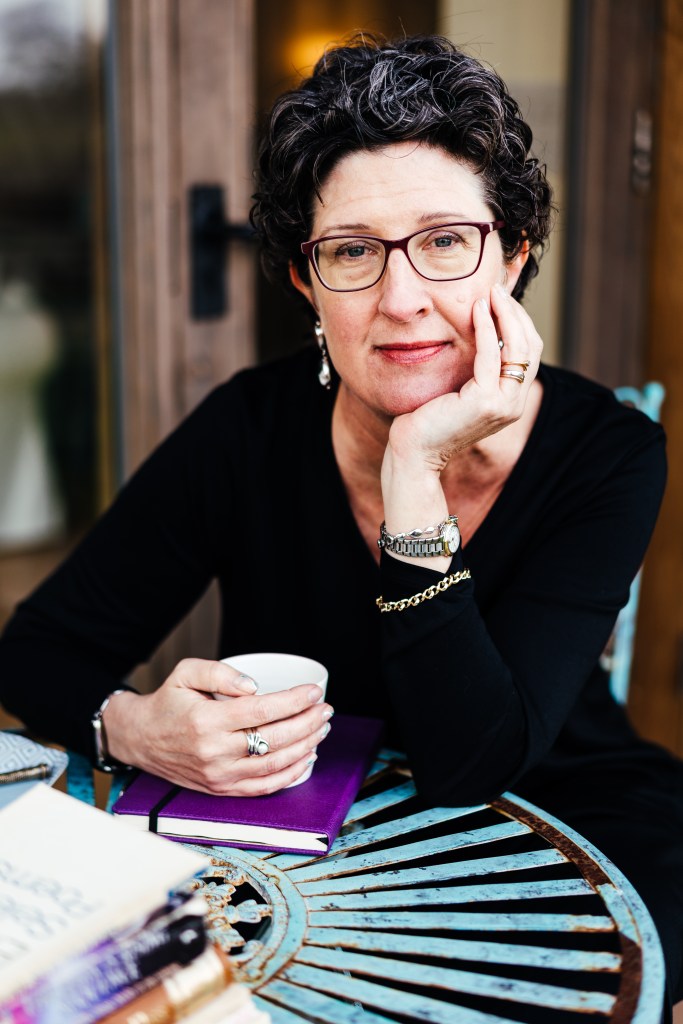
This photo of me was taken a few weeks ago by the same brilliant photographer who shot E and A’s wedding last summer (Hannah Hall Beddoe/Cuts the Mustard). I have known for a while that I needed new author photos, as the wonderful ones I had (by friend Nancy Wilson Fulton) were over 10 years old.

After discovering that my work was shortlisted in the Bridport Memoir Awards this year, I needed author photos urgently. I’ll say more about the awards in the next post, but suffice it to say I’m thrilled to bits. Child Sexual Abuse reaching the top five in an international, open competition. This is a win no matter what.

But back to the photos. I went to see Hannah of Cuts the Mustard because I trusted her. She was in the Lakes (six hour drive from here), so a bit of a haul over a weekend, but I knew I couldn’t go to a stranger. Especially a man. That was not ever going to happen.

In the couple of weeks which followed the shoot, I tried to identify my feelings. The process of doing them had felt harder than I anticipated. I felt on the spot. I felt awkward. And at some point, I realised that I felt scrutinised. Not, I hasten to say, by Hannah — but by the camera itself somehow. I tied myself into a knot trying to appear ‘normal’, all the while feeling so very ‘different’.

It’s not rocket science to figure out what is going on here. Being forced to appear ‘normal’, to perform, when really so much is NOT normal under the surface. Really you want to run away forever.

To Hannah’s enormous credit, I began, as the session went on, to see the person behind the camera for who she is: a friendly face, a face which means me no harm, a face which believes in me. Hannah knows my history, and I began to think ‘oh, just be how you are every day’ — she likes you! You like her!

The shoot improved exponentially partway through. I can identify when I began to ‘risk’ showing myself. I realised she wasn’t going to use anything against me. That I did not need to hide.

Because that’s what my father would do. Swoop into any show of my ‘true self’, try to weasel his way in, try to ‘steal’ it — or so it felt. So I learned to hide the way I felt, nothing showing on my face. I learned to live with scrutiny, with my father seeming to examine my face, my movements, for anything he could bring up later, in my bedroom, that night. Anything to get ‘closer’ to me.

At some point, in my teens, while the abuse was still going on, my father took pictures of me. They are not explicit pictures, but they are agonising nonetheless. They look grown up, so focused on me, the camera’s cold gaze. I was frozen, yet required to be ‘relaxed’. A child forced into grown up poses. Thinking about it now, I feel just sick, sick to my stomach.

Somehow, these experiences led to me being convinced that I do not, under any circumstances, ‘take a good picture’. My children and husband are ‘photogenic’. I am not. I have felt this way for as long as I can remember.

When the photos come through from Hannah though, I am gobsmacked. And elated. There, on the page, in so many photos, I am myself. I recognise me. My husband recognises me, seeing in my movements and expressions so much that is ‘typical’. I look: yes, I am happy with that kind of ‘typical’. I am happy with how I guess I must appear to the world. This is me.

I have always hated representations of myself. They feel so far away from my nebulous idea of ‘me’. I harboured a fear in fact that I always looked fake, that there was always some of kind of ‘wall’ between my interior self and my external appearance, and never the twain shall meet. I honestly had zero idea that these photos could be ‘me’ in the world. But my friends and family assure me that they are.

So what happened? How did I arrive here? Later, I spoke with my good friend Clare Best (another CSA survivor) about this. It turns out that she wrote a blog post herself about having author photos taken — by her son in this instance — and how this led to a sense of growth, of being more rather than less grounded, connecting with the self in profound ways.

Clare mentioned the idea of ‘post traumatic growth’. I’d never heard of it. But reading up on it: this is clearly what has happened to me, in particular ways, over time. The latest one being finding my way through being photographed, and experiencing it differently than ever before. There is a part of me that might have turned away completely from having these photos taken. I did find it gruelling at first, extremely emotionally challenging. But at some point, unawares, I grew past/through the initial, old trauma. I can now see that I have done this a number of times in my life, around very specific things. It is patently obvious that PTG is by no means the inevitable outcome (‘what doesn’t kill you makes you stronger’ — NO!), nor should there (as the above linked article is careful to point out) ever be an expectation or imposed narrative of certainty around PTG happening. Because we all know that there are some things about having been abused which will always remain raw — different things for different people — but forever traumatic and triggering. It’s just that for me, surprisingly, being photographed is now not one of them.

Last night we went out to dinner to celebrate the Bridport prize. My husband took a picture of me in front of some nice food, to send to the kids. He showed it to me — ‘you won’t let me send this, will you?’ After 37 years together, he is prepared! But I looked at it and thought: nah, I don’t care. Send it! So he did.

***

The following excerpt from my memoir LEARNING TO SURVIVE, recounts being scrutinised by my father. This particular event happened when I was over 18, but it is one of many such occurrences throughout my teen years.

***

That same summer, the household in Blacksburg acquires a set of weights and some gym mats. They are in the basement, in the half of the downstairs sitting room which has never been used for much. After a serious knee dislocation during a modern dance rehearsal at Oberlin College, I am in rehab, building my leg muscles, generally getting back into shape, and I use the weights every other day, doing sit-ups and stretches as well. When he’s home, my father comes downstairs to watch me. He says he is learning about weights, and smiles, laughs a half-laugh. But I know he’s simply coming down here to look at me. When [my stepmother] comes home, he quickly gets to his feet, goes upstairs.

            Encounters like this are common, I realise now. From age 11, when the abuse starts, right up until the last time I see him, at age 21, every time we are alone he behaves as if I am party to a secret, a secret between us. He behaves, I realise now, as if we are actually in a secret relationship. As if external forces ‘keep us apart’, but we still ‘long’ for each other.

            For me of course, nothing could be further from the truth. He repels me, disgusts me. His laugh, his hands rubbing together, fingers clasping. His physical awkwardness. I have a hard time being around him at all. I have no wish ever to see him again. Yet: here I am. Here is the family. Here is Blacksburg. Here is where I grew up.

            What I struggle to accept now is my tolerance of the situation. How do I not storm out and never come back? How do I eat in the same room? How do I smile? How do I breeze in and out every day? Secrecy, I guess, is hard to break the surface of. It holds firm, membranous and tough, despite the liquid chaos underneath.

            And I suppose, if I’m honest, a part of me still hopes. I hope that all of this will pass, and I know that some part of me is strong enough to last until it does. I continue to hope – for years – that he will change. That he will seek help in the ways that perpetrators I later witness are forced to seek help. I know – deeply and with real regret – that everything about his attitude to his relationship with me is wrong. What takes me so many years to do is give up on him. Give up on the family, give up on [my stepmother]. And it’s this giving up which brings lasting pain, to this day.

the cost of immobility

On the advice of my consultant, I’ve been forced into ‘complete rest’ recently. Somehow my lower back started acting up, and six weeks later not only is it not recovered, but I keep ‘setting it off’. It’s a rollercoaster.

As a consequence of my indeterminate (thus far) back issue, I haven’t been to dance or do hydrotherapy in weeks. Complete rest for me is extremely difficult. I am used to just throwing myself into things, and my body coping. The advantage of being strong and bendy is that I’ve always been able to do virtually anything without any serious consequences. I always get injuries, yes, but they clear up more or less in a few weeks. Now I am finding that things simply aren’t healing; my chronic pain has escalated, and it seems that my early arthritis (common with hEDS) is impacting everything.

So. What of mobility?

I have mentioned before here my reliance on dance as a way of shifting trauma. Dance has always been the way that I manage to stay in touch with my body — not disassociate, be grounded, be meditative, etc.

Free movement in my environment has been crucial to my mental health for decades, and, probably more than anything else, preserves my wellbeing and my belief in the future.

I noticed when I had my hip replacement operations that within a couple of weeks I felt low. Everything seemed to stop. I felt paralysed, unable to help myself. Useless. But each time, I knew the end was in sight: slowly slowly I began to move again. I had goals. I did physio diligently. And in each case, I was walking well by six weeks post-op.

My current situation is different however. The end of my immobility is not in sight. The cause of this pain and reactivity is unknown. It’s not clear that I will dance again, though I will do everything in my power to get there. I have no exercises to do, no agency in this. Except to be patient.

Which is not my top personality trait, if I’m honest!

I suspect that immobility triggers many Child Sexual Abuse survivors. There are several aspects of this for me:

  • I froze while I was being abused .
  • I could not walk or run away from my father; I was stuck.
  • I could not push my father off of me. I could not move my arms. I was afraid he would do something ‘worse’.
  • I stayed still in order to ‘disappear’.
  • I felt in danger of imploding, the withheld fear and panic inside me almost overwhelming.

Helplessness — true helplessness, powerlessness — is extraordinarily grinding. Your body seizes up much like your mind does. You turn into a rock, and cannot reach out. You cannot do anything to help yourself. You simply cannot. You feel yourself slipping into invisibility, nearly losing yourself in the process.

Immobility, for me, equals being nothing. Not being able to dance, for me, risks dissociation. It can also bring the inner turmoil of CPTSD: bad dreams, flashbacks, the ramping up of despair.

I am completely aware of what immobility means for me. But my reactions are not something I can control. They are hard-wired.

I am much stronger now than I was when I was a child, of course. I have more to live for, a lot more hope. And I know that whatever happens, I can bear it. But lasting through, time and again, does come at a cost.

***

(Side note: I won’t be excerpting Learning to Survive for a little while. I’m all good though, and am so grateful for everyone’s companionship and belief.)

going back (5)

Three weeks ago today in San Antonio, Texas, my cousin Jamie (more about my love for him here), my cousin Linda, Jamie’s wife Patricia, and I scattered my mother’s ashes across the graves of her (and their) beloved grandparents’ graves.

I read the Hopkins’ poem God’s Grandeur , and anyone who wanted to say something, said something. There was no sugar coating of the difficult relationships we all had with her, but we all loved her.

It was wonderful to be with people who knew her, and who cared for her and for me, no matter what. My people.

The journey to Texas with my mother’s ashes was traumatic; I do not recommend it. I was completely unprepared for the separate examination and testing the box would need to undergo. On my own in an airport of rushing people, security folks handling ‘my mother’, I just stood there and sobbed and sobbed. The low point. But I had to get her to San Antonio. Which I did.

(After security, I found a place in the terminal to cry more, send a sad note to the family WhatsApp, and blow my nose. Within a couple of minutes I spoke with E in Boston, heard from M in Pittsburgh, and spoke with R in Cambridge. I am so grateful for my solid, loving family.)

I had not been to San Antonio in 34 years, since leaving for the UK. Yet there, especially after the scattering, sheer elation took me by surprise. I was so happy. I felt like having a party – dancing! Home at last. My home, which I had truly thought lost to me forever. It was so much more powerful and empowering than I could ever have imagined.

My mother would have been delighted, through and through. And would have utterly relished the cracking Tex Mex we had afterward for lunch. We toasted her with margaritas.

Goodbye Mom. Rest in peace now.