amnesia

Another fairly common characteristic of trauma memory and (C)PTSD is amnesia. Forgetting.

I wonder if this sounds like a good thing. Maybe it does? After all, if you forget aspects of abuse, it won’t bother you, right? Wrong.

And here’s why:

  1. The body keeps the score, regardless of what you remember and what you don’t. There are plenty of survivors who only remember what happened to them as they explore their unhappiness, their suicidal ideation, or why oh why do I see flash images of something I can’t place? Just because you don’t remember something clearly doesn’t mean it hasn’t happened. And hasn’t done damage. For instance, I have a solid idea of the first couple of episodes of actual sexual abuse — I was 11. And I am pretty sure that it went on until I was around 15. Yet even then I can only remember glimpses of moments — an action, a positions, a time of day, a pair of trousers, a sound — out of episodes which will have lasted perhaps 15 – 30 minutes each, and happened dozens of times. This type of remembering is more than fragmentation: the mind forces itself entirely to forget.
  2. The mind forgets too what might have been positive, or good to remember. The mind forgets times when you might have been powerful, or successful. It might forget the loyalty of your friends, or in my case, even that you had any. The mind is — depressingly, and distressingly — indiscriminate in its forgetting sometimes. There’s probably a neurological reason for this strange thing — forgetting the potentially good as well as the self-evidently bad. All I really know is that my whole childhood has stretches of absolutely nothing at all. Blankness, regardless of what might have happened in that space.

In my memoir Learning to Survive I call these blank passages of time ’empty rooms’. That’s what they feel and look like when I think of them: grey-scale, entirely bare, deserted, with wind blowing through them. They are all over the place. And I can’t help but feel them as losses — examples of yet more helpless loss of what is rightly mine.

This excerpt captures the nature of these blank passages, and one in particular which I still find startling: I told people for nearly 40 years that I did not attend my high school graduation — but then I discover something that refutes that.

I am 17 here, and living with my mother for my final year of high school. It’s a different high school, in a different town, and I am only there for eight months.

*

so far

Aside from the smoking block, the creative writing magazine, and drama, virtually nothing else in my time at Patrick Henry [High School] sticks. My group of friends is important to me – even if I am aware from the start that soon I am leaving – but I remember nothing about my classes, what I learn, if I learn, what I study. Not even English. I do know, however, that I refuse to undertake Advanced Placement classes, and also refuse to take the exams, even though doing well in them will remove some college credit requirements. I feel certain that the school merely wants the kudos – I have no idea if this is true – and I take heart from there being no one else at Patrick Henry going for AP. So I hold firm, perhaps – the jury is out – cutting off my nose to spite my face.

            In June 1982 I graduate second in my class of around 500 students. I remember nothing about the ceremony itself – not the location, the gowns, the announcements, the walk across stage – nothing, and have always assumed (and told everyone) that I did not attend. Except I must have, because three days ago I discover two copies of the graduation programme in the manila folder [my sister] passed to me from [my stepmother] – all my paperwork, such as it is, from my 13 years with them.

            The programme shows that I am the top graduating woman in my class, and my sister tells me that the whole family was there: my father, my stepmother, my mother, and my siblings. …….. I wish I could remember being there, remember taking pleasure in it — anything about it at all — but as ever, when the wind blows, it sweeps everything away in its path.

And so the academic year ends. I get the first of many jobs in restaurants, at first as dishwasher, then soon move up to wait staff. My mother is delighted and I love the work; I am earning my own money and am able to save. I am going back to Blacksburg a little more, still uncomfortably, but we all, I think, seem to reach an unspoken truce. And no one is the wiser.

            In August it is time for me to go to Oberlin [College]. Inexplicably, it seems to me now, [my stepmother] takes me there. Together we make the eight-hour journey with a full car, after which I will start the rest of my life. We listen to The Beatles, and I cry all the way through ‘The Long and Winding Road’, hiding my tears by looking out the window. I allow myself to feel homeless then, anchorless, all belief fading, going from who knows what to who knows where. I don’t know if I’m going to be okay. I wonder if I am wrong: if my old life, after all, is better than the one I am going to. I wonder if I will ever come back. If I will ever really be happy.

the girl by the pool

I’ve been thinking a lot about hypervigilance, and the part it plays in my life. And many if not most survivors’ lives, actually. Right now for me, it’s brought on by one of my children needing surgery.

Hypervigilance is one of a long list of PTSD symptoms, and one I cannot remember being without. I’ve had it all my life it seems — before my father’s abuse, for sure.

I can trace this particular ‘high alert’ habit/necessity right back to living with my mother, which I did (part time, as it turns out) until I was six years old. My mother was ‘unwell’ — a lot. When I was older she used to reminisce that when I was three years old I would bring her my teddy bear and some orange juice when she was incapacitated on the sofa. I didn’t realise how inverted those actions were until I told a therapist at some point. And she was like ‘so you were the parent?’. Um, yes.

My mother had mental health issues on and off for most of her life, and I believe I witnessed some bad times, particularly before I was six. I have no visual memory of these times, but I do have the sense of vigilance, of being aware, of needing to be so — otherwise I’d be in danger.

And of course this vigilance had no reason to fade when I went to my father’s house at age six. Here I had to be ‘good’, and eventually, I had to try to protect myself as much as possible by ‘reading the room’. The danger was real. What I didn’t know is that I couldn’t really protect myself. That’s the catch about hypervigilance: quite often, it doesn’t serve us. What’s going to happen, will happen — no matter how aware we are, and how hard we try to cut it off at the pass.

I posted on Twitter recently about the extreme ‘alertness’ I often feel in my life now. I have been haunted by ‘what if’ scenarios, and images of disaster and catastrophe, and the ‘cat on a hot tin roof’ feeling of I must be prepared my whole life. I now more or less recognise it, though this doesn’t mean I can prevent it. Most of the time I see it when I am in it. I never see it coming.

The physiological effects of hypervigilance are worth noting here: constant spikes of adrenalin, and rushes of cortisol to deal with stress. The long-term impacts of years of this are both known and unknown, depending on how individuals are put together. But it’s a fact that survivors have higher incidences of chronic conditions, autoimmune and inflammatory conditions, and some cancers (from The Body Keeps the Score). There is the health of complex organisms — us, all of us — at stake here. These distorted reactions to — life — of course also impact our families, especially our children. These are tough roads to walk. But with honesty and communication, we can walk them, and we can halt the cycles of dysfunction.

Vigilance is not always a bad thing of course. Being alert and aware and sensitive to each other are all good ways to live. We want this in our lives. And in fact, sometimes even hypervigilance — that weird constant state of high alert — can serve us. For instance, I have known within half a day in every instance when our children’s colds or sore throats became infections. Every time. I also knew that ‘something was wrong’ with our elder child when he started wetting the bed and was very thirsty. I googled. And insisted he go to the doctor. He did — and was diagnosed with type 1 diabetes — a life threatening condition — that day. Because of my (hyper) vigilance, he was never very ill at diagnosis, which is fairly unusual. We caught his diabetes very early.

Recently I told my therapist about an event in my childhood, as a way of talking about my mother’s neglect really. But my therapist ended up saying ‘well, here your hypervigilance paid off’. Yes. I’d never thought of that.

I’ve written about it in Learning to Survive. There are two passages below about the event. A few months before she died, I asked my mother if she had any regrets. She said she did — and the very first one she mentioned was that she wished she’d jumped into the pool.

*

Q is for Quick

I am playing outside with a friend, or an acquaintance, another little girl. I am not sure where we are – not at the apartments where I learned to swim though. It is a perfectly still day, the sky grey and flat. I know this because when I look down at the water, I can’t see my own reflection, I can only see down into the dark blue depths.

            I know we are not supposed to be down this end, somehow. The colour of the water frightens me, a deep blue-grey, verging on black. I know what it’s like to be in deep water, your chin barely out, and I don’t want to be there again. The edge is white, shaped and curved rough concrete, the kind that grazes your knee each time you get out.

            It is entirely silent. I do not even think we are speaking to each other, my friend and me, we are just walking. I don’t even know if we are really friends.

            The noise is barely noticeable. I turn just in time toward it, in time to see the top of her head going under, and something white – her hand, her face – near the surface.

            I do not want to leave her there, without anyone. But I turn and run toward the building, toward my mother and Bill who are all the way inside, up some stairs, sitting on the sofa. It seems to take so long, and it feels so heavy, like a storm approaching. I don’t know what I say, but the grown-ups come out in a great rush, Bill’s watch and shoes flying.

            I remember him diving in. Cleanly, clearly, with next to no sound, just the slip of someone going under. I remember my mother teetering on the edge, staring down. And I remember later, someone telling me I did the right thing.

            This girl must not die. I think I would know if she did. She must survive, dragged or lifted out, choking. After all, Bill is a doctor. Or perhaps she isn’t choking; perhaps she is silent, like all of that day seems to be. Perhaps she looks perfectly normal, as if none of it has happened, she is just holding her breath.

            You would think that I remember the moment of re-emergence, when everything is alright. You would think that her survival shapes the whole incident, is the one good thing. But it isn’t, that isn’t what I remember at all. What I remember is the feeling of helplessness staring down at her, my arms by my sides, and the feeling that I too might fall in. I remember the vision of the looming building, so far away, up the steps. That I cannot run fast enough, my own legs in water, that they are not going to understand me, sitting together on the sofa. That I am not going to be able to say, a girl is drowning and I know what she looks like.

And Questions

What my mother is thinking – much less Bill – allowing us out by an empty, unguarded pool, I am not able to fathom. I am also not able to say to her: and where were you? She will say she could hear or see us, she will say the distance between the pool and the apartment building wasn’t far. She will say that no one died. But I know differently and have always known differently: I ran up the stairs and turned left into the apartment, a long way away. I could have died that day, not to speak of the girl who almost did. Looking back, I don’t know why I too don’t fall in. On the edge of a pool, it is always on the verge of happening.

            I don’t know exactly how old I am when all of this happens, but I know I am younger than six. I am six and a half when I go to live with my father, and my memories have as their central axis pre-Virginia (with my mother) and Virginia (with my father).

            Why don’t I fall in? Why do I know what to do? As is the case for so many stories from my childhood, I am feted as sensible, knowing. But perhaps that’s not why, why I rarely if ever put a foot wrong. Perhaps instead I know, even then, that there might not be anyone around to save me.

even the ‘good’ goes away

For many years I tried to ‘reconcile’ the parts of my father who was my abuser with the parts that weren’t. I tried to hold onto the ‘good’ parts. I tried to look past the ‘bad’. Because without doubt, he had much to offer to the world.

Like probably all survivors of sexual abuse, I am hugely relieved to hear of Ghislaine Maxwell’s conviction for sex trafficking girls. Regardless of her no doubt manifold ‘good’ qualities, her ‘bad’ qualities, her crimes, have taken priority. She has been held accountable.

Child Sexual Abuse (CSA) can ruin victims’ lives. Sexual abuse is an extraordinarily damaging crime. Its effects bleed into everything. There is no way to look past it, either in your life or in the life of someone you love. The blame lies squarely with the perpetrator, and absolutely nowhere else. Sexual abuse is so heinous that it negates whatever else a perpetrator might have done in their lives. This may feel ‘unfair’ or ‘out of proportion’ to those who love or respect the perpetrators. But dealing with being a victim of sexual abuse is a lifelong sentence. Being sexually abused doesn’t ‘clear up’. It is never ‘out of sight’. There are ways to tackle its effects which are helpful, and which develop good tools for living. But trauma changes the wiring in the body; it changes us physiologically. As survivors, we are forever altered.

Perpetrators’ lives — no matter how much ‘good’ they do in the world — deserve likewise to be forever changed. The decisions they made, and the damage from them, are irreparable.

From Learning to Survive, writing about the loss of anything good to do with my father.

***

Good Things

After the age of about 11, I cannot remember a single decent time with him. That is, one that isn’t inflected with fear, or repulsion, wondering what his next move will be. Wondering how he will use any moment to bring me closer to him, to be with him, later. As I look back, I think I may experience some moments of joy, in theory – like listening to music with him, peering through a telescope, arriving at the correct answer to a maths problem together – but none of them exist separately for long. I cannot tease them apart from everything else; I cannot make them stand up strong. They are never far from everything else I want to forget. They become meaningless.

            So I forget them all. I forget any possibility of good in him, and it never comes back. That room, like so many, is entirely empty.

[photo Martin Muir]

shifting trauma

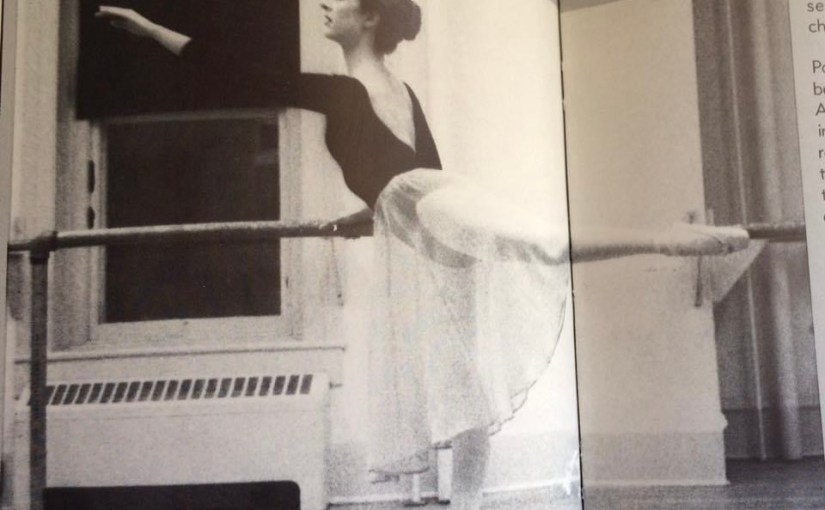
This is a photo of me at about 16. I have no memory of it being taken, and no idea for what it was taken. One of my children found it in my high school yearbook. It was taken, it seems, to highlight my dance. There’s an article that goes with it. My memory loss from abuse is indiscriminate: I have forgotten a number of ‘good’ things as well as a number of ‘bad’ things. I have holes in my memory all over the place. In my memoir I call them ’empty rooms’. So I have an empty room around this photo.

I am, though, a die-hard dancer, and an accomplished one, it seems. I danced from age seven or eight until my late 40’s, with never more than a few months’ break. I pitched up at dance schools in London and Norwich UK, danced all the way through university in the US, through having children, and working. Indeed, I often performed yearly, with other adult dancers. And WHAT a blast we had!

I have always known that dance was somehow vital for me. I knew I was happy doing it. I knew that its lyricism and rhythm informed my writing over decades.

What I didn’t know — until literally October 2021, practically yesterday — was that dance shifts my trauma, and always has done.

I am now 57 years old. I haven’t been able to dance in nearly a decade. There are physical reasons for this: namely, dodgy joints from hypermobility, and early onset arthritis. I have, however, remained fit. And for the last 10 years, I pretty much thought it was FITNESS that dance provided for me. Fitness and moving to music. I really never thought much beyond that.

Fast forward to summer ’21. Like a lot of people, I’ve had a tough, tough 18 months. Two close bereavements, a second hip replacement, one of my children having a serious accident and then a major operation. My writing stalled. And three lockdowns. I remained fit by walking (after recovery from my op), but I felt trapped. I was static in some fundamental way. And I spiralled down, really for the first time in my life. I landed in a mild — but frightening — depression. The more paralysed I felt, the more debilitated I became.

I am fortunate to have a brilliant therapist ‘on tap’. I have turned to her numerous times over the last few years, and so this time, at my husband’s insistent urging (I was all ‘no one can do anything; I’m going to feel like this forever’) — I contacted her again.

One of her first questions was ‘what has made you the happiest in the last two weeks?’. I had one answer, that I was rather embarrassed about: watching Strictly Come Dancing.

The unsettling thing is — she didn’t even know I had been such a dancer. She didn’t know that I danced all the way through the abuse. That I never felt threatened while dancing, I never felt watched. I always but always felt inside my body. It was my space. It was my thing. Time and again, I found myself gushing to her, dance has been transcendent for me. It takes me entirely into my body, and entirely elsewhere, at once. But I had never articulated this to her; indeed, I didn’t really know it myself.

It turns out that dance, over and over, has re-centred me, locating my ‘core self’ again and again. Because one thing I do know: I have preserved my core self. In that I have been extremely, extremely lucky. I just didn’t know that dance harboured and protected it.

First, I agreed with my therapist to watch as much dance as I wanted, to let that happen and indulge in that, instead of — as I was feeling — thinking of it as kind of a fun waste of time. I needed to let my body experience it.

Second, my best bae Nancy suggested we go line dancing (this video is a dance I actually do in class). We went to the first one together. And, as those of you who follow me on FB know: I WAS INSTANTLY HOOKED. Line dancing is not high impact, doesn’t involve grasping a barre (thumb arthritis, ugh), or going up on half point much (toe arthritis, double ugh!). What it does involve is my brain and focus (32 or 64 steps in sequence, repeated to each side of the room in various combinations, for five minutes at a time) and my intense, now realised, love of being inside my body and moving through music.

Along with talking therapy, line dancing has proved transformative — and yes transcendent — these last two months. I now do it twice a week, and my biggest fear over this new Covid wave is that line dancing will stop. I feel almost like I could give up everything but that. Here’s hoping.

I’m writing about this now for several reasons. First: it’s the holiday season, and we all need to pay attention, if we can, to what supports us rather than depletes us. Holidays are not fun for everyone.

Second, I saw a genius video about how The Body Keeps the Score when it comes to trauma. Yes, there is a brilliant book about this. And here’s the video that brought it home to me: The Body Keeps the Score by Knowledge is Power

Illustrated like this, I now see so clearly that dance shifts trauma for me. It moves it to a place where it doesn’t haunt me or stay in the present. It shifts the trauma. The last two years in particular have seen my body in an unfamiliar and unhealthy stasis. And the old and new trauma stacked up. It had nowhere to go, and I didn’t even know how to begin to shift it.

Third, I read this brilliant blog yesterday on the Epione page, Co-Regulation in Times of Covid by Felicity Douglas (twitter @felicitydougie). About how trauma sticks around, and about the kind of unabashed deep care you need to do to shift it around to something you can live with. How it may circle back, the same or differently, and how we as survivors can’t really be ‘fixed’. How the nervous system — the body — is something we can’t always know or take account of. It does what it does. Indeed, my therapist really feels that everything unravelled for me this last summer as much due to past stresses as to more present ones. I had been living with high cortisol and adrenaline levels for years. YEARS. Like the author of this blog: my nervous system just gave up the ghost.

So. As we go into this time of year — so difficult and strange for so many — I just want to say: your body keeps the score. Find, if you can, what nourishes you. What brings you pure joy, however fleeting. And do more of it. Do it mindfully. Make space for it. Cherish it. And your ever-shifting body will return the favour.

***

This is the first mention of dance in my memoir, Learning to Survive: an ABC of Abuse:

Ballet

Soon after arriving in Virginia [aged six], I begin to dance. Has someone mentioned my adventures with the Pink Panther theme dance class back when I was living with my mother? Does my father recall that my mother loves to dance?

            I do not know when or how I realise I am good at it. And I never realise, while living in my father’s house anyway, the purpose it comes to serve. It provides rhythm, shape to my days. I do it away from the family. It is mine. It is my body.

            I inhabit that room. I make another house. And I live there, in one form or another, for as long as I dance, for 40 years.

it only takes one

My first therapist Diana Kahn has been in my thoughts every day for many years. I loved her so much. The mother/protector I never had. The outraged one, the loving one, the fierce and driven one. The one who knew well before I did how my abuse would stretch outward and through my life forever.

She was the third person I disclosed to, aged 21, the second being my beloved creative writing professor and her friend, Diane Vreuls. Today I heard that Diana Kahn had died recently. The person who wrote to tell me this was Diane Vreuls. I feel as if the wind has been knocked out of me.

The ties with these two compassionate women stretch out over 35 years, and run deep. These women, between them, saved my life. Probably literally.

Diana Kahn prepared me for living, for life. She helped me be able to love, which I have gladly and wholly done for many years now. She led me toward my best self, the one that had been overshadowed by abuse, by shame, by fear. She kept me safe. My ability to be happy, to find joy, to believe in the future — all of this, I owe to her care, her insights, her encouragement, and her love. Rest in peace, you beautiful person.

It only takes one person to act, to know and understand. To help us heal. Here’s how I write about that time, in 1985, in my memoir, Learning to Survive:

***

it only takes one

Everything cascades into new places like dominos in my final year at Oberlin College [university], albeit in a slow and observable chain. After the summer, as if nothing has happened, I return to writing classes, this time to prose, with Diane Vreuls.  

            I begin to work on a story around a young woman called Roberta, and a young man called Alex. And the parallel narrative of her past, which involves something sinister. In the copy I have, I can see that I have made copious notes for Diane – ideas for development, acknowledgments of failings. I also state that there is a ‘father story’ here, though so far it’s not reflected in the text. The notes are chirpy, well organised. 

            But I can’t finish the story. I am due to go in and see Diane, but I can’t finish the story. I change tack: a different girl, older this time, in a relationship, a different man, the ‘father story’ further in the past. And I cannot finish this one either. I have no idea where it’s going, and don’t know what I want to say. But I know I want to say something.

            Diane calls me in for a tutorial on the initial four pages. I still have the copy she hands back to me then, and at the bottom, in small red writing, are the words ‘not enough for 2 weeks’ work’. It’s clearly a mess. She looks at my pages, all of them sketchy and faint. I can see I have disappointed her. She asks me to tell her about the story. I try to talk about the girl in it, and the love that must happen between her and Alex, somehow. About the other, different story I’ve started. Diane then asks me about the ‘father story’ line. She wonders what it is doing here, really, and how it connects to the floating interludes with some ‘she’ character, and some older ‘he’ character? There is too much, way too much, she says, unsaid.

            Of course, I have no words. I don’t even know how to talk about this. I have no idea what I’m doing. Then she turns her chair, directly facing me, and says, her voice a little shaky, ‘You are trying to write the same story over and over, do you see that? And it’s not happening.’ I must nod. Then she says, ‘Is there something you need to tell me?’.

            And I tell her. I am trembling all over. As much as I can tell anyone at that stage, I tell her. I tell her what my father did. I cannot yet cry about it, but she does. She asks about therapy, and I tell her about my last experience in that grand room. She is furious, and I later find out she makes an official complaint. But for now, and immediately, she phones her friend, a therapist called Diana Kahn – right there, while I’m in the office. She asks my permission to tell Diana a little bit, and I give it. I trust her completely; I give everything over. I tell her that I have no money at all to pay for anything. I don’t know what I’m going to do. Diane says not to worry. Not to worry any more about such things, because this is far, far more important.

I see the therapist Diana the next week, and twice a week at least for the following year, reducing to once a week for another year. She is fierce, and knowing, and protective. She releases me. She saves me. She begins the deep healing. And she pursues my father for every cent of her time, finally threatening him with a lawsuit. After which, he – surprise surprise – pays up.

I have never been able properly to express my gratitude to Diane Vreuls. For her compassion, her alertness, and for the friendship and love she shows me for years after. For the phone call she makes right there and then. But I hope that at times I’ve been able to embody her and make a difference. I promised myself I would, as soon as I started teaching 30 years ago. I promised myself that I would never turn away from a student in crisis, and I believe I never have. I know from experience that some changes in life can turn on a dime. Instead, I have numerous times picked up the phone, right there and then. I have made counselling appointments, I have walked students to the doctor’s office. I have had to tell students’ parents that I think their baby is in trouble. And I tell such students – often – of my own struggles. And of how my life is now. That there’s hope. Lots of it.

I saw his face

Over the years I’ve had plenty of nightmares. Shadowy figures, fear of doors opening, lying on my back suffocating. Plenty of those. And only with the recent spate of them, in the last six months or so, have I really acknowledged that all of them are from being abused. As is the development of claustrophobia, and a profound fear of the dark, among other things.

However. Something must be shifting: the night after my last post, I dreamt directly about my abuser, my father, for the first time in my memory. We had been estranged for over 30 years when he died in 2018. In this dream though: I saw his face. I looked right at his face. And I was grown up — a 57 year old woman with some things to say.

In the dream, he was sitting down. I was determined to stand up. And I told my father everything. I railed at him. I listed every last damaging effect that his abuse had had upon me, upon my family, my relationships, my sense of self. I absolutely let him have it. I tore a strip off of him.

I wasn’t scared. At all. I felt indeed — the opposite. I felt so strong. So clear. So just and righteous. I knew I was right, and that he was wrong, and that he had always been wrong. I told him all this, right to his face.

He didn’t understand. He tried to laugh. He tried to move away from me. I followed. I wouldn’t let it go. I listed and listed, until I reached the end of my list. Then I turned and left him, and went into the next room, where my beautiful grown up children were getting on with their lives. I told them what I had just done, and they were proud of me. We had things to do, and we did them, all without my father.

When I woke up, I felt like I could take on the world. I’d left him for good, and he would never understand. He was never going to. But at last I’d said my piece.

I credit this powerful dream in no small part to starting this blog, and to being in touch with so many other survivors and allies now, all of whom are strong, inspiring, and supportive. Together we are getting things done. THANK YOU, one and all.

In my memoir Learning to Survive, there’s a section of poems written around my father’s death. This one is about the last time we spoke, on the phone, in 1986, the very last time I tried to speak to him at all:

***

the last time

I am standing

           in my first apartment

                        before marriage

                        before children

                        before the UK

                        beige carpets

                        second hand sofa

                        second hand bed

                        new cushions (three hours to choose in JC Penny’s)

                        second hand glasses and bowls

                        fiancé hovering

                        in the kitchen

                        in case

my arm aches

            from gripping the handset

hand cramped

            from squeezing too hard

you are asking me

            to meet you

                        somewhere mid-way

                        somewhere

                                    to get past this

you say

                                    we need to resolve this

                                    with our therapists

                                    and I find out later

                                    that yours wants

                                    a Gestalt model

                                    which suits you fine

                                    conflict-resolution

                                    where both parties are responsible

                                    I wonder

                                                not for the first time

                                    if you have told her

                                                anything like the truth –

I say

                                    heart always pounding

                                    always shaking inside

                                    always swallowing fear

I say

                                    you are the perpetrator

                                    I am the victim

and

                                    you laugh

                                                you chuckle

you say

                                    you’ve been reading

                                    too many magazines

                                    you don’t know

                                    what you’re talking about

I stand there

            trembling

I want to hurt you

            like I am hurting

I try to think

            how to show you

                                    how important

                                    how vital

                                    how crucial

                                    this is

I say

                                    if you don’t do this

                                    my way

                                    my rules:

                                    you will never see your grandchildren

and

                                    you laugh again

you laugh

                                    but you never do

                                    see them

Zip

My habit – borne of self preservation no doubt – is to slam a metal shutter down, shut up shop, whenever I sense my mind or emotions edging toward remembering my abuse. It’s only natural I guess. I have become expert at shifting focus, blocking out some things, moving at speed toward others.

Only recently have I accepted that this urge in itself perpetuates damage. It keeps secrets. It tells no one. It suffers in silence.

The difficulty with allowing these memories to surface, to speak them, is that it can feel like I’m giving in. Giving in to the bleak reality that like it or not abuse has etched itself across my life, my day to day living. I’m so angry about this, angry on behalf of my child self who could not get angry: GO AWAY! I want it all to go away.

But try as I might, my triggers – my reminders – cut straight through whatever defences I have raised. And always have done. Regardless of what I want or hope for, they find their way in, just as my abuser did. They are with me daily.

And it turns out that they will never go away. It turns out that healing does not banish memories. Healing means that we learn to speak without risking our lives, without the implosion that silence brings. It’s not a fair trade, these daily reminders. Living with them is hard, and a cruelty. And none of it is our fault.

From my memoir Learning to Survive:

***

Zip

Because of you, it is years until I can bear the sound of one, or the feel of polyester.

            There are many things like this: flaky skin, a backrub.

            Some types of brown shoes. Checked shirts with white backgrounds. Thin cotton pyjamas. The feel of beards and moustaches. Teeth yellowed by cigarettes. Slightly pudgy fingers.

            Sleeping in the dark.

            Any soft caress, from anyone.

            Any romantic kindness. Any kiss on the lips.

            Any sign of desire. Any sigh.

Most of the time now I brace myself; most things surge and fade. Except for the dark: that panic never goes away.

***